


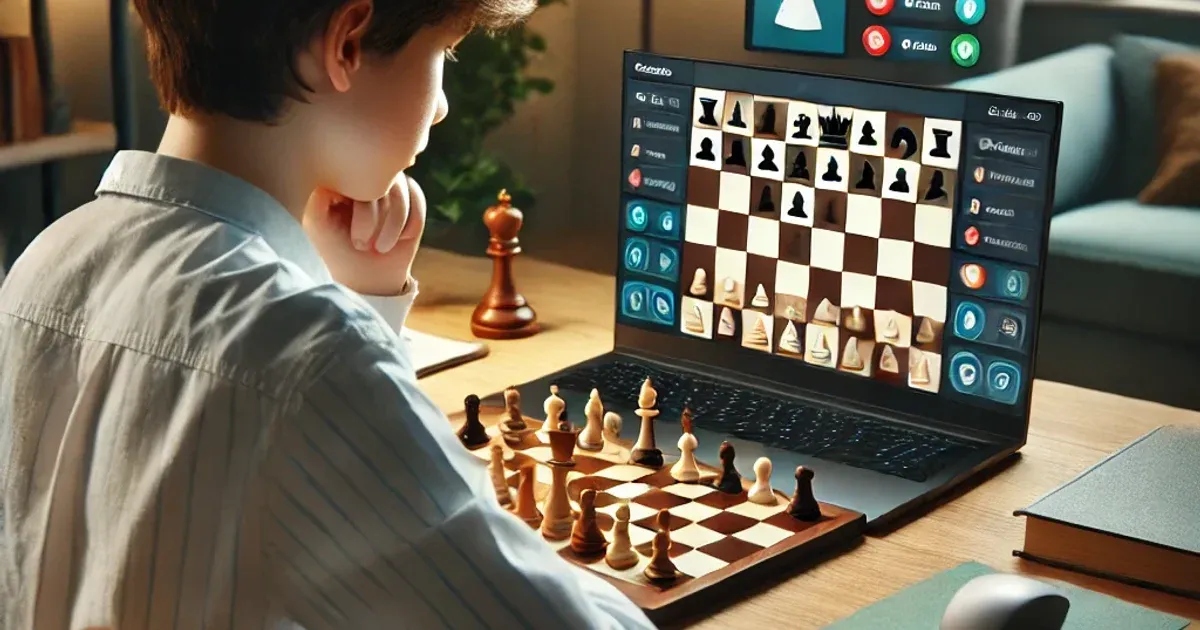
Not everyone has access to a personal chess coach, and the good news is that you do not need one to make serious progress. With modern tools like AI-powered chess bots, online platforms, and structured self-study methods, you can practice chess effectively on your own schedule. Many strong players, including titled players, reached advanced levels through disciplined self-training. For a complete step-by-step improvement plan, see our comprehensive guide to improving at chess.
This guide answers the most common questions about practicing chess without a coach and gives you a clear roadmap to follow.
Can You Get Better at Chess Without a Coach?
Absolutely. History is full of strong players who improved through self-study alone. The key ingredients are dedication, structure, and the right tools. With a well-designed training plan, you can develop tactical sharpness, positional understanding, endgame technique, and time management, all without paying for private lessons.
What matters most is consistency. A player who trains 30 minutes every day will improve faster than someone who studies five hours once a week. The regularity builds pattern recognition, which is the foundation of chess skill.
Modern platforms like Chessiverse make self-training even more effective by providing AI opponents that adapt to your level and challenge your specific weaknesses. You can play chess against computer opponents anytime, getting the kind of focused practice that used to require a human sparring partner.
What Is the Best Way to Practice Chess Daily?
A good daily chess training routine covers multiple skill areas in manageable chunks. Here is a sample plan that works well for most improving players.
Solve tactical puzzles (15-20 minutes). Start each session with puzzles focused on forks, pins, skewers, discovered attacks, and checkmate patterns. This sharpens your calculation and builds the pattern library your brain draws from during games.
Play a focused game (20-30 minutes). Choose a rapid game (10-15 minutes per side) against a bot or human opponent. Play seriously and try to apply concepts you have been studying.
Review your game (10-15 minutes). After each game, go through it move by move. Identify where you went wrong, where you missed a tactic, and where you made good decisions. This review process is where the deepest learning happens.
Study one topic (10-15 minutes). Dedicate each week to a specific theme: openings, endgames, pawn structures, or a particular middlegame concept. Focused study prevents the scattered feeling of trying to learn everything at once.
Even 30 to 60 minutes a day using this structure can lead to significant improvement over weeks and months.
Self-Study Plan: Weekly Schedule
| Day | Focus Area | Activity | Time |
|---|---|---|---|
| Monday | Tactics | Solve 20–30 puzzles | 20 min |
| Tuesday | Play | Rated game + quick review | 45 min |
| Wednesday | Openings | Study one opening line | 20 min |
| Thursday | Tactics | Solve 20–30 puzzles | 20 min |
| Friday | Play | Rated game + full analysis | 60 min |
| Saturday | Endgames | Drill one endgame type | 30 min |
| Sunday | Study | Watch annotated master game | 30 min |
How Chess Bots Help You Practice Without a Coach
Chess bots are like having a training partner available 24 hours a day, 7 days a week. Unlike human opponents, bots let you choose exactly the type of challenge you need.
When you play chess against computer opponents on Chessiverse, you can select from over 1000 bots across every skill level. Each bot has its own playing personality, preferred openings, and strategic tendencies. This variety means you are never stuck playing the same type of game over and over.
Key benefits of practicing with chess bots include playing against different skill levels to find your edge, facing a variety of playing styles from aggressive attackers to patient defenders, training specific positions or openings by choosing bots that favor those systems, and analyzing your results immediately after each game.
To understand what makes each bot unique, read about how Chessiverse bots are created. The personality system behind each bot is designed to simulate the experience of playing against real human styles.
What Is PersonaPlay and How Does It Replace Coaching?
PersonaPlay is Chessiverse's training system built around five distinct categories of chess bot personalities. Each category targets a different aspect of your game.
Savages are ultra-aggressive bots that attack relentlessly. Playing against them strengthens your defensive skills and teaches you to stay calm under pressure. If you struggle against attacking players, Savages expose those weaknesses.
Observers are calm, strategic bots that play quiet, positional chess. They teach you patience and help you improve your long-term planning skills. Games against Observers tend to be slow, instructive battles.
Hunters are sharp, tactical bots that look for combinations and tricks. They punish loose play mercilessly and force you to calculate accurately. Regular practice against Hunters sharpens your tactical eye.
Guardians are solid, defensive bots that are hard to break down. They teach you how to build advantages gradually and convert small edges into wins. If you struggle to win "equal" positions, Guardians help you develop that skill.
Mediators are adaptable, balanced bots that adjust their style during the game. They give you the most realistic simulation of a well-rounded human opponent.
By rotating through these five categories, you get the diversity of training that would normally require multiple sparring partners or a coach who adjusts their approach for each lesson.
Should You Focus on Tactics or Strategy First?
Start with tactics. At the amateur level, most games are decided by tactical mistakes, not strategic errors. If you can spot forks, pins, and checkmate threats faster than your opponent, you will win more games regardless of your strategic understanding.
Build a daily puzzle-solving habit first. Once you consistently find tactics in practice games, start adding strategic study. Our article on the most effective chess training method explains how to structure this progression into a daily routine. Learn about pawn structures, piece activity, weak squares, outposts, and the relationship between the center and the flanks.
The ideal progression looks like this: first master basic tactics, then learn opening principles, then study middlegame strategy, and finally develop endgame technique. Each layer builds on the one before it.
How to Identify Your Weaknesses Without a Coach
One of the biggest advantages of a coach is that they spot your mistakes. Without one, you need to be your own analyst. Here is how.
Use post-game analysis tools. Platforms like Chessiverse, Lichess, and Chess.com offer engine analysis that highlights blunders, mistakes, and missed opportunities. Review every game you play seriously.
Track your mistakes in a notebook. After analyzing each game, write down the type of mistake you made. Over time, you will see patterns. Maybe you consistently miss back-rank threats, or you always mishandle rook endgames. These patterns tell you exactly what to study next. If you feel stuck despite putting in the work, our article on why you can't get better at chess breaks down the most common plateau causes and fixes.
Compare your moves to engine suggestions. When the engine disagrees with your move, ask yourself why. Understanding the gap between your thinking and the engine's evaluation is one of the most powerful learning tools available.
Understanding how Chessiverse ratings work can also help you track your progress objectively and identify which types of opponents give you the most trouble.
Can You Learn Chess Openings Without Help?
Yes, and the approach is simpler than most people think. Start with one opening for White and two for Black (one response to 1.e4 and one to 1.d4). Learn the first 5 to 8 moves of each line and, more importantly, understand the strategic ideas behind them.
Use chess bots to practice your chosen openings repeatedly. On Chessiverse, you can find bots that favor specific opening systems, giving you repeated practice in the exact positions you are studying.
Watch free YouTube tutorials or explore Chess.com's opening lessons that explain not just the moves but the plans and typical middlegame structures that arise from your openings. Do not try to memorize 20 moves deep. Understanding the first 5 moves well is far more valuable than memorizing 20 moves poorly.
PersonaPlay bots are especially useful here because different personality types handle openings differently, giving you practice against varied responses to your chosen systems.
Is Watching Chess Content on YouTube Effective?
Watching chess videos is highly effective when you do it actively. Passive watching, where you just let the video play, teaches very little. Active watching means pausing before the instructor reveals the move and trying to find it yourself.
Look for content that includes game analysis by titled players who explain their thought process, opening breakdowns that cover the ideas rather than just the moves, tactical puzzle walkthroughs that teach you how to think about combinations, and streamers who narrate their decision-making during live games.
The key rule is this: for every hour you spend watching, spend at least an hour practicing what you learned.
How Often Should You Play Versus Train?
A good self-training ratio for improving players is roughly 60 percent training and 40 percent playing.
Training includes solving puzzles, analyzing your games, studying openings, reading about strategy, and reviewing instructive games. Playing means serious, focused games where you try your best and think carefully.
The common mistake is overplaying. Players who grind out game after game without reviewing them improve slowly because they keep making the same mistakes. Use chess bots for controlled practice sessions where you focus on specific goals (like "play this opening correctly" or "do not blunder in the endgame"), then test yourself against human opponents.
Best Platforms for Self-Guided Chess Training
Several platforms support effective self-study, each with different strengths.
Chessiverse stands out for its AI bot training system. With over 1000 bot personalities through PersonaPlay, customizable difficulty levels, and post-game analysis, it provides the closest thing to coach-guided practice available without a coach. Chessiverse premium unlocks the full library of bots and advanced training features.
Lichess offers a completely free suite of tools including puzzles, studies, opening explorer, and engine analysis. It is an excellent complement to bot training on Chessiverse. For a side-by-side breakdown, see our chess bot platform comparison.
Each platform has tools that, when used effectively, replicate coaching-like feedback and structured improvement.
Building Your Self-Coaching Routine
To become your own coach, follow these principles. Track your progress with a simple spreadsheet or notebook. Set weekly goals like "learn the main line of the Caro-Kann" or "solve 100 tactical puzzles." Use chess bots for focused practice on your weak areas. Study your losses more carefully than your wins. And most importantly, be patient with yourself.
With today's technology, chess bots and online tools can serve as your coaches, opponents, and mentors, all in one. The players who improve fastest are not the ones with the most expensive coaches. They are the ones who train consistently and thoughtfully with the tools available to them.
Related Comparisons
- AI Chess Training vs Human Coaching — When AI is enough vs when you need a coach
- Best Chess Training App — Top training platforms compared