



India is rapidly emerging as one of the most dominant forces in world chess. A new generation of extraordinary young players, including Gukesh Dommaraju, R Praggnanandhaa, and Arjun Erigaisi, is rewriting the record books and challenging the traditional chess powerhouses of Russia and China.
But India's chess revolution did not happen overnight. It is the result of decades of cultural investment, institutional support, technological access, and the inspirational legacy of one legendary player. In this article, we explore the forces driving India's rise as a chess superpower and profile the young stars who are leading the charge.
Viswanathan Anand: The Pioneer Who Started It All
No discussion of Indian chess can begin without Viswanathan Anand. Becoming India's first Grandmaster in 1988, Anand went on to claim the World Chess Championship title five times between 2000 and 2012. His achievements were monumental not just for his own career, but for an entire nation.
Before Anand, chess in India was a niche pursuit with limited competitive infrastructure. His success changed the perception of chess from a quiet hobby to a viable professional career. Millions of young Indians watched Anand compete on the world stage and dreamed of following in his footsteps.
Anand's impact extends beyond inspiration. He has actively mentored the next generation, sharing his knowledge and opening doors for young talent. The chess academies and training programs that now flourish across India trace their origins to the movement Anand ignited.
Young Superstars: Gukesh, Praggnanandhaa, and Arjun Erigaisi
India's current chess generation is arguably the most talented in the country's history. Three players in particular have captured global attention.
| Player | Born | Peak Rating | Title | Notable Achievement |
|---|---|---|---|---|
| D. Gukesh | 2006 | 2794 | GM | Youngest-ever Candidates winner (2024), World Championship challenger |
| R. Praggnanandhaa | 2005 | 2747 | GM | Second-youngest GM in history, World Cup finalist |
| Arjun Erigaisi | 2003 | 2778 | GM | India #1, consistent top-10 world ranking |
| Vidit Gujrathi | 1994 | 2727 | GM | Candidates 2024 participant, India team captain |
| Nihal Sarin | 2004 | 2707 | GM | Prodigy, known for creative attacking play |
Gukesh Dommaraju: The World Champion
Gukesh made history by becoming one of the youngest Grandmasters ever and has since established himself as a force at the absolute highest level of chess. His fearless playing style, extraordinary work ethic, and ability to perform under pressure have earned him victories against many of the world's top-ranked players.
Gukesh's most remarkable achievement came when he won the FIDE World Chess Championship, becoming the youngest World Chess Champion in history. For AI-powered predictions and analysis from the championship match, see our AI predictions for the 2024 World Chess Championship. His calm demeanor at the board belies a fierce competitive spirit, and many experts believe he will dominate world chess for years to come.
R Praggnanandhaa: The Tactical Prodigy
Known affectionately as Pragg, R Praggnanandhaa earned his Grandmaster title at just 12 years old, making him one of the youngest GMs in history at the time. His sharp tactical vision and ability to calculate deep combinations have produced spectacular victories, including wins against former World Champion Magnus Carlsen.
Pragg's style is characterized by aggressive piece play and a willingness to enter complex tactical battles. He thrives in sharp positions where precision and calculation determine the outcome. At his young age, his ceiling appears virtually unlimited. To see the kind of player he is chasing, browse our profile of Magnus Carlsen.
Arjun Erigaisi: The Consistent Performer
Arjun Erigaisi has quietly risen to become one of the highest-rated players in the world. Ranked among the top players globally in both classical and blitz formats, Arjun combines solid positional understanding with sharp tactical skills.
What sets Arjun apart is his remarkable consistency. While some young players are prone to volatility, Arjun delivers strong results tournament after tournament. His steady improvement trajectory suggests that his best chess is still ahead of him.
Training with Chess Greats Like Vladimir Kramnik
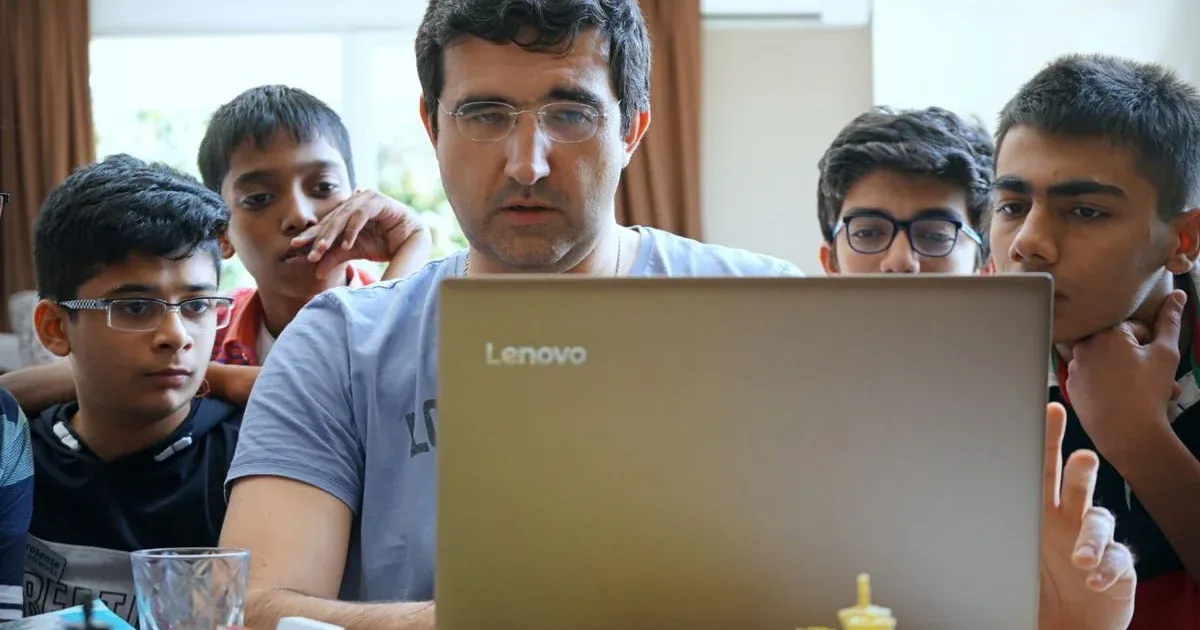
The young Indian players have not achieved their success in isolation. They have benefited from world-class coaching, including sessions with former World Chess Champion Vladimir Kramnik. Kramnik, known for his deep positional understanding and strategic mastery, has shared invaluable knowledge with Gukesh, Pragg, and Arjun.
This kind of elite mentorship accelerates development by exposing young players to ideas and approaches they might not discover on their own. It also demonstrates the growing respect the global chess community has for Indian chess talent: when a former World Champion invests time in coaching Indian players, it signals that the chess world recognizes India's potential.
Government and Institutional Support for Chess in India
Chess in India has received growing support from both government bodies and private organizations. Several key factors have contributed to the institutional backbone of Indian chess:
- Chess academies have proliferated across major cities, providing structured training for young players from an early age
- Corporate sponsorships now fund tournaments, training camps, and international travel for promising players
- State and national championships have grown in both participation and prestige, creating a competitive pipeline that identifies and develops talent
- School chess programs have introduced the game to millions of children, ensuring a steady flow of new players into the system
Chess is no longer viewed as merely a hobby in India. It is increasingly recognized as a legitimate professional career, with the infrastructure and support systems to back that aspiration.
The Role of Technology and Online Chess in India's Rise
Technology has been a critical enabler of India's chess boom. The widespread availability of affordable internet and smartphones has given young players across the country access to world-class training resources from their homes.
Online chess platforms play a central role in this transformation. Players can study openings with database tools, analyze their games with powerful engines, and compete against opponents from around the world without leaving their rooms. If you want to experience this kind of training yourself, you can play chess against computer opponents that simulate a wide range of human playing styles.
Chessiverse contributes to this ecosystem by offering over 1000 unique AI chess bots with distinct personalities and playing styles. Through PersonaPlay, players can choose opponents that match specific training goals, whether they want to practice against aggressive tacticians or solid positional players. Understanding how Chessiverse bots are created reveals the sophisticated AI behind these training partners.
The democratization of chess through technology means that talented players no longer need to live in major cities or attend expensive academies to receive quality training. A young player in a small Indian town now has access to many of the same resources as a student at an elite chess school in Moscow or Chennai.
India's Historic Chess Olympiad Victory
India's dominance was emphatically confirmed at the Chess Olympiad, where the Indian team delivered a historic performance. The young team, featuring Gukesh, Pragg, and Arjun among others, demonstrated the remarkable depth of Indian chess talent.
The Olympiad victory was more than a sporting achievement. It was a statement to the world that India has arrived as a chess superpower, with enough depth to field multiple teams capable of competing at the highest level. The celebrations that followed reflected the growing importance of chess in Indian culture.
Will India Continue to Dominate World Chess?
All signs point to yes. India's chess pipeline is deeper than ever, with dozens of young players rated above 2600 FIDE and more emerging every year. The combination of inspirational role models, institutional support, technological access, and a culture that increasingly values chess creates a self-reinforcing cycle of excellence.
Gukesh's World Championship victory has only amplified this momentum. His success proves to every young Indian player that reaching the absolute pinnacle of chess is possible. As Pragg, Arjun, and the next wave of Indian talent continue to develop, India's position as a chess superpower looks secure for decades to come.
Conclusion: India's Chess Revolution Is Just Beginning
From Viswanathan Anand's pioneering achievements to Gukesh's historic World Championship, India's chess journey is one of the most remarkable stories in modern sport. The country has built a chess ecosystem that rivals the best in the world, combining grassroots development, elite coaching, institutional support, and technological innovation.
For chess fans and aspiring players worldwide, India's rise is both inspiring and instructive. It demonstrates what is possible when talent meets opportunity, and when an entire nation embraces the beauty and challenge of chess.
Whether you are inspired by Gukesh's fearless attacking style, Pragg's tactical brilliance, or Arjun's quiet consistency, you can develop your own chess skills by training against AI opponents that emulate different playing styles. Take the chess personality quiz to find out which legend you most resemble, explore global chess traditions in our Around the World chess challenge, or discover which chess legend matches your style. Understanding how Chessiverse ratings work helps you track your progress as you improve.