Playing chess against computer opponents has become the most popular and accessible way for players of all levels to practice, learn, and sharpen their skills. Whether you are a complete beginner who wants to learn chess from scratch or an experienced club player looking to refine your opening repertoire, facing off against a well-designed AI opponent offers a training experience that is always available, endlessly patient, and remarkably effective. At Chessiverse, we have taken this concept further than any other platform by building more than 1000 unique AI personalities powered by our proprietary PersonaPlay™ technology. Each bot plays with a distinct style, makes human-like decisions at its rating level, and responds to the game in ways that genuinely mirror what you would encounter across the board from a real person. The result is a chess training environment that feels authentic, engaging, and endlessly replayable.
The days of practicing against a single Stockfish engine dumbed down to your level are over. Modern chess practice demands opponents that behave realistically, and that is exactly what Chessiverse delivers. Our bots span a rating range from under 100 to over 3300 Elo, each calibrated through more than a million training games to ensure their play is consistent and believable. Curious about the engineering behind these opponents? You can read about how our chess bots are created to understand the deep research and neural network training that goes into every single personality. From aggressive tacticians who will sacrifice material for an attack, to solid positional grinders who squeeze you in the endgame, the variety of opponents available means you will never run out of fresh challenges or learning opportunities.
| Topic | Details |
|---|
| Available Bots | 1000+ unique AI personalities |
| Rating Range | Under 100 - 3300+ Elo |
| Bot Personalities | Aggressive, Defensive, Positional, Tactical, and more |
| Time Controls | Bullet, Blitz, Rapid, Classical, Untimed |
| Skill Levels | Complete Beginner to Grandmaster |
| Opening Repertoires | 1000+ unique opening lines |
| Play Style Technology | PersonaPlay™ human-like behavior |
| Platform | Web browser, mobile-friendly, no download |
Why Play Chess Against a Computer?
There are many compelling reasons to play chess against a computer, and the advantages go well beyond simple convenience. First and foremost, an AI opponent is available around the clock. Whether it is two in the afternoon or three in the morning, you can sit down, choose an opponent, and start a game without waiting in a queue or worrying about time zones. This constant availability makes it dramatically easier to build a consistent practice habit, which is one of the most important factors in long-term chess improvement. You can play chess online free whenever inspiration strikes, without any friction.
Another significant benefit is the elimination of social anxiety and competitive pressure. Many players, especially beginners and intermediate learners, feel nervous or self-conscious when playing against real people. They worry about making embarrassing blunders or losing rating points. When you play against a computer, that pressure evaporates. You can experiment with new openings, try unconventional strategies, and take as long as you need to think through complex positions without anyone judging you. This relaxed environment actually accelerates learning because your brain is free to focus on pattern recognition and calculation rather than managing stress. If you have not tried it yet, create a free account and experience the difference for yourself. The adjustable difficulty means you always have an opponent that pushes you just enough to grow without crushing your confidence.
Understanding Chess Bot Rating Systems
Rating systems in chess serve as a numerical representation of playing strength, and understanding how they work is essential for getting the most out of your practice sessions against computer opponents. The most widely recognized system is the Elo rating, developed by physicist Arpad Elo, which assigns a number based on game results against other rated players. In human chess, a complete beginner typically falls around 400 to 600 Elo, a casual club player sits around 1200 to 1500, a strong club player reaches 1800 to 2000, and titled players such as International Masters and Grandmasters range from 2200 to 2800 and beyond.
At Chessiverse, every bot is assigned a rating that reflects its genuine playing strength, validated through extensive calibration against both other bots and human players. This means that a 1200-rated bot on Chessiverse will give you an experience that closely mirrors playing against a real 1200-rated human. The bot will make the kinds of mistakes a 1200 player makes, see the tactics a 1200 player sees, and miss the subtleties that a 1200 player misses. This is radically different from traditional engines where a "1200 strength" setting simply means a grandmaster-level engine randomly inserting blunders. To learn more about the calibration process and how we ensure accuracy, visit our detailed breakdown of how Chessiverse ratings work. Accurate ratings mean you can track your real progress over time and choose opponents that provide the optimal challenge for growth.
What Makes PersonaPlay™ Bots Different
Traditional chess engines are built to find the objectively best move in any position. When you weaken them to simulate lower-rated play, they do so by randomly inserting terrible moves into otherwise perfect play. The result feels jarring and unrealistic: one moment the engine plays a brilliant grandmaster-level combination, and the next it hangs its queen for no reason. This is not how real humans play chess, and practicing against such an opponent teaches you very little about what to expect in actual games.
PersonaPlay™ takes a fundamentally different approach. Each bot is powered by its own neural network that has been trained to play at a specific strength level from the ground up. A 1000-rated PersonaPlay bot does not know grandmaster-level moves and then forget them. Instead, it genuinely sees the board the way a 1000-rated player does, with all the characteristic blind spots, positional misunderstandings, and tactical oversights that come with that level. Beyond pure chess strength, each bot also has a distinct personality. Some are aggressive attackers who love to sacrifice material for initiative. Others are patient defenders who will grind you down in the endgame. Some have favorite openings they always play, while others mix things up. They even have emotional responses during the game, chatting and reacting to the position. To understand the full depth of what goes into building these opponents, explore how bots are created at Chessiverse.
Choosing the Right Bot for Your Skill Level
Selecting the right opponent is crucial for productive practice. If you play against bots that are far too weak, you will not be challenged and your games will reinforce lazy thinking. If you play against bots that are far too strong, you will get overwhelmed without understanding what went wrong. The sweet spot for improvement is facing opponents rated approximately 50 to 100 Elo points above your current level. At this difficulty, you will lose more often than you win, but the games will be competitive enough that you can learn from your mistakes and identify specific weaknesses to work on.
For complete beginners who are still learning how the pieces move, Chessiverse offers bots in the 400 to 600 range. These opponents play slowly and make frequent mistakes, giving new players time to practice basic tactics and piece coordination. Casual players in the 800 to 1200 range will find a rich selection of bots that test fundamental chess principles like controlling the center, developing pieces efficiently, and basic endgame technique. Intermediate players rated 1200 to 1800 can challenge themselves against bots that understand positional concepts, execute multi-move combinations, and punish strategic errors. Advanced players rated above 1800 will find formidable opponents that play sophisticated chess, including deep strategic planning and complex tactical sequences. No matter where you are in your chess journey, you can start playing today and find the perfect training partner.
Practicing Openings Against Chess Bots
One of the most effective ways to learn chess openings is to play them repeatedly against opponents who respond with realistic, varied moves. This is where Chessiverse bots truly shine. With over 1000 unique opening lines distributed across our roster of 1000+ bots, you can find opponents who specialize in virtually any opening system you want to study. If you are learning the Italian Game, you can seek out bots that consistently play 1.e4 and enter Italian structures. If you want to test your Sicilian Defense, there are dozens of bots who will challenge you with different anti-Sicilian systems and main lines.
The advantage of practicing openings this way, rather than simply memorizing moves from a database, is that you develop a genuine feel for the resulting middlegame positions. You learn not just the moves but the ideas, the typical plans, and the common tactical motifs that arise from each opening. This kind of deep, practical understanding is far more valuable than rote memorization and transfers directly to your games against human opponents. For players who want a more structured approach, Chessiverse also offers dedicated courses like the Scandinavian Defense course, which combine bot practice with guided instruction. You can also visit our structured chess practice page for more training resources and ideas on how to build an effective study routine.
Improving Tactics Through Bot Play
Tactical ability is the foundation of chess strength at every level, and playing against bots with diverse styles is one of the best ways to sharpen your tactical eye. When you face an aggressive bot that loves to attack, you are forced to practice defensive calculation, spotting threats before they materialize, and finding counter-attacking resources under pressure. When you play against a quiet, positional bot, you learn to create tactical opportunities in closed positions where they are less obvious. This variety of challenges builds a well-rounded tactical skill set that prepares you for any opponent you might face.
The key insight is that tactics do not exist in isolation. They arise from specific types of positions, and different playing styles create different types of positions. By exposing yourself to a wide range of styles through Chessiverse's diverse bot roster, you naturally encounter a broader spectrum of tactical patterns than you would by playing against a single engine or only one type of opponent. For dedicated tactical training between games, you can also work through chess puzzles that are designed to test specific tactical themes such as pins, forks, skewers, discovered attacks, and back-rank combinations. Combining puzzle work with practical bot play is one of the most effective approaches to rapid improvement, and you can organize your entire training routine from our practice page.
Endgame Training with AI Opponents
The endgame is often the most neglected phase of chess training, yet it is arguably the most important for converting advantages into wins. Many players focus heavily on openings and middlegame tactics while their endgame technique remains underdeveloped, leading to drawn or even lost games from winning positions. Playing full games against AI opponents is one of the most natural and effective ways to improve your endgame skills, because you regularly reach endgame positions that demand precise technique.
Some Chessiverse bots are particularly strong in the endgame, and deliberately seeking out these opponents forces you to develop your technique or face the consequences. You will learn essential endgame concepts like king activity, pawn structure management, the principle of two weaknesses, and the technique of converting material advantages. Other bots are weaker in the endgame, making them excellent practice partners for learning how to press an advantage and convert it into a full point. For players who want to work on specific endgame positions outside of full games, Chessiverse also offers practice positions that let you drill critical endgame scenarios against appropriately rated opponents until the technique becomes second nature.
Tracking Your Progress and Improvement
Consistent improvement in chess requires more than just playing games. You also need to track your results, identify patterns in your performance, and adjust your training accordingly. Chessiverse provides comprehensive tools for monitoring your chess development over time. Your rating is tracked across every game you play, giving you a clear visual picture of your improvement trajectory. You can review your game history to revisit critical moments, analyze where you went wrong, and identify recurring mistakes that need attention.
Beyond simple win-loss records, Chessiverse tracks statistics like your performance against different bot styles, your results with different openings, and your winning streaks. These insights help you understand your strengths and weaknesses at a granular level. For example, you might discover that you perform well against aggressive opponents but struggle against positional players, which tells you exactly where to focus your training. To access the full suite of tracking and analytics features, sign up to track progress with a free account. Players who want even deeper insights can explore our premium features, which include advanced analytics, unlimited bot access, and additional training tools designed for serious improvement.
Chess Against Computer vs Human Opponents
A common question among chess players is whether it is better to practice against computers or humans, and the honest answer is that both forms of practice serve different and complementary purposes. Playing against human opponents develops skills like psychological resilience, time management under pressure, and adaptability to unexpected strategies. The unpredictability of a human opponent keeps you on your toes and simulates the real competitive experience you will encounter in tournaments and rated games.
Playing against computer opponents, on the other hand, offers unmatched consistency and convenience for targeted training. You can practice specific openings repeatedly, work on endgame technique without time pressure, and gradually increase difficulty as your skills improve. The critical factor is the quality of the AI you are training against. Traditional engines that play unnaturally teach bad habits because they create positions and patterns that real humans never produce. Chessiverse bridges this gap with PersonaPlay bots that combine the convenience of computer play with the realism of human opponents. The ideal training regimen includes both: use Chessiverse bots for focused practice and skill development, and play human opponents to test your progress under competitive conditions. You can also play free online chess to explore everything the platform has to offer.
Getting Started: Your First Game Against a Chess Bot
Starting your first game against a chess bot at Chessiverse is straightforward and takes less than a minute. You do not need to download any software, install any apps, or even create an account to explore the platform. Simply visit the site, browse the available bots, and choose one that appeals to you. Each bot profile shows their rating, playing style, personality description, and preferred openings, making it easy to find an opponent that matches your current level and training goals.
For the best experience, we recommend creating a free account so your games are saved, your rating is tracked, and you can pick up right where you left off in future sessions. The signup process takes about 30 seconds and requires only a username and password. Once you are set up, start by playing a few games against bots rated close to what you estimate your skill level to be. If you win easily, move up. If you get crushed, move down. Within a few games, you will find your natural range and can begin the rewarding process of steady improvement. Ready to begin? Create your account and play your first game today. And if you are brand new to chess and need help with the rules and fundamentals, our beginner guide will walk you through everything you need to know before your first move.



















































































 Featured by Leading Chess Creators











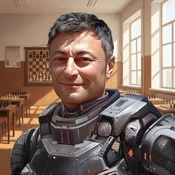


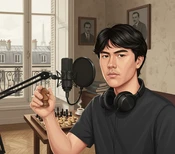


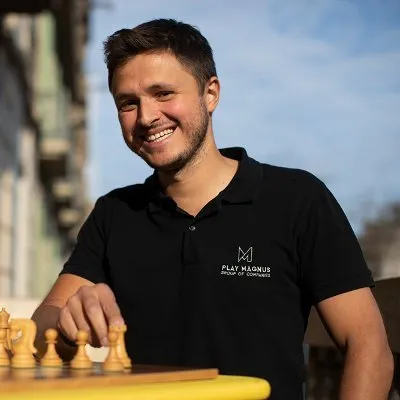
 GuardianProtective
 ObserverBalanced
 MediatorFlexible
 HunterTactical
 SavageAttacking