
Play Chess Against
The Most Human-Like Chess Bots Online
Practice with 1000+ AI opponents that actually feel like real players — calibrated ratings, distinct personalities, real blunders. Free chess bots, free account, no credit card.









 Featured by Leading Chess Creators
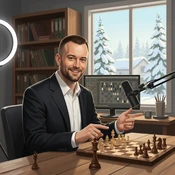
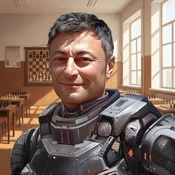
Challenge your favorite right away! Each bot's playstyle is modeled on thousands of their own games. View all VIP bots →




























The Evolution of
the Most Human-Like
Chess Bots
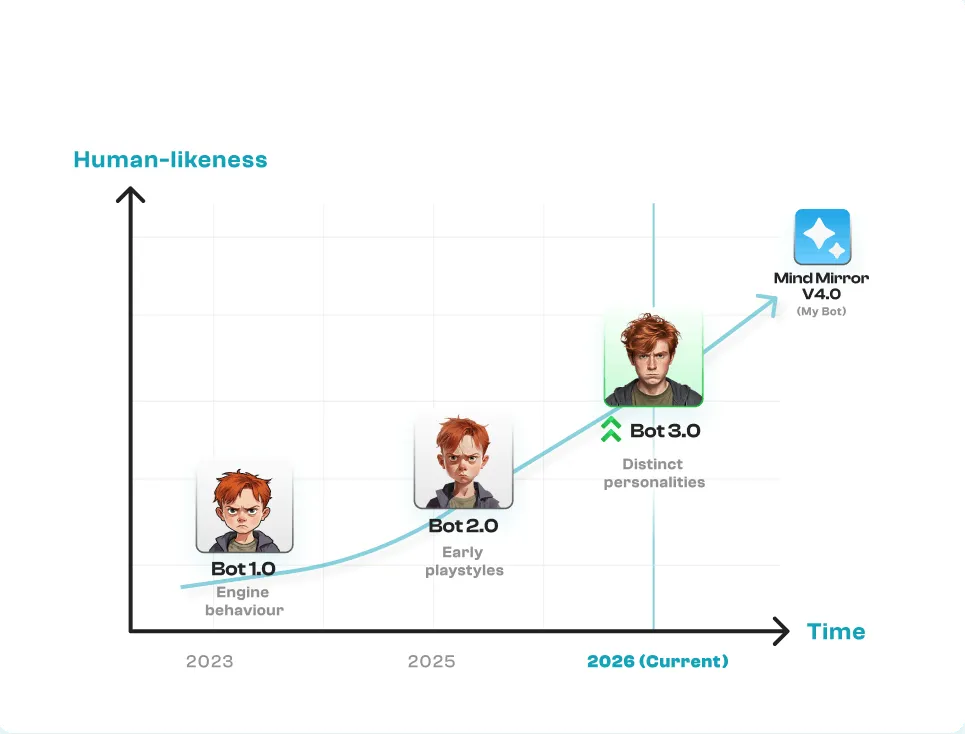
Chessiverse bots have evolved through multiple generations, from early engine based opponents to Bots 4.0 and beyond. Each new version improves how naturally bots think, make decisions, and even commit realistic mistakes. Combined with unique personalities and playstyles, Chessiverse delivers one of the most human-like chess experiences available on any platform.
Why Our Chess Bots Feel Human
Most "chess bots" online are just Stockfish dialed down. Ours are built from the ground up to play like real people at their rating — quirks, blunders, personality and all.

Trained on Human Games
Each bot is fine-tuned with neural networks on millions of real human games — so it captures the patterns people actually play, not engine-perfect moves.

Calibrated Ratings
A 1500-rated Chessiverse bot performs like a 1500-rated human. Calibrated against real player data, not a sliding "engine depth" hack. Read how ratings work →

Distinct Personalities
Aggressive attackers, patient defenders, tactical hunters, positional grinders. Every bot has a recognizable style — practice against the type you struggle with most.

Real Blunders, Real Openings
Each bot has its own opening repertoire and makes the kinds of mistakes a player at its level would actually make — not random noise, not engine-perfect refutations.







John Bartholomew
Age 39 | Chess Content Creator
Playstyle detail
 Hunter
 Savage
 Guardian
 Observer
 Mediator

Openings
Play. Track. Improve.
Track how your performance develops over time. Identify your strongest moments, recognize patterns in your play, and uncover areas that need attention.
Play now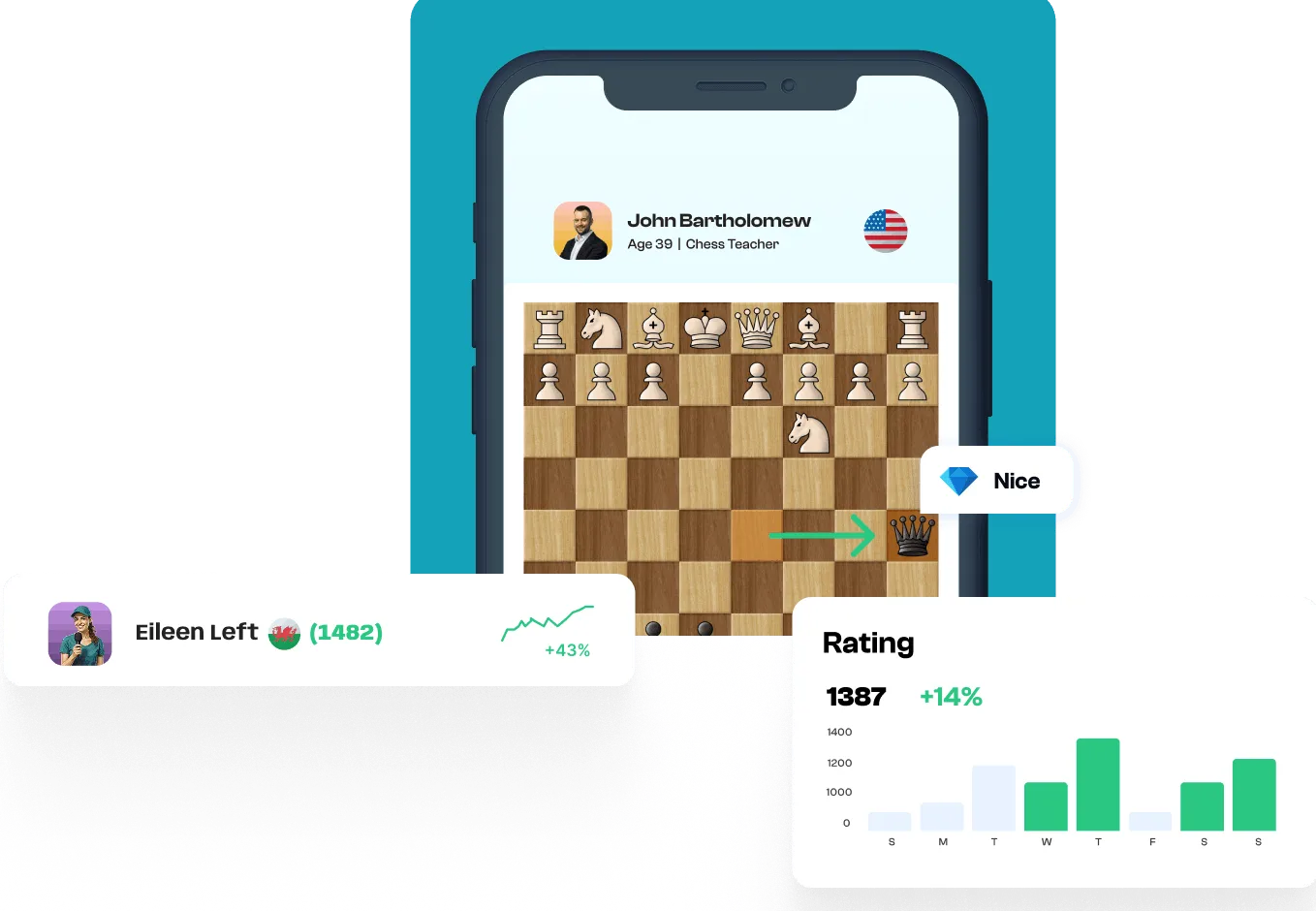


1000+ PersonaPlay™
Bots
From fast attackers to stubborn defenders—every bot plays with a unique style
What's PersonaPlay™?
Learn Through Genuine
Human-like Play
Master openings, tactics, endgames, and puzzles—with opponents who make human mistakes

Track Real
Progress
Get bot ratings, game stats, and streaks—see your growth over time and breakthrough moments
I love playing with bots mainly for one thing: no cheaters. Usually, I use the Lucaschess program, but your bots are fantastic.
 Maria - Survey
I was looking for bots that would play like humans and have various styles of playing.
Olga - SurveyThe bots on Chessiverse feel realistic, and there's a huge variety, so I can practice on my time.
Sam - SurveyI can pause anytime, take as long as I need, and never wait for moves. The bots are well designed and feel much more human-like than Stockfish bots on Lichess.
Broder - SurveyGreat site and great realization! I was about to create my own bots, but yours are much better. I love the practice ideas and different personalities.
Ivan - SurveyIt's much more convenient, instructive and stress-free to play here. Chessiverse has totally replaced my online play.
 Mojo Jojo - Discord
I'm enjoying Chessiverse a lot. The difficulty scales very well—I always feel challenged but not stuck.
Reidsan - DiscordHaving access to hundreds of bots with names and personalities feels like a dream. It's very useful for serious training.
Mircea-Marius - DiscordI've been looking for something like this for over 30 years. If your ratings are accurate, this is exactly what I needed.
 TheLightBender - Email
You've absolutely hit the sweet spot for me. I don't like playing real people online, and this helps me enjoy chess again.
Jenny Smith - EmailThe thing that I like most about this site, and the reason I thought it was worth paying for, is the frankly massive number of bots that you have made available.
Chris - Site surveyI mainly use Chessiverse as a training partner. I like that there are many bots and downloadable PGN files, and it's easier to use than other platforms.
Bjœrn - SurveyMy goodness, I’ll be one of the first to give you my money when you're ready. Thanks again.
Clemtkx - DiscordLove your work. No cheats but feels normal to play. Thanks.
Chris Perona - SurveyJust played a game and this 10x's my feedback and learning. Thank you for this!
Anonymous - SurveyThe experience is very holistic—playing, reviewing, and understanding mistakes happens seamlessly and helps learning much faster.
Keith Framnes - DiscordMemorizing lines wasn’t helping me improve. This approach helps me understand why moves are played and learn much more effectively.
Anonymous - SurveyI enjoy the learning aspect more than competition, and the bots provide a perfect, stress-free way to practice. They also feel much more human-like.
dev.null - DiscordThe bots are playing great—very human-like. Thanks for all the tweaks.
Wendtech - DiscordThe bot experience has been phenomenal. They challenge me and capitalize on my weaknesses, which helps me improve.
Xavier - DiscordI love playing with bots mainly for one thing: no cheaters. Usually, I use the Lucaschess program, but your bots are fantastic.
Maria - SurveyI was looking for bots that would play like humans and have various styles of playing.
Olga - SurveyThe bots on Chessiverse feel realistic, and there's a huge variety, so I can practice on my time.
Sam - SurveyI can pause anytime, take as long as I need, and never wait for moves. The bots are well designed and feel much more human-like than Stockfish bots on Lichess.
Broder - SurveyGreat site and great realization! I was about to create my own bots, but yours are much better. I love the practice ideas and different personalities.
Ivan - SurveyIt's much more convenient, instructive and stress-free to play here. Chessiverse has totally replaced my online play.
Mojo Jojo - DiscordI'm enjoying Chessiverse a lot. The difficulty scales very well—I always feel challenged but not stuck.
Reidsan - DiscordHaving access to hundreds of bots with names and personalities feels like a dream. It's very useful for serious training.
Mircea-Marius - DiscordI've been looking for something like this for over 30 years. If your ratings are accurate, this is exactly what I needed.
TheLightBender - EmailYou've absolutely hit the sweet spot for me. I don't like playing real people online, and this helps me enjoy chess again.
Jenny Smith - EmailThe thing that I like most about this site, and the reason I thought it was worth paying for, is the frankly massive number of bots that you have made available.
Chris - Site surveyI mainly use Chessiverse as a training partner. I like that there are many bots and downloadable PGN files, and it's easier to use than other platforms.
Bjœrn - SurveyMy goodness, I’ll be one of the first to give you my money when you're ready. Thanks again.
Clemtkx - DiscordLove your work. No cheats but feels normal to play. Thanks.
Chris Perona - SurveyJust played a game and this 10x's my feedback and learning. Thank you for this!
Anonymous - SurveyThe experience is very holistic—playing, reviewing, and understanding mistakes happens seamlessly and helps learning much faster.
Keith Framnes - DiscordMemorizing lines wasn’t helping me improve. This approach helps me understand why moves are played and learn much more effectively.
Anonymous - SurveyI enjoy the learning aspect more than competition, and the bots provide a perfect, stress-free way to practice. They also feel much more human-like.
dev.null - DiscordThe bots are playing great—very human-like. Thanks for all the tweaks.
Wendtech - DiscordThe bot experience has been phenomenal. They challenge me and capitalize on my weaknesses, which helps me improve.
Xavier - DiscordHow Chessiverse Bots Compare
Most platforms run a single engine dialled up and down. Chessiverse bots are individual opponents. Here's how that stacks up.
| Feature | Chessiverse | Other bot sites |
|---|---|---|
| Trained on human games (neural nets) | ✓ | ✕ |
| Deep bot personalities | ✓ | – |
| Distinct playstyles | ✓ | – |
| Unique opening repertoires | ✓ | – |
| Human-like blunders and mistakes | ✓ | – |
| Human-like thinking times | ✓ | ✕ |
| Realistic resignations | ✓ | ✕ |
| Human-like draw offers | ✓ | ✕ |
| Accurate ratings (0–3300 Elo) | ✓ | – |
| Multiple time controls | ✓ | ✓ |
| In-game coaching (Guided Play) | ✓ | – |
| Take back the bot's move | ✓ | ✕ |
| Saved what-if lines and training PGN | ✓ | – |
| Practise a chosen opening from move 1 | ✓ | – |
| Bot tournaments | ✓ | ✕ |
✓ Full – Limited ✕ Not available
Pros and cons of playing chess against a computer
Computer practice is the fastest way to get reps in — as long as you know its limits.
Pros
- Play any time, with no waiting for an opponent
- No pressure and no judgement — take as long as you like
- Practise an exact opening or position on demand
- Pick the difficulty that keeps you improving
- Nobody cheats and nobody rage-quits: every game finishes
- Free and instant in your browser
Cons
- A raw engine plays unnaturally — either perfectly or with robotic blundersFixed on Chessiverse
- Unrealistic bots can teach you bad habitsFixed on Chessiverse
- Less social than playing a person
- It cannot fully reproduce the nerves of a real tournament game
The two above are fixed here: bots are trained on human games and calibrated to a rating, so they play naturally at your level and you build real chess habits instead of engine-proof ones. The last two are honest limits of playing a computer at all.
Chess Bots FAQ
Playing Chess Bots
- Are the chess bots on Chessiverse free?
- How is a chess bot different from a chess engine like Stockfish?
- Do I need an account to play chess bots on Chessiverse?
- What rating chess bot should I play?
Bot Design & Ratings
- How are Chessiverse bots built?
- Are the bot ratings accurate?
- Can I play chess bots on a phone or tablet?
Dive Deeper Into Chess Bots
Hand-picked guides on how chess bots work, how to pick the right opponent, and how to train with them effectively.
Understanding Chess Bots
Chess AI vs Chess Engine: The Difference
The terms get used interchangeably, but they mean different things — and the difference matters for training.
Stockfish vs Human-Like Chess Bots
Why the world's strongest engine isn't the best practice partner — with concrete examples.
How We Build Human-Like Chess Bots
The technical breakdown: neural networks, calibration games, opening repertoires.
How Chessiverse Bot Ratings Work
The calibration process behind our bot ratings — and why they're accurate.
Choose the Right Chess Bot
Best Free Chess Bots Online
Where you can actually play free chess bots — and where the catches are.
Best Chess Bot for Beginners
Under 1000 Elo. Which platform has the most realistic beginner-level opponents.
Best Chess Bot for 1500-Rated Players
The most underserved rating range — and where to find realistic 1500 opponents.
Best Chess Bot for Club Players (1700–2000)
Club-level opponents with real positional understanding and varied repertoires.
Train Effectively With Chess Bots
Benefits of Playing Against AI Bots
Why training against bots beats playing humans (or engines) when you're trying to improve.
How to Train With Chess Bots
The right (and wrong) way to use chess bots for real improvement.
Best Chess Bots Online (Compared)
A head-to-head comparison of the top chess bot platforms in 2026.
The Complete Guide to Chess Bots
How chess bots work, why human-like bots beat dumbed-down engines for training, and how to pick the right opponent for your level.
Read the complete chess bot guide
A chess bot is a computer opponent designed to play chess against a human. The phrase covers everything from a Stockfish engine with its depth dialled down, to dedicated neural-network opponents trained to play like real people at specific rating levels. That distinction matters more than most players realise — the kind of chess bot you choose will quietly determine whether your training actually transfers to your games against humans. Chessiverse exists to be the home of the second kind: more than 1000 unique chess bots built from the ground up to play like real players, calibrated against millions of human games, and grouped into a single roster you can browse, filter, and play against in a browser.
This guide walks through what makes a chess bot “human-like”, how that differs from a traditional chess engine, how Chessiverse calibrates ratings so a 1500-rated bot really does play like a 1500-rated human, and how to choose the right opponent for whatever you’re working on — openings, tactics, endgames, or just steady practice. If you want the executive summary, skip to How to Choose the Right Chess Bot for Your Rating. If you want the full picture, start at the top.
| Feature | Details |
|---|---|
| Total chess bots | 1000+ unique AI personalities |
| Rating range | 0 to 3300 Elo, calibrated to human ratings |
| Bot technology | PersonaPlay™ neural networks (one per bot) |
| Playing styles | Aggressive, positional, defensive, tactical, creative, more |
| Opening repertoires | 1000+ unique opening lines across the roster |
| Time controls | Bullet, blitz, rapid, classical, untimed |
| Platform | Browser-based, mobile-friendly, no download required |
| Price | Free chess bots included, full catalog on Premium |
Chess Bot vs Chess Engine: The Real Difference
The terms “chess bot” and “chess engine” get used interchangeably online, but they describe two genuinely different things. A chess engine like Stockfish or Komodo is a piece of software built to play the strongest move it can find. It calculates millions of positions per second, and at full strength it crushes the world’s best human players. A chess bot, in the modern sense, is an opponent designed to play like a human at a target rating — not the strongest move available, but the kind of move a real player at that level would actually make.
The reason this distinction matters is that when traditional engines try to play at lower levels, they cheat. They calculate the perfect move, then randomly throw in a terrible one to drop their rating. The result is a bizarre opponent who alternates between grandmaster brilliance and incomprehensible blunders — nothing like a real human you’d face online or over the board. Modern AI chess bots take a different approach. Each Chessiverse bot has its own neural network trained from scratch on real human games at its target level. A 1000-rated bot doesn’t know grandmaster moves and forget them; it genuinely sees the board the way a 1000-rated human does, with the characteristic blind spots, positional misunderstandings, and missed tactics that come with that level. That’s why training against chess bots transfers to real games. We wrote more about the engineering behind this in How We Build Human-Like Chess Bots and the technical breakdown at how our chess bots are created.
Why Train Against Chess Bots Instead of Humans?
People play chess bots for three main reasons: availability, lack of pressure, and repeatability. A good chess bot is there at 2am on a Tuesday, doesn’t mind if you take fifteen minutes on a move, won’t spam toxic chat after a loss, and doesn’t care if you try the same opening eight games in a row. None of that is available against humans online — not consistently, not at every rating level. For anyone trying to build a sustainable chess practice habit, this is the single biggest reason to play chess bots: you remove every excuse not to play.
The second factor is psychological. Many players, especially adults returning to chess or beginners working their way up, find online play stressful. Rating points feel real, losses feel personal, and the social pressure of being watched (even by strangers) makes it harder to experiment with new ideas. Chess bots remove that pressure entirely. You can try a sharp gambit you don’t fully understand, walk into a bad position on purpose to see what happens, or take twenty seconds to look at every piece on the board — and nobody cares. That relaxed state of mind is exactly where pattern recognition and calculation get built. We covered this in more depth in The Psychological Edge of Chess Bots and stress-free chess against the computer.
The third factor is repeatability. Chess bots will play the same opening, the same structure, the same kind of endgame as many times as you want them to. That makes targeted practice — the kind that actually moves your rating — possible in a way it simply isn’t against random online opponents. The bots don’t get tired, don’t resign early, don’t flag you on time. They just play. Pair that with deliberate analysis afterwards (Chessiverse’s built-in review or your engine of choice) and you have a training loop that quietly compounds.
How to Choose the Right Chess Bot for Your Rating
Picking the right chess bot is the most underrated decision in chess training. Play opponents too weak and you build lazy habits without being challenged. Play opponents too strong and you get overwhelmed without learning what went wrong. The research on skill acquisition is unambiguous: the optimal challenge sits just above your current level — close enough that you win some, lose some, and finish each game with something to think about.
For complete beginners still learning the basics, start in the 400–800 Elo range. These bots make frequent tactical mistakes, give you time to think, and forgive imperfect opening play. Casual players in the 800–1200 range will find dozens of opponents that test core principles — center control, piece development, basic tactics. Intermediate players (1200–1800) get bots that understand positional themes, execute multi-move combinations, and punish strategic errors. Advanced players above 1800 face opponents capable of deep planning and sophisticated tactical calculation. If you’re unsure where to start, try a few games in the 800–1200 range and adjust from there — or take the chess personality test for a rating estimate plus matched opponent suggestions.
The other axis to consider is style. If you struggle against attackers, deliberately seek out aggressive bots until those positions feel familiar. If you get squeezed in quiet positions, pick a positional bot and try to defend. The variety of styles across the roster is the point — you can deliberately train against the kind of opponent who gives you the most trouble.
Free Chess Bots vs Premium on Chessiverse
Every Chessiverse account gets free access to a curated selection of chess bots across all skill levels. You can play these as much as you want, with no time limit and no credit card on file. Signup takes about 30 seconds. The Premium tier unlocks the full roster of 1000+ bots, all opening repertoires, and the complete set of training features. There’s no trial-then-charge trick — the free tier is genuinely free, and you only upgrade when you decide you want more.
For a side-by-side look at how Chessiverse’s chess bots stack up against other platforms, see Best Chess Bots Online, the best bots for club players, and our chess bot rating accuracy review of how honest different platforms’ bot ratings really are.
How Chessiverse Bot Ratings Are Calibrated
A chess bot rating is only useful if it matches reality. A bot labelled 1500 should beat the average 1300, lose to the average 1700, and trade results roughly evenly with a 1500-rated human. Most platforms get this wrong — their bot ratings are inflated, deflated, or wildly inconsistent across the rating range. Chessiverse calibrates every bot against more than a million training games before release, then continuously re-tests against real Chessiverse players over time. The result is a roster where the rating on the tin actually matches what you experience at the board.
The full methodology is documented in How Chessiverse Bot Ratings Work and discussed practically in Everything You Need to Know About Chessiverse Bot Ratings. The short version: if a Chessiverse bot says 1500, treat it like a 1500.
Using Chess Bots for Opening Practice
One of the most effective uses of AI chess bots is practicing specific openings inside a real game. With 1000+ unique opening repertoires distributed across the roster, you can find a chess bot that consistently plays into whatever opening you’re trying to learn — the Italian, the Sicilian, the French, the King’s Indian, almost anything. Play eight games in a row against the same opening structure and you learn not just the moves but the typical plans, the middlegame motifs, and the endgame patterns that follow. That kind of feel transfers far better than memorising lines from a database.
Chessiverse maintains in-depth guides for hundreds of openings under openings resources, each with statistics, popularity trends, and bot recommendations for practicing that specific line.
Chess Bots for Tactics and Endgame Training
Tactical sharpness comes from facing opponents who actually pose threats, not from engines that drop a piece on move 12. Playing chess bots with diverse aggressive and defensive styles forces you to calculate under varied pressure: spotting tactics in sharp positions, defending counter-attacks, finding resources in quiet structures. The mix of styles across the Chessiverse roster is deliberately designed for this kind of varied tactical training.
Endgames are the most neglected area in most players’ training, yet they’re where games at every level get decided. Playing full games against chess bots naturally puts you in endgame positions that demand precise technique — converting material advantages, defending pawn-down positions, executing winning king-and-pawn structures. Stronger endgame bots punish sloppy technique; weaker ones let you practice conversion. Pair with the broader guidance in How to Actually Improve Using a Chess Bot for a structured way to turn casual bot games into real progress.
Getting Started: Your First Chess Bot Game
Playing your first chess bot on Chessiverse takes less than a minute. Create a free account — no credit card, no trial — pick a bot near your estimated rating, and start playing. Everything runs in your browser on desktop, tablet, or phone. No app download, no plugin, no setup. Each bot profile lists their rating, playing style, personality, and preferred openings, so you can pick the kind of opponent that fits what you’re working on.
If you win comfortably, move up. If you get crushed, move down. Within a handful of games you’ll find your range. From there, the rewarding part begins: steady practice against opponents who actually feel like real players, in a roster deep enough that you’ll never run out of fresh challenges. Ready to start? Create your free account and play your first chess bot in under a minute.