Becoming a stronger chess player is not about talent alone — it is about deliberate, structured practice that targets the areas where you need the most growth. Whether you are a complete beginner trying to learn the fundamentals or an experienced tournament player looking to break through a rating plateau, the way you practice matters far more than the number of hours you spend at the board. The most effective chess training combines focused game play against appropriately challenging opponents, tactical puzzle solving, opening study, endgame drills, and honest post-game analysis. When you approach each practice session with clear goals and a willingness to examine your mistakes, improvement follows naturally. The journey from beginner to advanced player is a marathon, not a sprint, and the habits you build during your practice sessions will determine how far you ultimately go.
One of the biggest advantages modern chess players have is the ability to practice anytime, anywhere, against opponents perfectly calibrated to their skill level. On Chessiverse, you can start playing chess against computer opponents that feel remarkably human — they play real opening lines, make realistic mistakes, and adapt to various playing styles thanks to our PersonaPlay™ technology. Unlike traditional chess engines that play perfect moves at maximum strength, our bots are designed to replicate the patterns and tendencies of real human players across every skill level. This means your practice games translate directly to improvement in real competition. Combined with our transparent rating system, you can track your progress with precision and always find practice partners who push you just enough to keep improving without overwhelming you.
| Topic | Details |
|---|
| Recommended Daily Practice | 20-30 minutes for consistent improvement |
| Key Practice Areas | Openings, Tactics, Positional Play, Endgames |
| Best Practice Partners | AI bots rated 50-100 points above your level |
| Available Training Tools | Bot matches, Puzzles, Practice positions, Courses |
| Rating Improvement Timeline | 100-200 points in first 2-3 months |
| Opening Lines Available | 1000+ unique lines across all bots |
| Progress Tracking | Rating graphs, Win/loss stats, Streaks |
| Skill Levels Covered | Beginner (under 100) to Grandmaster (3300+) |
Building an Effective Chess Practice Routine
The single most important factor in chess improvement is consistency. A player who practices twenty to thirty minutes every day will almost always outpace someone who crams in several hours on the weekend and then ignores the board for the rest of the week. The reason is simple: chess skills, particularly pattern recognition and tactical awareness, strengthen through regular repetition rather than sporadic intensity. An ideal daily practice routine begins with a short warm-up session of chess puzzles — five to ten minutes of tactical problems gets your mind engaged and your calculation muscles firing. After that, play one or two focused games against an opponent close to your rating level, paying genuine attention to each move rather than blitzing through on autopilot. Finally, spend a few minutes reviewing what happened in those games. Where did you go wrong? Where did your opponent surprise you? What patterns did you recognize? This cycle of warm-up, play, and review creates a feedback loop that accelerates learning. If you haven't already, take a moment to create an account so you can save your games and track your progress over time. Even on days when you only have fifteen minutes, doing a quick puzzle session keeps the neural pathways active and prevents the rust that sets in when you step away from the game entirely.
Opening Study: Building Your Repertoire
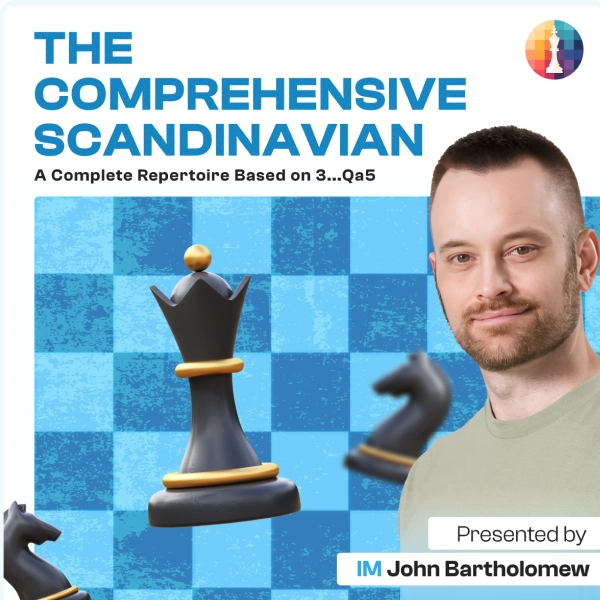
One of the most common mistakes amateur players make is trying to memorize long sequences of opening moves without understanding the ideas behind them. True opening mastery comes not from rote memorization but from grasping the strategic themes, typical pawn structures, and piece placements that define each system. Start by choosing one opening as White and one reliable defense as Black, and learn the first five to eight moves of the main lines along with the reasoning behind each move. For example, the Scandinavian Defense course teaches you not just the moves of this solid response to 1.e4, but the underlying positional concepts that help you navigate unfamiliar variations. Once you have a basic framework, the best way to internalize your repertoire is to put it into practice. Chessiverse bots each have distinct opening preferences, so you can deliberately play against bots that favor the systems you want to study. Playing the same opening repeatedly against different opponents — each with their own tendencies and typical responses — builds the kind of deep understanding that memorization alone can never provide. Over time, you will develop an intuitive feel for the positions that arise from your chosen openings, and you will find yourself navigating the early moves with confidence and purpose rather than anxiety.
Tactical Training: Sharpening Your Pattern Recognition
Tactics are the foundation upon which all chess improvement is built. No matter how well you understand positional principles or how deeply you have studied your openings, the ability to spot forks, pins, skewers, discovered attacks, back rank mates, and other combinational motifs is what ultimately decides the outcome of most games below the master level. The good news is that tactical ability responds remarkably well to consistent training. Solving tactical puzzles on a daily basis — even just ten to fifteen minutes — trains your brain to recognize recurring patterns and calculate variations more quickly and accurately. The key is to solve puzzles at an appropriate difficulty level: they should be challenging enough to require genuine thought but not so difficult that you spend twenty minutes staring at a single position without making progress. Complement your puzzle training with actual games, because the real test of tactical skill is spotting opportunities in the flow of a live game where no one has told you that a tactic exists. When you play against Chessiverse bots, they make the kind of realistic mistakes that create tactical opportunities — just like human opponents do. This means your puzzle training directly transfers to practical results at the board, creating a virtuous cycle where better pattern recognition leads to more wins, which in turn motivates further study.
Positional Understanding and Strategic Play
While tactics grab the headlines, positional understanding is the quiet engine that drives long-term chess improvement. Positional play is about making small, incremental decisions that gradually improve your position: strengthening your pawn structure, activating your pieces, controlling key squares, trading off your opponent's good pieces while preserving your own, and understanding the difference between a good bishop and a bad one. These concepts can feel abstract at first, but they become concrete and intuitive through practice. When you play against Chessiverse bots that have distinct positional styles — some favor aggressive piece play, others prefer solid pawn structures, and still others excel at quiet maneuvering — you naturally begin to absorb these strategic concepts through experience. You start to notice when your knight is beautifully placed on an outpost, or when your opponent's bishop is trapped behind its own pawns. Reading about how how our bots think can also give you insight into the different strategic approaches that exist in chess. The players who make the biggest leaps in rating are often those who develop a feel for when to play aggressively and when to play patiently — and that feel comes from exposure to a wide range of positional situations in your practice games.
Endgame Mastery: The Foundation of Chess Improvement
Ask any titled player what area of chess amateurs should study more, and the answer will almost universally be endgames. Despite being the least glamorous phase of the game, endgame knowledge is arguably the most impactful skill you can develop. Knowing how to convert a king and pawn ending, understanding the principles of rook endings, being able to execute basic checkmates with a rook or two bishops — these skills turn drawn positions into wins and lost positions into draws. The beauty of endgame study is that the principles are relatively stable and evergreen: the Lucena position, the Philidor position, the concept of opposition, and the technique of creating a passed pawn are just as relevant today as they were a hundred years ago. You can put your endgame knowledge to the test by working through curated practice positions that isolate specific endgame themes and challenge you to find the winning technique. Many players avoid endgame study because it feels less exciting than blasting out tactical combinations, but the confidence that comes from knowing you can convert a winning endgame is transformative. It changes the way you evaluate positions throughout the entire game, because you can accurately assess which simplified positions are winning and which are not.
Analyzing Your Games: Learning from Every Match
Playing games is essential for chess improvement, but playing games without reviewing them afterward is like attending lectures without ever studying your notes. Post-game analysis is where the real learning happens. After each game, take a few minutes to replay the moves and identify the critical moments: where did the evaluation shift? Where did you or your opponent make the biggest mistakes? Were there tactical opportunities that either side missed? Did you follow the principles of your opening preparation, or did you deviate and end up in an uncomfortable position? The goal is not to beat yourself up over every mistake but to develop honest self-awareness about your strengths and weaknesses. Over time, you will notice patterns in your errors — perhaps you consistently miss back rank threats, or you struggle with knight endgames, or you tend to play too passively when you have the initiative. These insights become the roadmap for your future practice sessions. When you track your games on Chessiverse, you build a personal library of instructive positions drawn from your own experience, which is far more memorable and relevant than studying random master games. Each game you analyze is an investment in your future chess strength.
Using AI Chess Bots for Targeted Practice
One of the unique advantages of practicing on Chessiverse is the ability to choose opponents that target specific areas of your game. Unlike a random human opponent on a standard chess server, our bots have carefully crafted personalities, playing styles, and opening repertoires. This means you can design practice sessions around your particular needs. Want to improve your ability to handle aggressive, tactical attacks? Choose a bot known for sharp, sacrificial play. Need to practice grinding out long positional games? Select a bot that favors solid, strategic approaches. Struggling against a particular opening? Find a bot that plays it regularly and get dozens of practice games in that exact system. This targeted approach, powered by PersonaPlay™ bots, is dramatically more efficient than random matchmaking because every game addresses a specific area of improvement. You can also play against computer opponents at precisely the right rating level — not so weak that you learn nothing from winning, and not so strong that every game feels hopeless. This calibrated challenge is the sweet spot for learning, and it is something that only an AI-powered platform with hundreds of distinct opponents can consistently provide.
Setting Achievable Rating Goals
Goal setting is a powerful tool for maintaining motivation and measuring progress, but only when the goals are realistic and well-structured. Rather than setting a vague goal like "get better at chess," break your improvement journey into concrete rating milestones. If you are currently rated around 600, aim for 800 as your first target. Once you reach 800, set your sights on 1000, then 1200, then 1400, and so on. Each of these milestones represents a genuine and meaningful increase in chess understanding. The jump from 600 to 800 typically involves mastering basic tactics and avoiding one-move blunders. Moving from 800 to 1000 usually means developing a basic opening repertoire and improving your endgame technique. The 1000 to 1200 range often involves learning to think more strategically and calculate two or three moves ahead consistently. By understanding ratings and what they represent, you can celebrate each milestone as a genuine achievement while keeping your eyes on the next target. It is also important to recognize that improvement is not always linear — there will be periods of rapid progress followed by plateaus, and that is completely normal. The players who ultimately reach the highest levels are those who stay patient during the plateaus and trust that their consistent practice will eventually produce breakthroughs.
Common Practice Mistakes to Avoid
Even dedicated chess students can fall into habits that slow their improvement or stall it altogether. One of the most common mistakes is playing too fast. When you blitz through games without thinking deeply about your moves, you reinforce bad habits rather than building good ones. Slow down, especially during practice sessions, and treat each move as an opportunity to improve your decision-making process. Another frequent error is neglecting post-game analysis — if you play ten games in a row without reviewing any of them, you are likely repeating the same mistakes over and over. A third pitfall is only playing opponents who are significantly weaker than you. While winning feels good, it does not push you to grow. Seek out challenging opponents who expose your weaknesses and force you to raise your level of play. Many players also make the mistake of ignoring endgame study in favor of flashy opening preparation, when in reality a solid endgame foundation would win them far more games. Finally, some players study chess passively — watching videos or reading articles without actively engaging with the material on a board. If you find yourself falling into any of these traps, our beginner's guide can help you reset your practice approach and build better habits from the ground up.
The Mental Side of Chess Practice
Chess is as much a mental game as it is an intellectual one. Your emotional state, your confidence level, and your ability to manage frustration all have a direct impact on the quality of your play. One of the most destructive patterns in chess is "tilt" — the state of emotional frustration that leads to reckless, impulsive moves after a tough loss or a missed opportunity. Learning to recognize when you are tilting and stepping away from the board before it spirals into a losing streak is a crucial skill that many players underestimate. This is one area where practicing against AI bots offers a significant advantage over human opponents: there is no social pressure, no fear of embarrassment, and no opponent chat to trigger frustration. You can experiment with new ideas, try risky strategies, and lose without any consequences beyond the learning experience itself. This low-pressure environment makes it easier to maintain a healthy relationship with the game and to approach each practice session with curiosity rather than anxiety. If you find yourself feeling discouraged after a string of losses, take a break, come back fresh, and play free chess at a comfortable pace. Remember that every strong player has lost thousands of games on their way to mastery — what matters is not whether you lose, but whether you learn something from each loss and come back a little stronger the next time.







 Featured by Leading Chess Creators