


Why Are So Many Chess Players Stuck at the Same Rating?
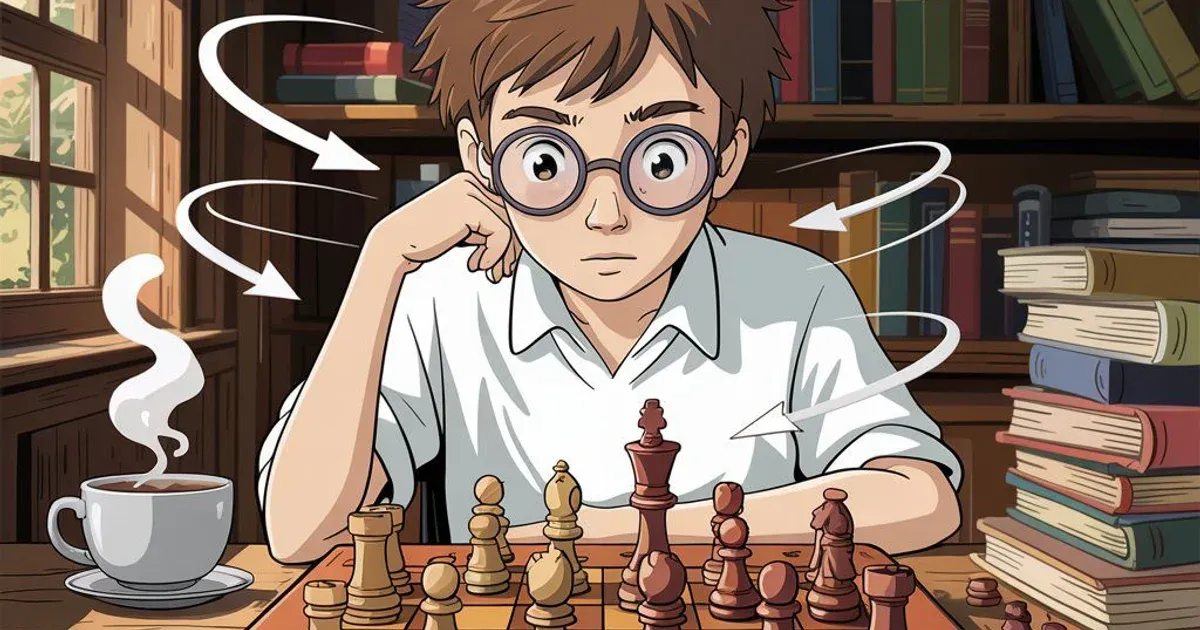
If you have been playing chess for months or even years and your rating refuses to budge, you are in good company. Thousands of players hit a wall at 800, 1200, or 1800 and cannot figure out how to push past it. The frustrating truth is that simply playing more games will not make you better. Improvement demands focused, deliberate practice that targets the exact habits holding you back.
This guide breaks down the most common reasons players stagnate, offers actionable solutions for each one, and shows how training against personality-driven chess bots on Chessiverse can accelerate your progress.
Common Chess Plateaus and Solutions
| Plateau Rating | Typical Cause | Warning Signs | Solution |
|---|---|---|---|
| 600–800 | Playing too fast, no blunder check | Losing pieces every game | Slow down, check each move for safety |
| 900–1100 | Only tactics, no strategy | Win material but lose games | Study basic positional ideas |
| 1200–1400 | No opening repertoire | Bad positions out of the opening | Learn 2–3 openings properly |
| 1500–1700 | Not analyzing own games | Repeating same mistakes | Review every loss with an engine |
| 1800+ | Lack of deep calculation | Missing complex tactics | Solve hard puzzles, study combinations |
You Keep Repeating the Same Mistakes
The number-one reason players stay stuck is that they make the same errors game after game without ever recognizing the pattern. You might consistently underestimate an opponent's knight outpost, fail to guard back-rank threats, or choose the wrong pawn break in familiar structures. Without a feedback loop, those mistakes become habits. Our comprehensive guide on how to improve at chess covers how to build the structured practice routine that breaks this cycle.
How to fix it:
- Analyze every game you lose. Spend at least five minutes reviewing the critical moment where the position turned.
- Write down recurring themes. If you notice the same type of blunder three times in a week, that is your priority weakness.
- Practice against bots that punish those specific weaknesses. On Chessiverse, you can play chess against computer opponents whose styles are designed to exploit positional mistakes, tactical oversights, or endgame errors.
Blitz Addiction Is Holding You Back
Speed chess is entertaining, but it can actively harm your development if it is your only form of training. In blitz, you rely on instinct and pattern recognition. You rarely calculate deeply, and you almost never pause to evaluate whether your plan actually makes sense. Over time, blitz reinforces sloppy thinking. If speed chess is your main format, read our advice on how to get better at blitz and bullet chess to make those games more productive.
How to fix it:
- Dedicate at least half of your chess time to longer games where you can think for two or three minutes on critical moves.
- After each longer game, review it move by move. Ask yourself what your plan was and where it broke down.
- Use Chessiverse bots for structured practice sessions. Unlike stressful blitz games against strangers, bot training lets you take your time, think deeply, and build proper calculation habits in a low-pressure environment.
You Blunder Pieces Despite Knowing Better
Almost every improving player has experienced this: you know you should check for threats, yet you drop a piece to a simple tactic. This happens because knowledge and habit are not the same thing. You may understand that you should scan for forks and pins, but under the pressure of a real game you skip the check.
How to fix it:
- Train tactics daily. Even fifteen minutes of puzzle work on sites like Lichess or Chess.com builds the pattern recognition that makes threat detection automatic.
- Develop a pre-move checklist. Before every move, ask: "What does my opponent's last move threaten? Is my intended move safe?"
- Play against Chessiverse bots that are specifically designed to punish careless play. Bots in the Hunter and Savage PersonaPlay categories will exploit every loose piece and unguarded square, training you to stay alert.
You Memorize Openings but Do Not Understand Them
Many players invest hours learning opening theory move by move, expecting it to translate into wins. But memorization without understanding leads to disaster as soon as the opponent deviates from the book line. You reach the middlegame with developed pieces but no plan, and your advantage evaporates.
How to fix it:
- Focus on opening principles rather than specific move orders. Understand why each move is played, what structures arise, and what the typical middlegame plans look like. Browse the openings library for explanations of the key ideas behind every popular system.
- Study master games in your chosen openings to see how strong players handle the resulting positions.
- Play against Chessiverse bots programmed to expose middlegame weaknesses. These bots will take you out of book early and force you to navigate plans on your own, building real understanding rather than superficial memorization.
Your Endgame Knowledge Is Weak
Endgames decide a surprising number of games, yet most players below 1800 spend almost no time studying them. If you cannot convert a won rook endgame or fail to recognize basic king-and-pawn positions, you are leaving points on the table in every single game that reaches the final phase.
How to fix it:
- Master the essential theoretical endgames first: king and pawn versus king, opposition, the Lucena position, and the Philidor position.
- Practice endgame scenarios repeatedly until the correct technique becomes second nature.
- Use Chessiverse bots to simulate common endgame situations. Guardian-style bots are excellent training partners for endgame practice because they defend tenaciously, forcing you to find the precise winning technique. Learn more about how Chessiverse bots are created to understand what makes each bot's style unique.
You Know Chess Concepts but Cannot Apply Them
There is a well-known gap between passive knowledge and active skill. You might understand piece activity, pawn structure, and prophylaxis in the abstract, yet struggle to apply those ideas when the clock is ticking and the position is messy. This gap is what separates studying from training.
How to fix it:
- Practice with intention. Before each training session, choose one concept to focus on, such as controlling open files or creating outposts.
- Review your games specifically for how well you applied the concept, not just whether you won or lost.
- Use Chessiverse's PersonaPlay training system. Each bot has a distinct personality and style, from aggressive attackers to patient positional grinders, so you can practice applying specific concepts against the playing style that tests them most.
Your Training Lacks Structure and Motivation
Random puzzles and aimless games can lead to burnout without meaningful improvement. Without clear goals, it is easy to lose motivation or to keep practicing the things you are already good at while avoiding your real weaknesses. Developing the psychology behind a winning mindset can help you stay focused and resilient through training plateaus.
How to fix it:
- Set short-term, measurable goals for each training session. Examples include "complete 20 tactical puzzles with 80 percent accuracy" or "beat a 1300-rated bot without blundering material."
- Rotate between different types of training: tactics, positional play, endgames, and full games.
- Use Chessiverse's library of 1000+ bots as a gamified training system. Choose a specific bot to beat, track your win rate, and move on to the next challenge once you consistently win. This progression provides built-in motivation and structure.
How the Chessiverse Training System Helps You Break Through
Unlike generic chess platforms, Chessiverse offers a unique AI-driven training experience designed to target your specific weaknesses:
- Target specific weaknesses by selecting bots whose playing style exploits them. Struggling against tactical players? Face a Hunter bot. Losing to solid defenders? Challenge a Guardian.
- Play against 1000+ chess bots with unique personalities, styles, and rating ranges. The variety ensures you never plateau from facing the same type of opponent. Discover how Chessiverse ratings work so you can choose the right difficulty level.
- Experience realistic game conditions that prepare you for tournament and casual play alike.
- Track your progress with in-game feedback and guided learning paths.
Whether you are stuck at beginner or intermediate level, Chessiverse helps you train smarter, not just harder. Mid-rated club players can also browse our shortlist of the best chess bot for 1500-rated players for a curated set of opponents at the typical plateau.
Take the First Step Toward Your Next Rating Breakthrough
If you are asking yourself "Why can't I get better at chess?", know that you are not alone and you are not hopeless. The key is to identify your specific roadblocks, focus your training on those areas, and use modern tools that provide meaningful, targeted practice.
Stop playing another random blitz game. Train with purpose, and let Chessiverse be your secret weapon to unlock your next breakthrough. Play chess against computer opponents with real personality and start improving today.
Related Comparisons
- Best Chess Platform for Competitive Improvers — Break through your plateau with the right tools
- AI Chess Training vs Human Coaching — Which approach works better?