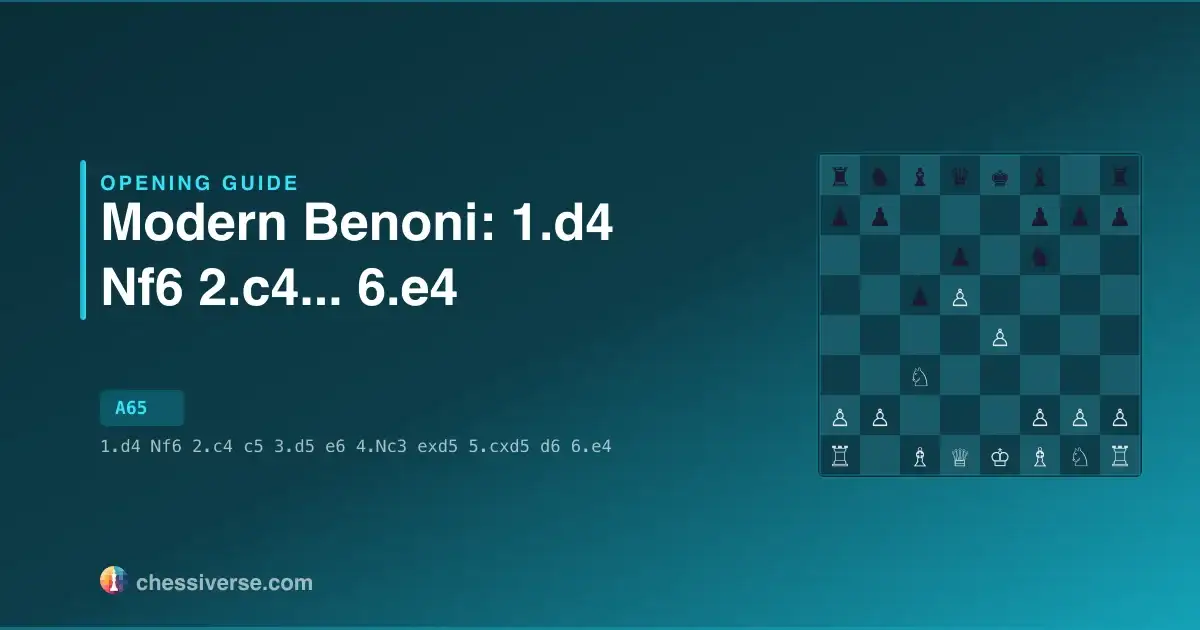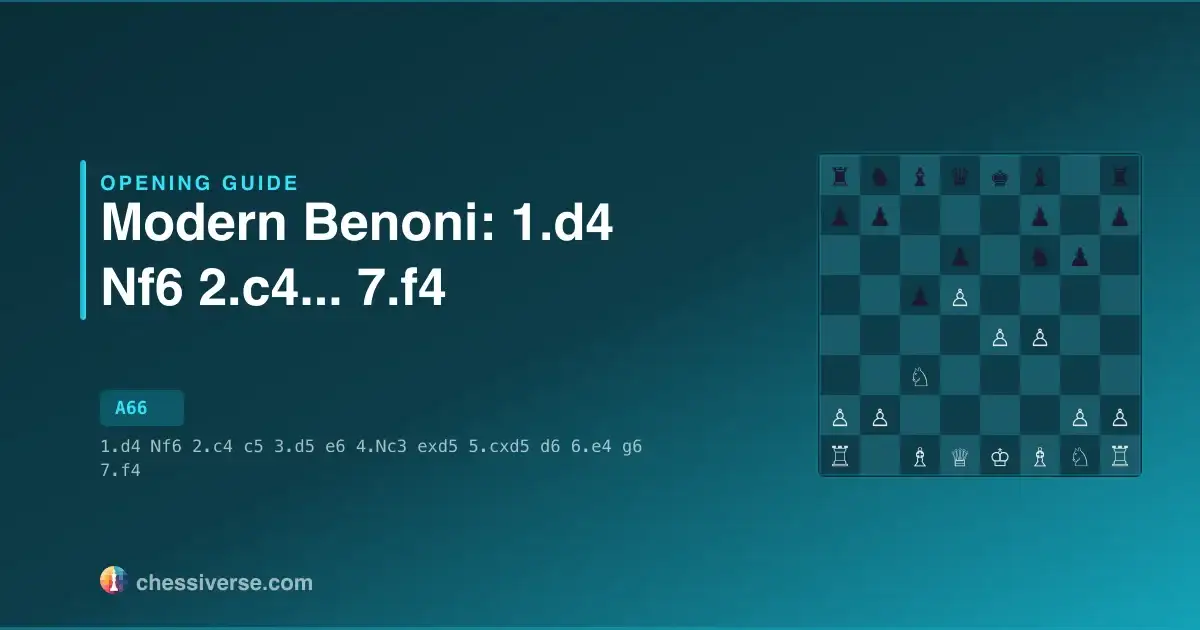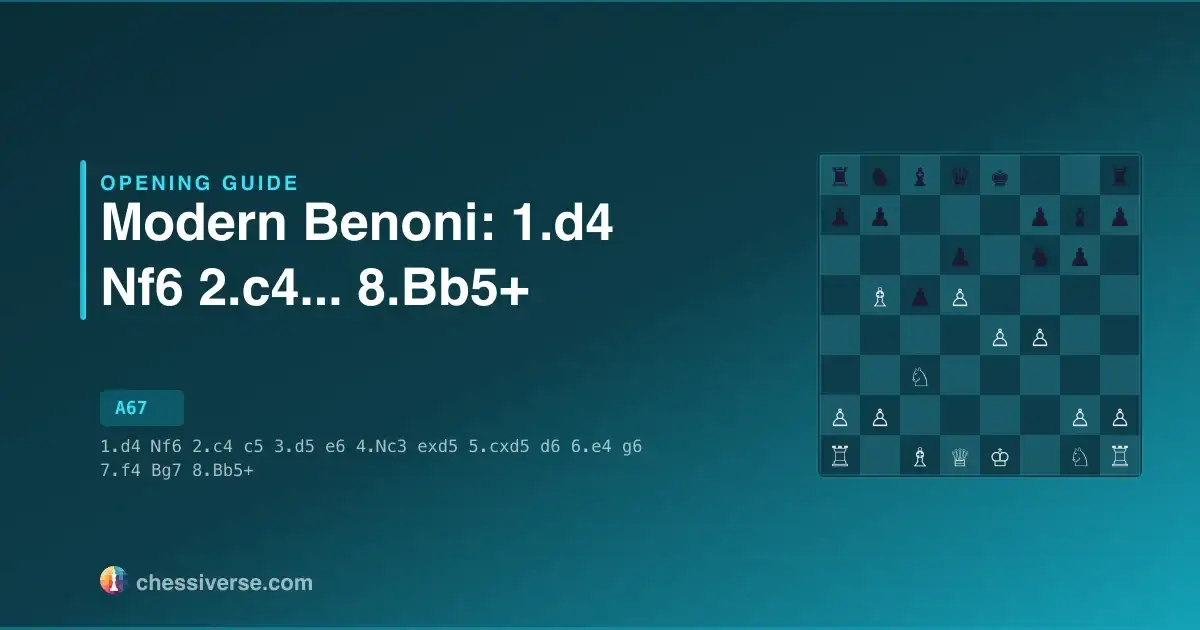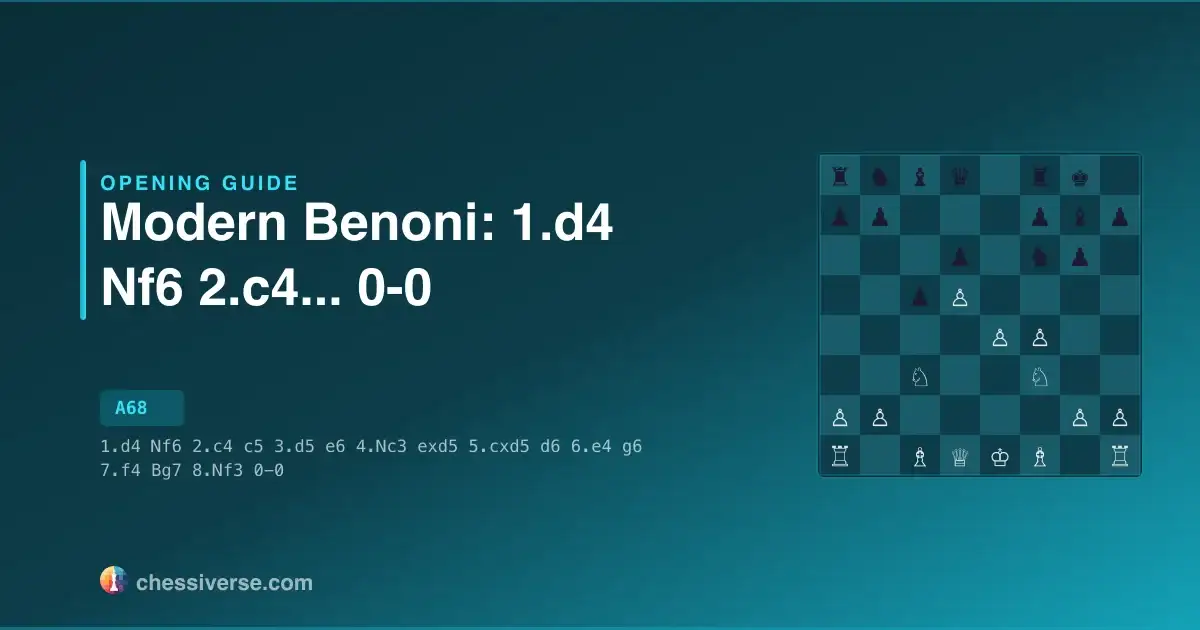




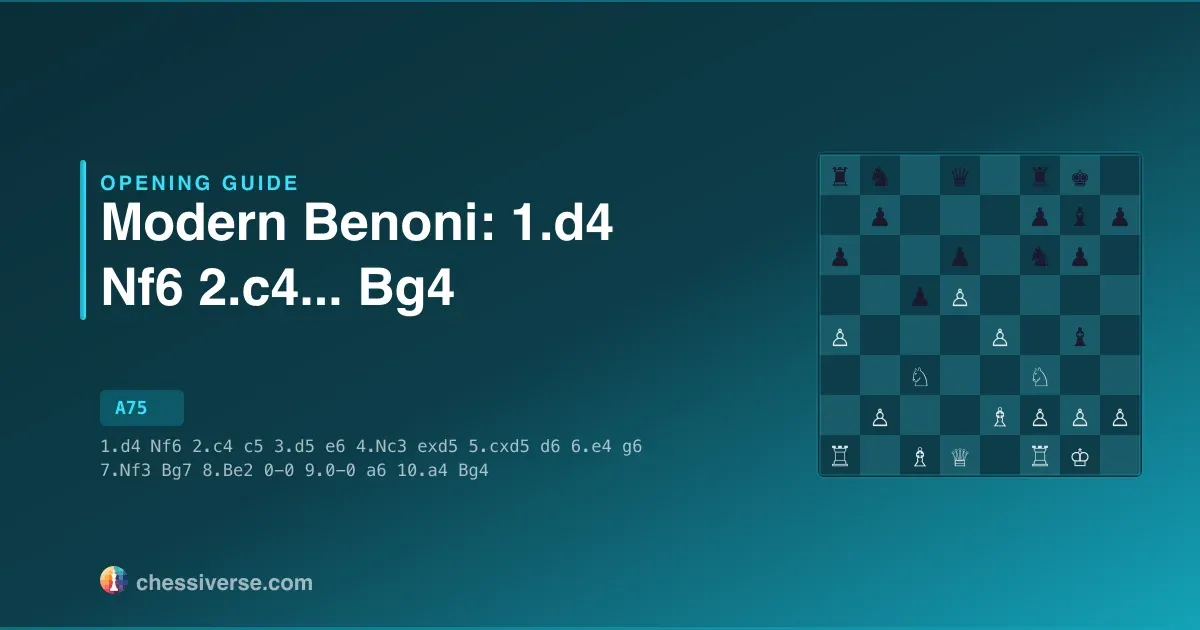
1.d4 Nf6 2.c4 c5 3.d5 e6 4.Nc3 exd5 5.cxd5 d6 6.e4 g6 7.Nf3 Bg7 8.Be2 0-0 9.0-0 a6 10.a4 Bg4 opens the Benoni Defense: Classical Variation, Argentine Counterattack, ECO A75. With 20,134 games on record, the patterns below come from the largest practical sample available.
History and Notable Players
It arises from the Benoni Defense: Classical Variation, Full Line. Among the most prolific White practitioners are Svetozar Gligoric (10 games), Krzysztof Panczyk (5 games), Alexander G Beliavsky (5 games). Black-side regulars include Roi Reinaldo Castineira (7 games), Nick E De Firmian (5 games), Milos Pavlovic (4 games).
Move Diversity and Theory Depth
Move choice is far from uniform in the Benoni Defense: Classical Variation, Argentine Counterattack. Below 1600 the samples are small (17 games at 1200, 80 at 1400), so the comparison starts at 1600, with 615 games. There, the top reply is h3, played 40.4% of the time. Four other moves each take at least 5% of games, and the top three moves account for 72.7% of games. Entropy: 2.58. By 2500 (553 games), Nd2 takes over as the top reply at 45.4%; only two other moves still reach 5% and the top three moves account for 90.6% of games. Entropy drops to 2.02. The narrowing is significant — strong players consolidate around a small set of best moves, while amateurs scatter across many plausible-looking options.
Common Mistakes
- Neglecting development — It can feel productive to make extra pawn moves early, but falling behind in piece development is what loses most amateur games — especially in open positions where active pieces find squares fast.
- Letting White own the centre — Hypermodern openings concede central space on purpose, but only if you strike back in time. Delay the counter-blow and you end up squeezed.
Practice on Chessiverse
Ready to try the Benoni Defense: Classical Variation, Argentine Counterattack against a bot? Pick an opponent at your level and play a game.