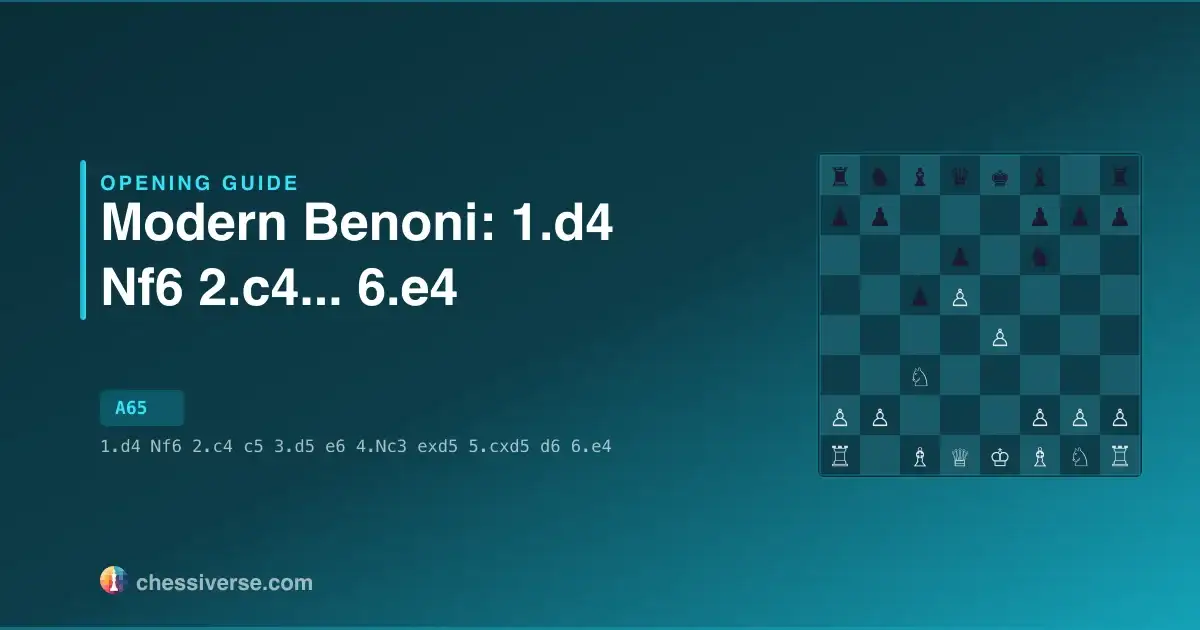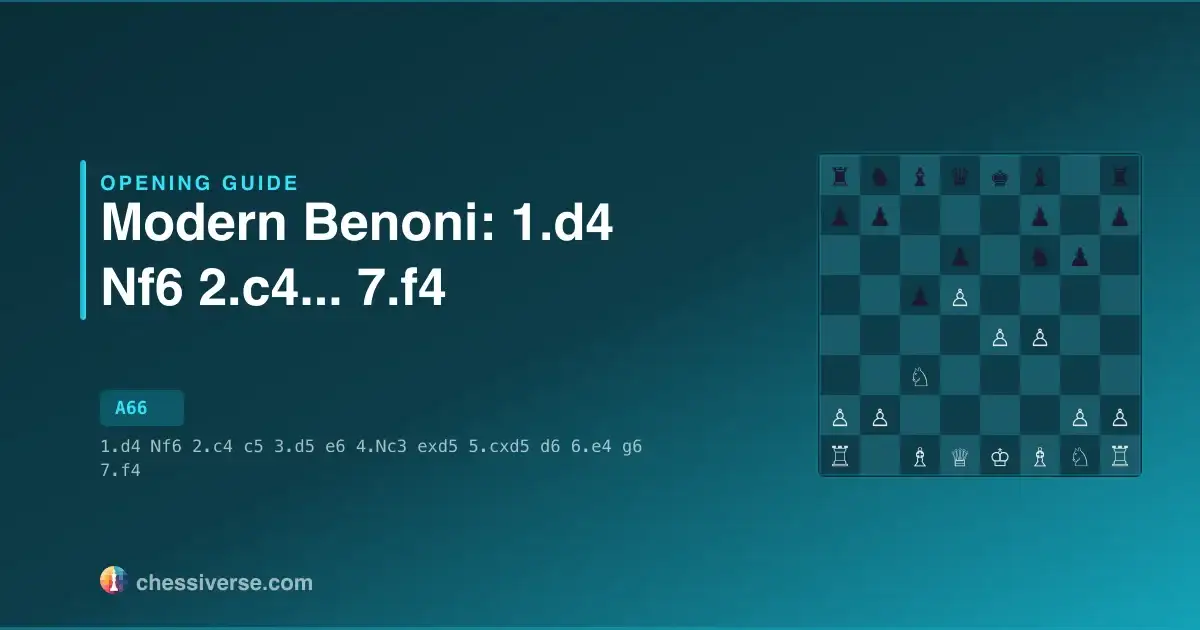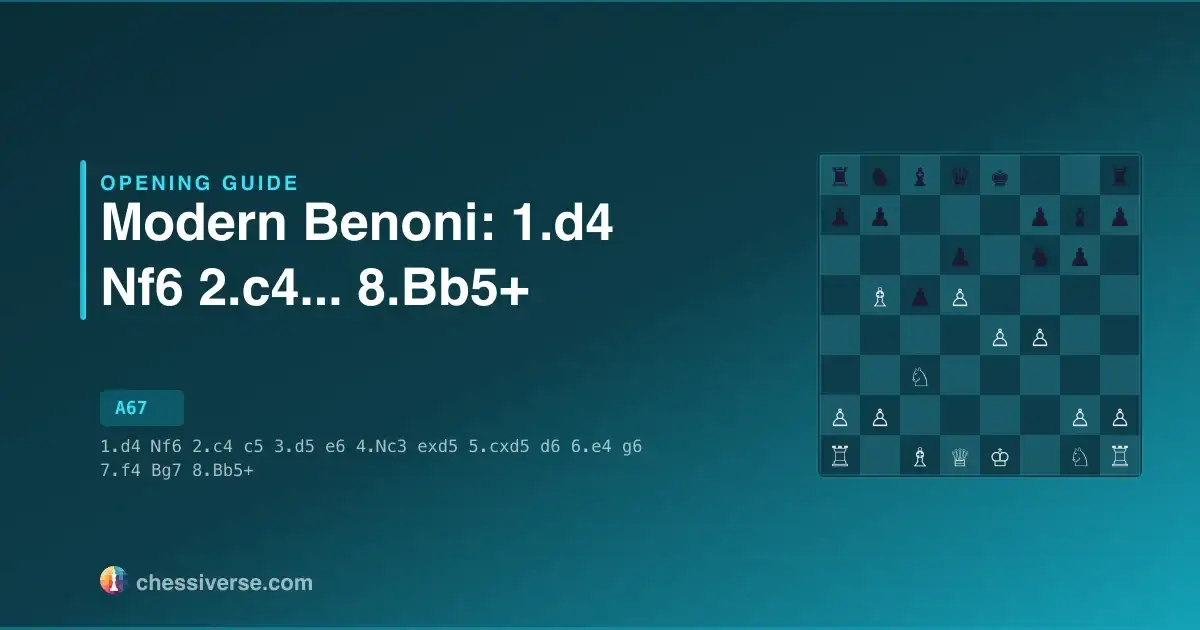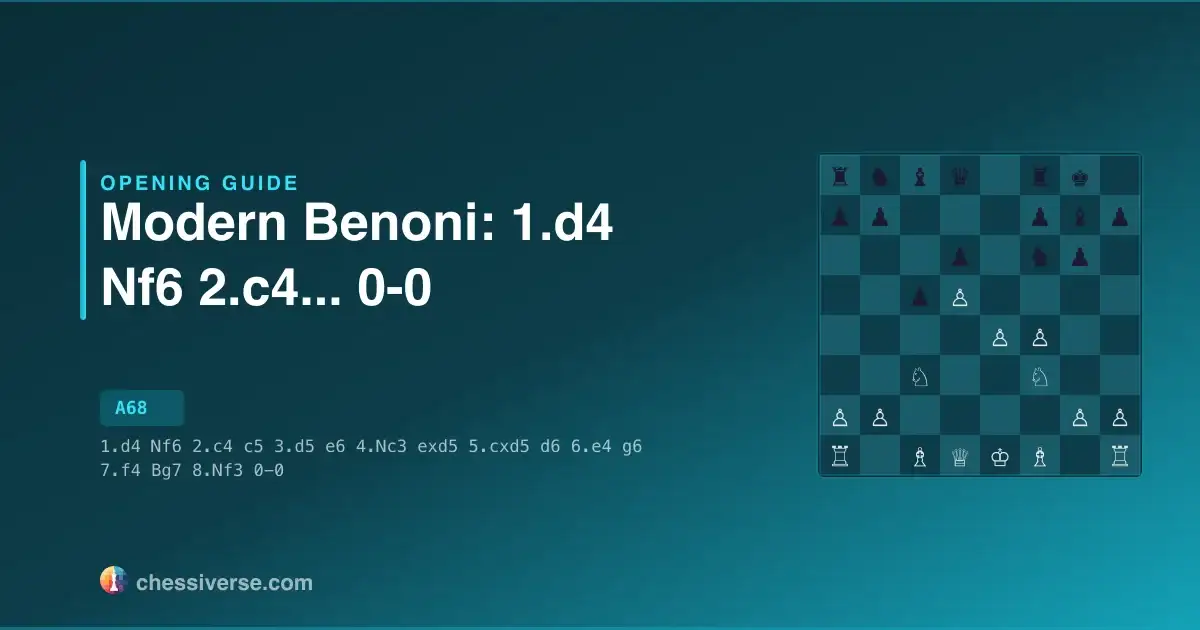




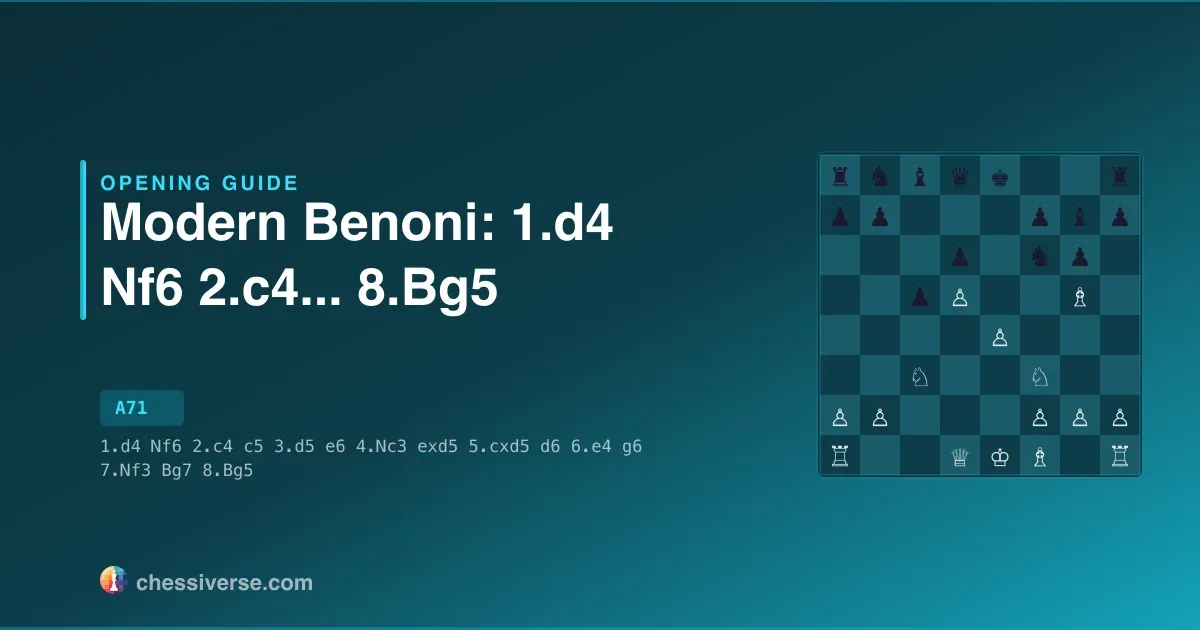
Starting from 1.d4 Nf6 2.c4 c5 3.d5 e6 4.Nc3 exd5 5.cxd5 d6 6.e4 g6 7.Nf3 Bg7 8.Bg5, players enter the Benoni Defense: Classical Variation, Averbakh-Grivas Attack — ECO A71. Across rating levels it shows up in 136,905 recorded games — enough data to map exactly where it succeeds and where it stalls.
History and Notable Players
It arises from the Benoni Defense: Classical Variation. On the White side, Carsten Hoi (10 games), Ariel Sorin (10 games), Alexander Mikhalevski (9 games) top the database. Notable Black exponents: Krunoslav Hulak (5 games), Dan Cramling (4 games), Werner Golz (4 games).
Move Diversity and Theory Depth
Looking at move selection shows how forcing — or not — the position really is. At 1200 Elo (2,279 games), the top reply is O-O, played 61% of the time. Three other moves each take at least 5% of games, and the top three moves account for 80.1% of games. Entropy: 2.04. By 2500 (695 games), O-O dominates at 55.4% of replies; only two other moves still reach 5% and the top three moves account for 95.8% of games. Entropy drops to 1.56.
Common Mistakes
- Drifting away from main theory — At 1000 Elo, the three most-played moves cover 80.4% of games, against 89.2% at 2000. The most popular deviation is Nbd7 (played 6.3% of the time at 1000, much less so up top). It looks fine but quietly hands the better-prepared side an edge.
- Neglecting development — Extra pawn moves in the opening are tempting, especially when you "know the moves". Developing a piece each turn is the simple correction.
- Letting White own the centre — Hypermodern openings concede central space on purpose, but only if you strike back in time. Delay the counter-blow and you end up squeezed.
Practice on Chessiverse
Ready to try the Benoni Defense: Classical Variation, Averbakh-Grivas Attack against a bot? Pick an opponent at your level and play a game.