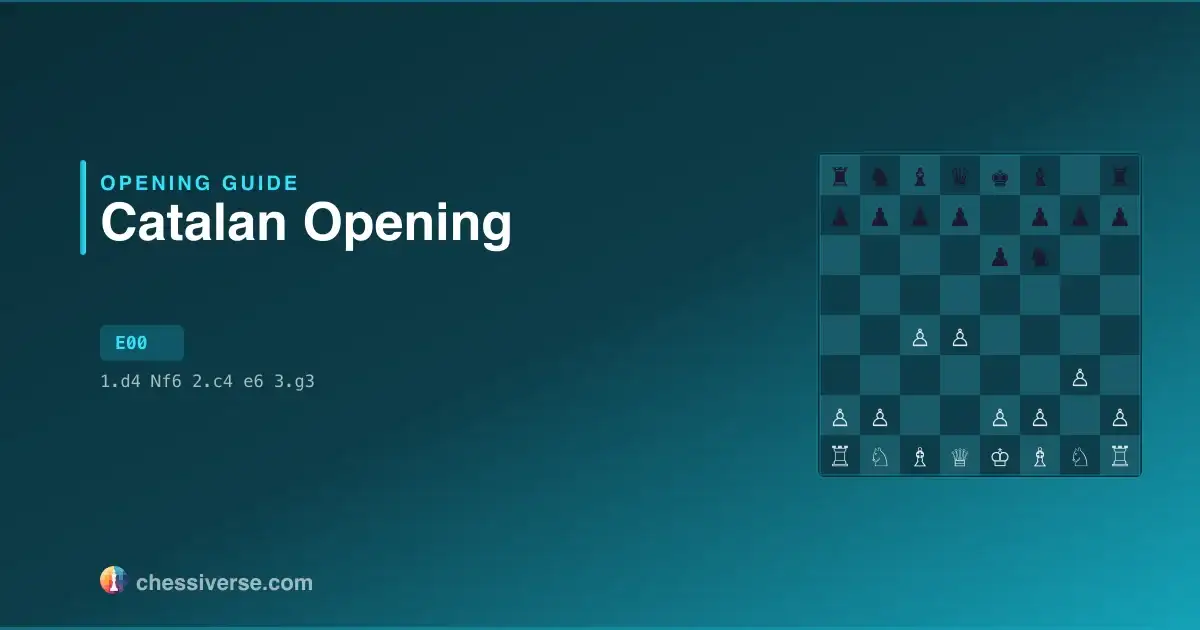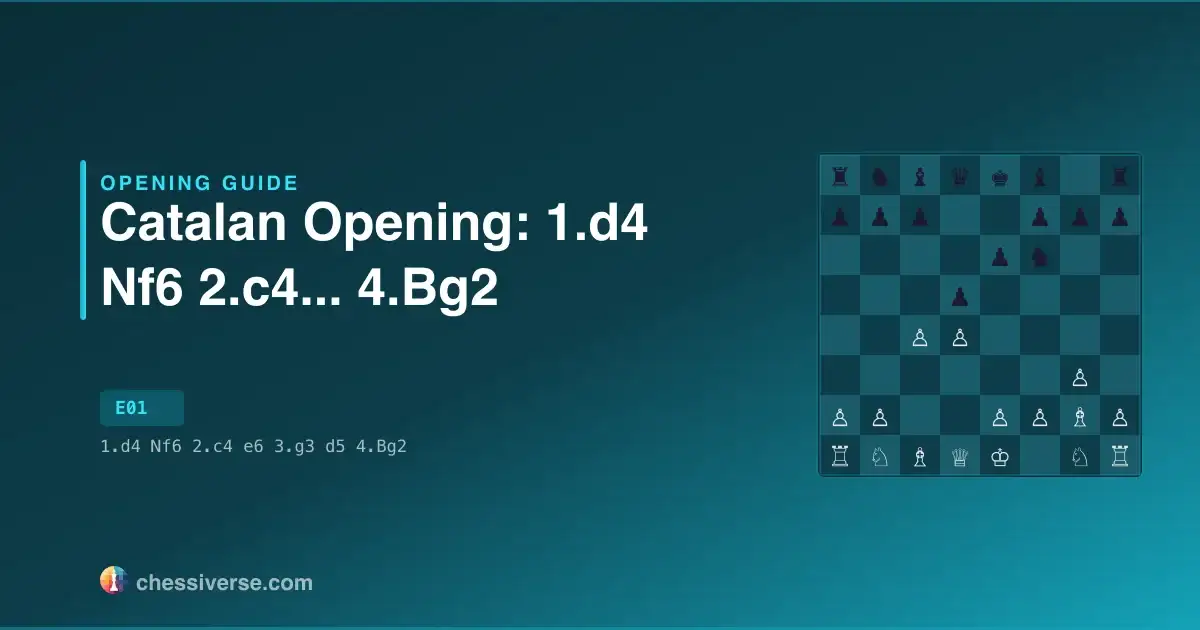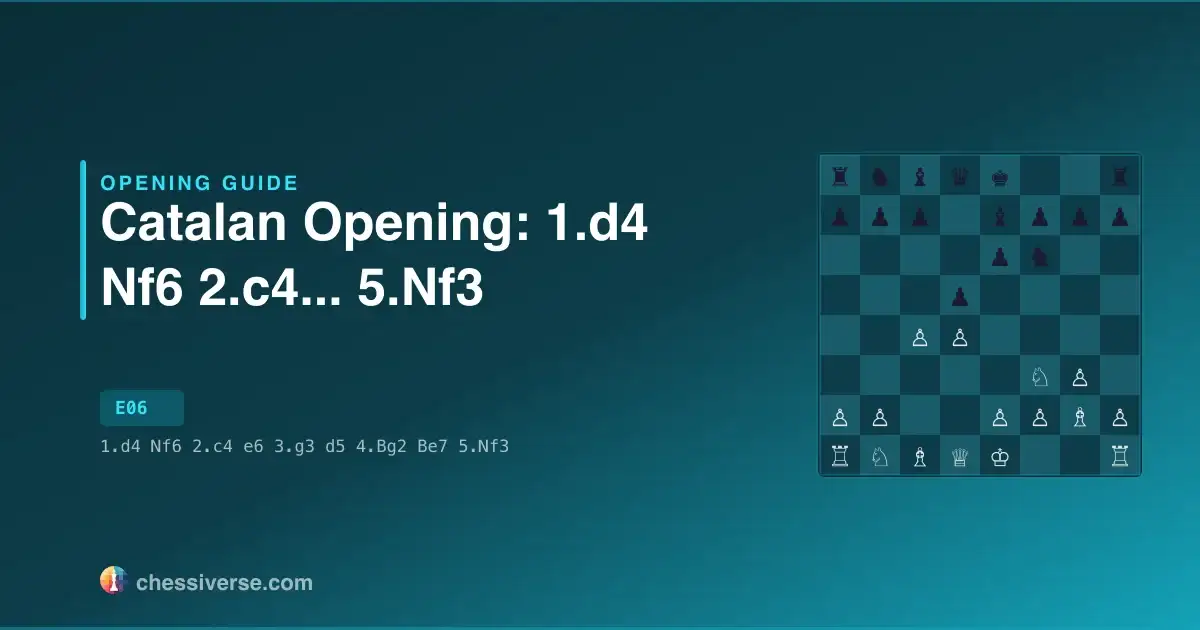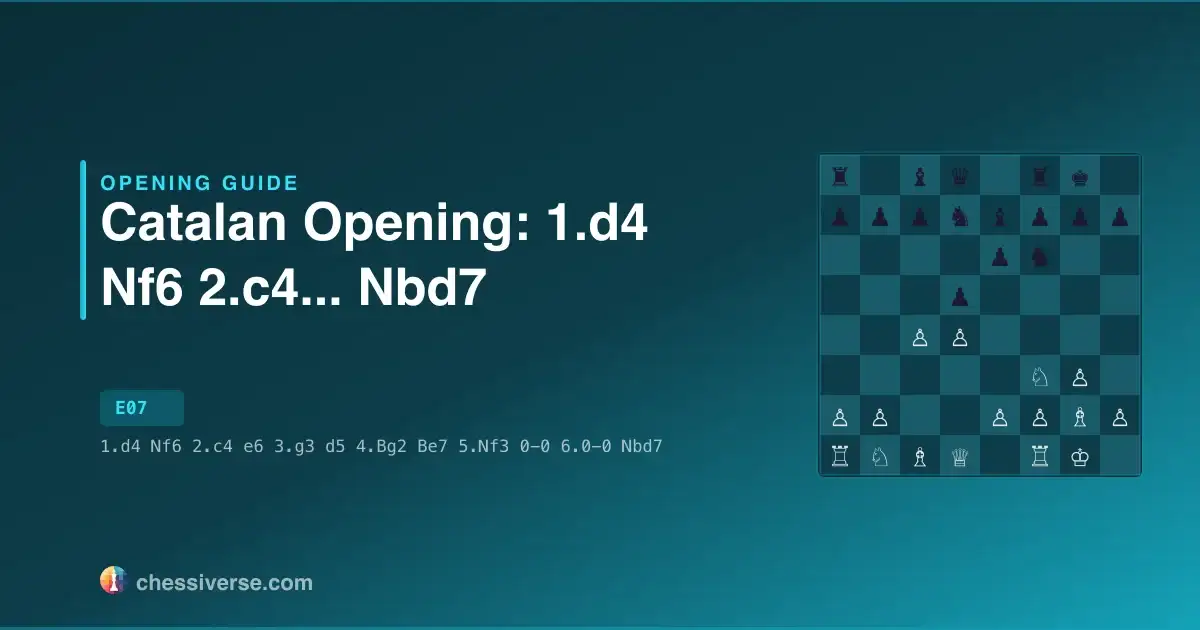


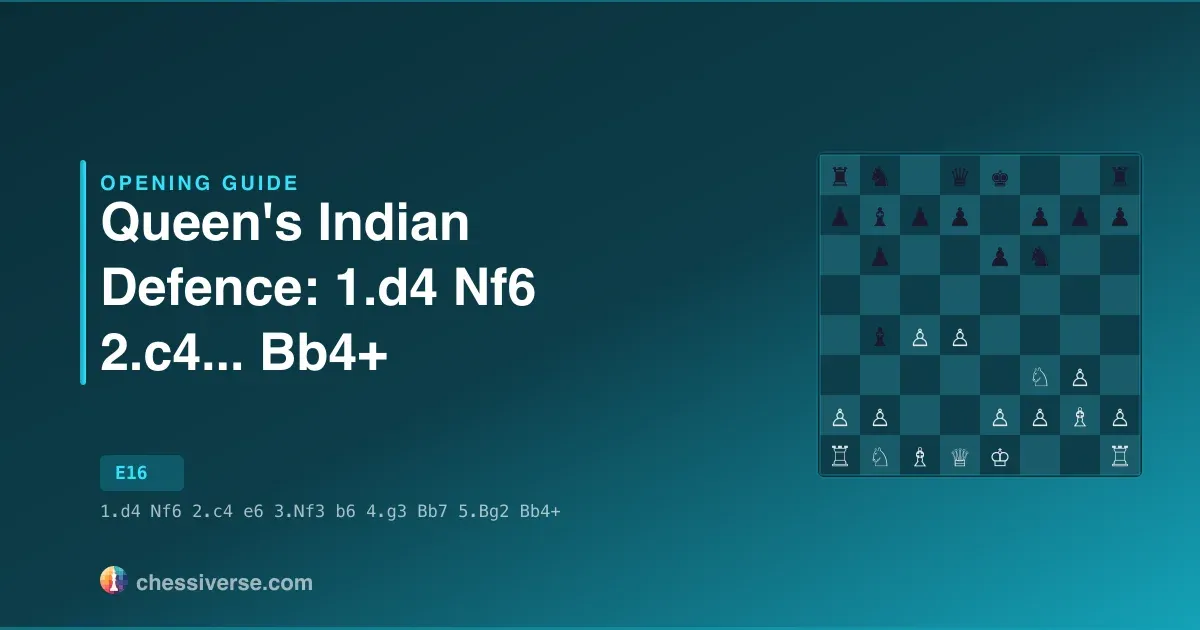
1.d4 Nf6 2.c4 e6 3.Nf3 b6 4.g3 Bb7 5.Bg2 Bb4+ opens the Queen's Indian Defense: Capablanca Variation, ECO E16. With 216,900 games on record, the patterns below come from the largest practical sample available.
History and Notable Players
It arises from the Queen's Indian Defense: Fianchetto Variation. Among the most prolific White practitioners are Borislav Ivkov (12 games), Milan Sr Vidmar (9 games), Max Euwe (9 games). Black-side regulars include Viktor Korchnoi (23 games), Laszlo Zsinka (20 games), Edgard Colle (14 games).
Performance Across Rating Levels
Popularity and results vary sharply by rating level. The 1200 bracket has 2,193 games (0.00% of all games at that level); White wins 52.8%, Black 43.4%, 3.8% are drawn. By 1800, popularity is 0.01% and White's score is 50.8% to Black's 42.8%. Among 2500-rated players the line appears in 0.07% of games and draws spike to 12.2%, indicating tight preparation. White's edge erodes by 6.7pp from 1200 to 2500 Elo, suggesting Black's counterplay is easier to find with experience.
Move Diversity and Theory Depth
Move choice is far from uniform in the Queen's Indian Defense: Capablanca Variation. At 1200 Elo (2,188 games), the top reply is Bd2, played 62.4% of the time. Two other moves each take at least 5% of games, and the top three moves account for 99.8% of games. Entropy: 1.29. By 2500 (9,406 games), Bd2 dominates at 78.6% of replies; only one other move still reaches 5% and the top three moves account for 99.3% of games. Entropy drops to 0.86.
Common Mistakes
- Neglecting development — It can feel productive to make extra pawn moves early, but falling behind in piece development is what loses most amateur games — especially in open positions where active pieces find squares fast.
- Letting White own the centre — Hypermodern openings concede central space on purpose, but only if you strike back in time. Delay the counter-blow and you end up squeezed.
Practice on Chessiverse
Ready to try the Queen's Indian Defense: Capablanca Variation against a bot? Pick an opponent at your level and play a game.