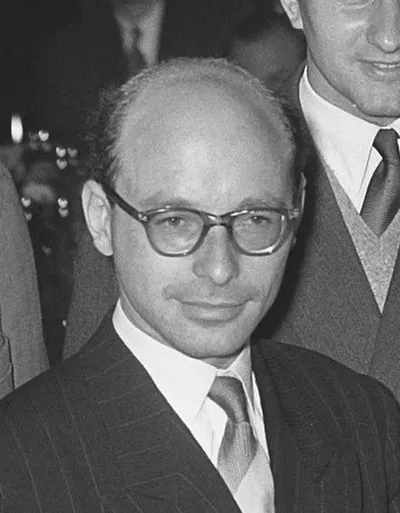
David Bronstein (1924 to 2006) was a Soviet and Russian chess player who narrowly missed becoming World Champion in 1951. He was born in Bila Tserkva in Ukraine to Jewish parents, learned chess from his grandfather at six, and was trained in Kiev by Alexander Konstantinopolsky. He earned the Soviet Master title at 16. His peers described him as a creative genius and a master of tactics, and he was one of the world's strongest players from the mid-1940s into the mid-1970s.
Bronstein placed third in the 1945 USSR Championship and tied for first in the Soviet Championships of 1948 and 1949. He won the 1948 Saltsjöbaden Interzonal, became a grandmaster in 1950, and won the 1950 Candidates after a playoff against his close friend Isaac Boleslavsky. In the 1951 World Championship match he tied 12 to 12 with Mikhail Botvinnik, each player winning five games. The drawn match left Botvinnik as champion. He is widely considered one of the greatest players never to win the World Championship.
Bronstein enjoyed offbeat openings such as the King's Gambit, though he generally did not use them in serious games. Like most grandmasters of his era he favoured queen's pawn openings, such as the Queen's Gambit, the King's Indian Defence and the Nimzo-Indian Defence. The Bronstein-Larsen Variation of the Caro-Kann Defence carries his name. He was also an early advocate of faster chess and in 1973 proposed adding a small time increment per move, an idea now used on almost all digital clocks.
His attacking win over Ludek Pachman in Prague in 1946 attracted worldwide acclaim. In game 22 of the 1951 title match he beat Botvinnik with a deep combination against the back rank, taking a one-game lead with two games to play. At the 1953 Zürich Candidates he defeated Samuel Reshevsky in a crucial game. His book on that event, Zurich International Chess Tournament 1953, is widely considered one of the greatest chess books ever written.
You can play the David Bronstein legend bot on Chessiverse. It is an independent historical simulation of his style, not endorsed by the player or his estate.
Sources: David Bronstein on Wikipedia