





















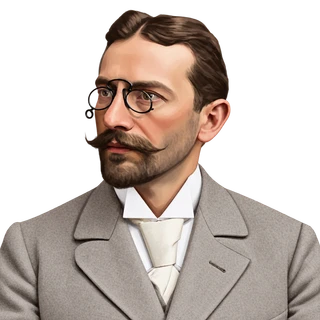
Siegbert Tarrasch
Siegbert Tarrasch says: Greetings, and welcome to the board. I am Tarrasch, ready for a game whenever you are. Take a seat, choose your colour, and let us see what the position has to teach us both.
 Represents Germany
 Born Poland 1862
Free, independent historical simulation in the Hall of Legends
Siegbert Tarrasch was a towering figure in late nineteenth and early twentieth century chess, regarded as one of the strongest players and most influential theoreticians of his time. His systematic approach to positional play and opening theory helped codify the principles that would shape modern chess thinking for generations.
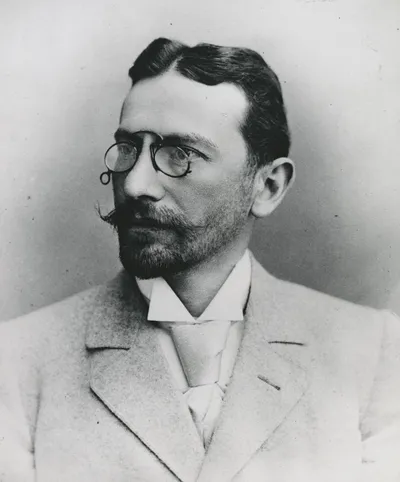
Siegbert Tarrasch (1862 to 1934) was a German chess player and one of the strongest players and most influential theoreticians of the late 19th and early 20th centuries. He was born in Breslau, now Wrocław in Poland, studied medicine in Berlin and Halle, and ran a successful medical practice in Nuremberg and later Munich. He was Jewish, converted to Christianity in 1909, and lost a son in World War I.
Tarrasch may have been the best player in the world in the early 1890s. He won four major tournaments in succession: Breslau 1889, Manchester 1890, Dresden 1892 and Leipzig 1894. He scored heavily against the ageing World Champion Wilhelm Steinitz in tournament games but declined a chance to challenge him in 1892 because of his medical practice. In 1893 he drew a hard-fought match with Mikhail Chigorin in St Petersburg. After Emanuel Lasker became champion in 1894, Tarrasch could not match him, and Lasker beat him in their 1908 world title match with eight wins, three losses and five draws. He still crushed Frank Marshall in a 1905 match, won Ostend 1907, and finished fourth at St Petersburg 1914 behind Lasker, José Raúl Capablanca and Alexander Alekhine. His win over Capablanca in the 19th round helped Lasker win that tournament.
Tarrasch was a very influential writer, known as Praeceptor Germaniae, "Teacher of Germany". He made Steinitz's ideas, such as control of the centre, the bishop pair and space, accessible to ordinary players, and placed more stress than Steinitz on piece mobility. He disliked cramped positions, saying they "had the germ of defeat". The Tarrasch rule in rook endgames says rooks belong behind passed pawns. The hypermodern school of Richard Réti, Aron Nimzowitsch and Savielly Tartakower attacked his ideas as dogmatic, but many modern masters do not see his actual play that way.
His win with Black against Louis Paulsen at Nuremberg 1888 in the Advance French is a well-known example of his style. His favourite defence to the Queen's Gambit was the Tarrasch Defence, about which he said: "The future will decide who has erred in estimating this defense, I or the chess world!" The Tarrasch Variation of the French Defence (3.Nd2) is still one of the main lines.
You can play the Siegbert Tarrasch legend bot on Chessiverse. It is an independent historical simulation of his style, not endorsed by the player or his estate.
Sources: Siegbert Tarrasch on Wikipedia
Picked for a similar opening repertoire, era and country.
These AI opponents play the same openings as Siegbert Tarrasch.
Free, independent historical simulation. Not endorsed by the player or their estate.
Siegbert Tarrasch says: Greetings, and welcome to the board. I am Tarrasch, ready for a game whenever you are. Take a seat, choose your colour, and let us see what the position has to teach us both.
Are you an aggressive attacker like Tal, a positional genius like Carlsen, or a solid defender like Petrosian? Take our free personality test to find out which archetype matches your playing style.
Take the Chess Personality Test