Summary
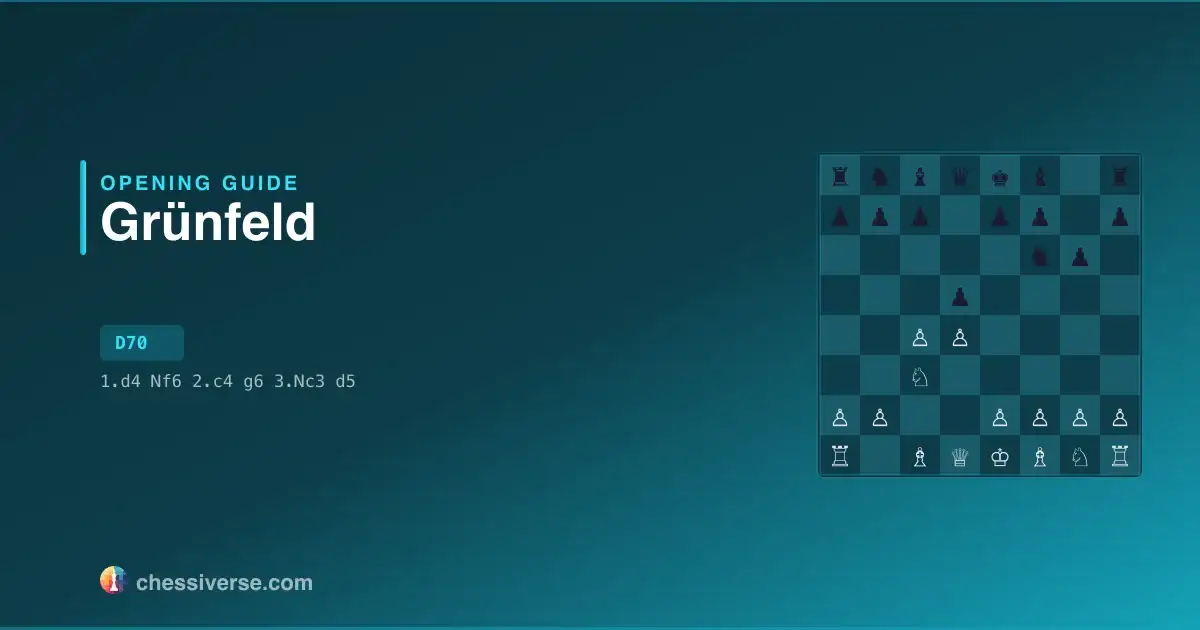
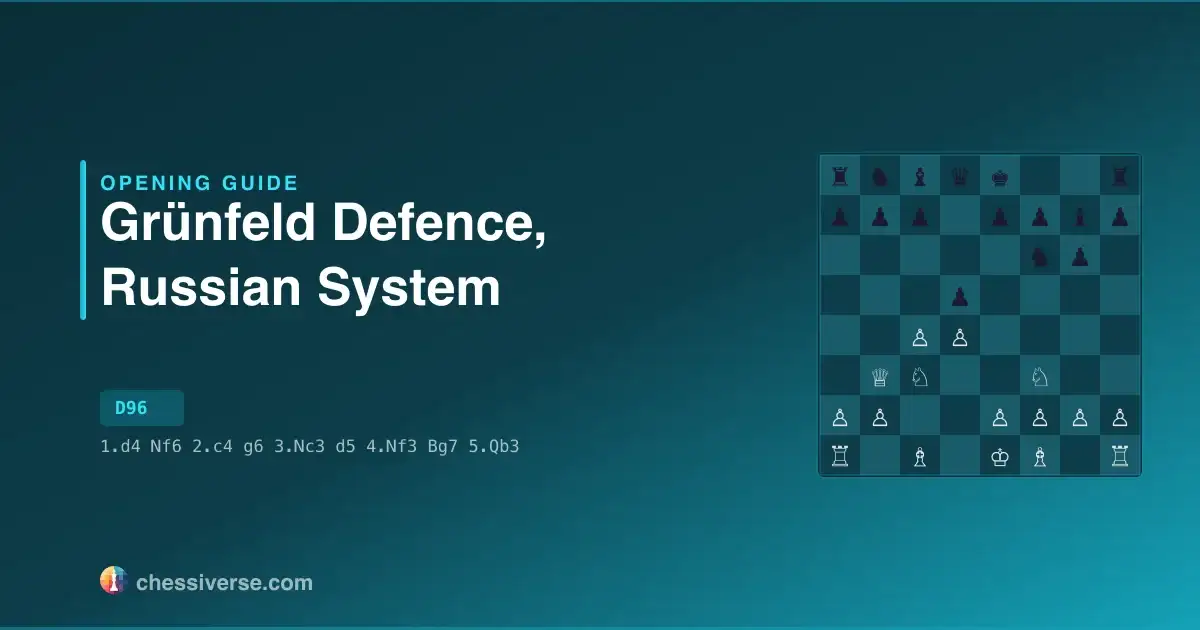
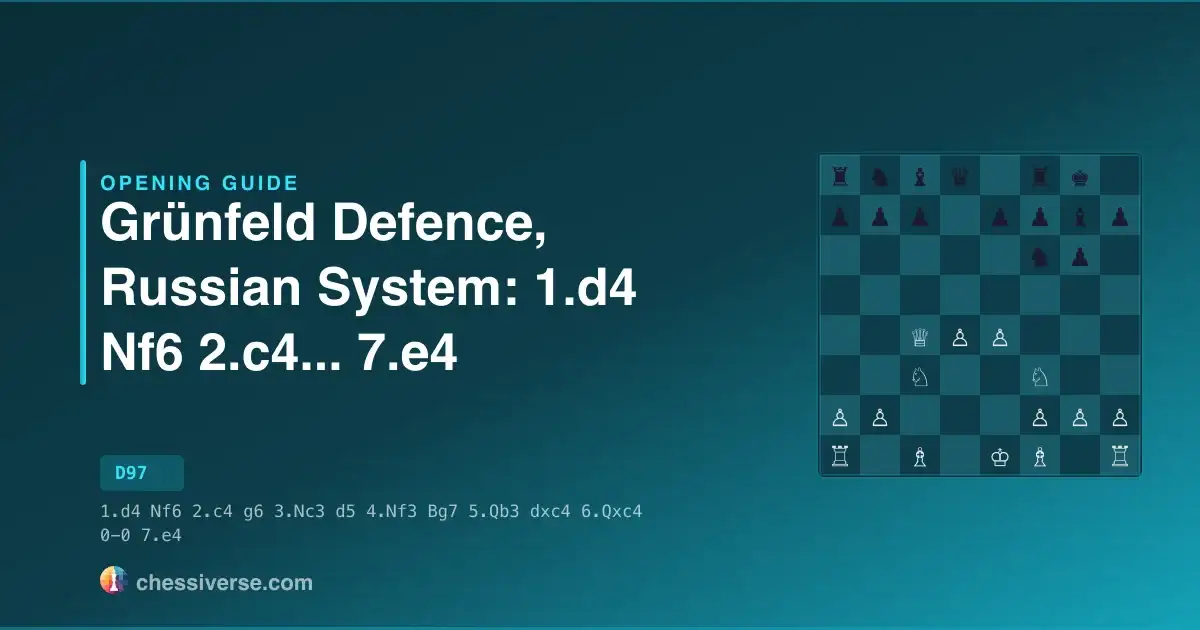
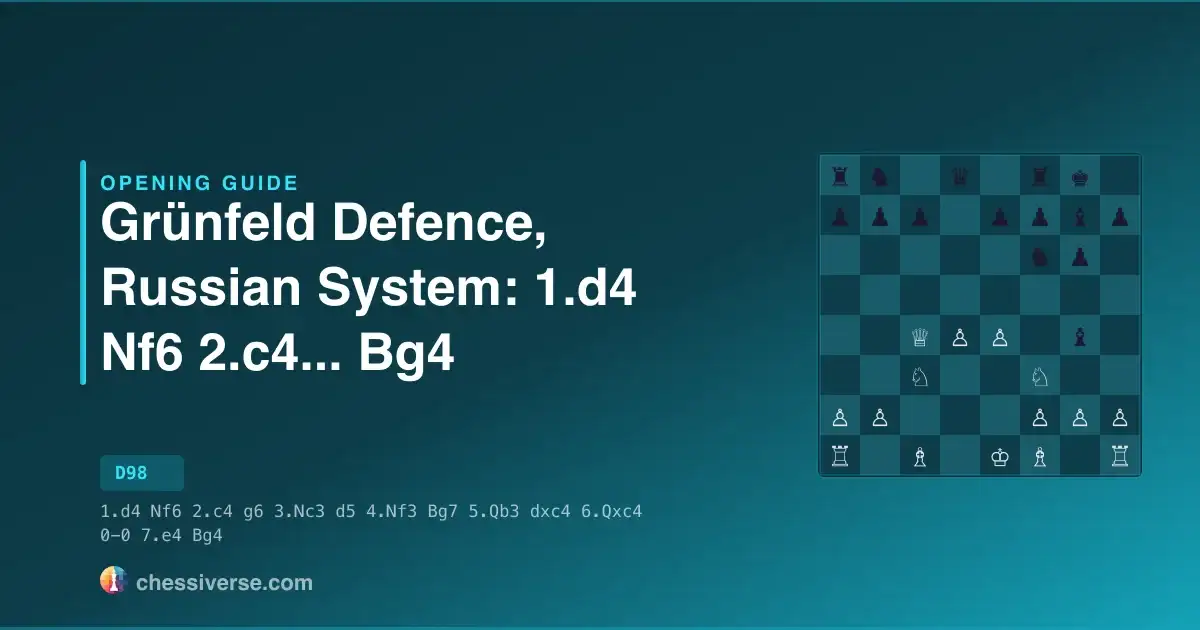
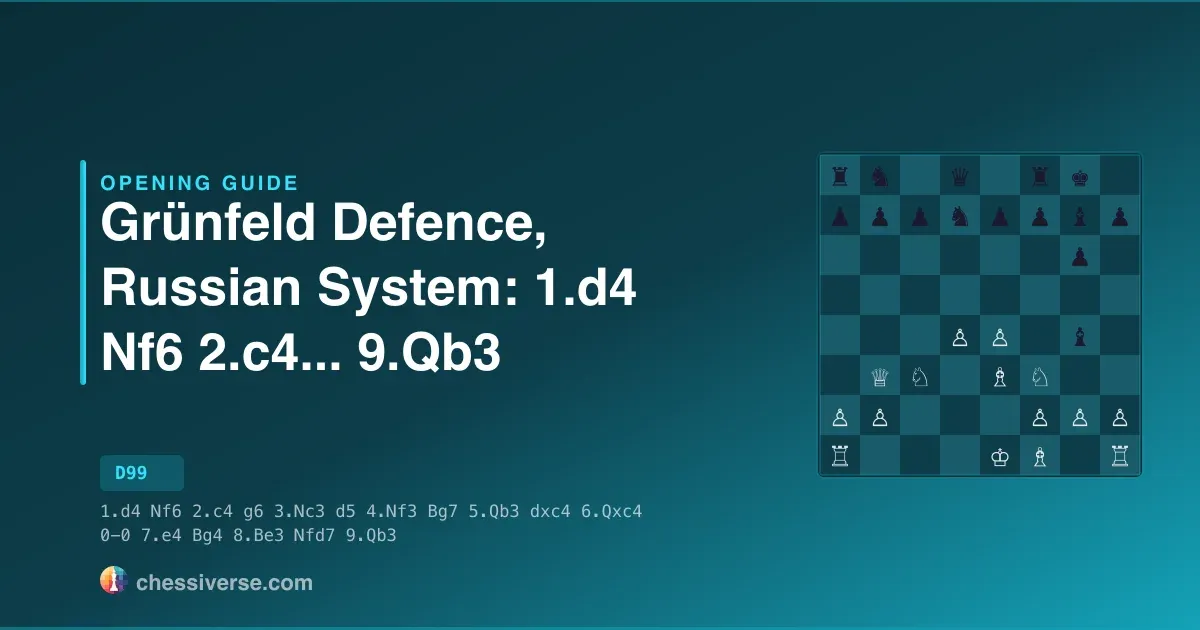
Starting from 1.d4 Nf6 2.c4 g6 3.Nc3 d5 4.Nf3 Bg7 5.Qb3 dxc4 6.Qxc4 0-0 7.e4 Bg4 8.Be3 Nfd7 9.Qb3, players enter the Grünfeld Defense: Russian Variation, Smyslov Variation — ECO D99. Lichess records 193 games in this line, which gives us a reliable view of how it actually performs in practice.
History and Notable Players
It arises from the Grünfeld Defense: Russian Variation, Smyslov Variation (7...Bg4). On the White side, Vlastimil Babula (14 games), Gennadi Sosonko (11 games), Alexander G Beliavsky (6 games) top the database. Notable Black exponents: Jan H Timman (9 games), Jan Smejkal (9 games), Vlastimil Jansa (9 games).
Common Mistakes
- Neglecting development — Extra pawn moves in the opening are tempting, especially when you "know the moves". Developing a piece each turn is the simple correction.
- Playing without a plan — Each Grünfeld Defense: Russian Variation, Smyslov Variation middlegame demands a specific approach. Decide whether the position calls for attack, manoeuvre, or simplification before reaching for a move.
Practice on Chessiverse
Ready to try the Grünfeld Defense: Russian Variation, Smyslov Variation against a bot? Pick an opponent at your level and play a game.