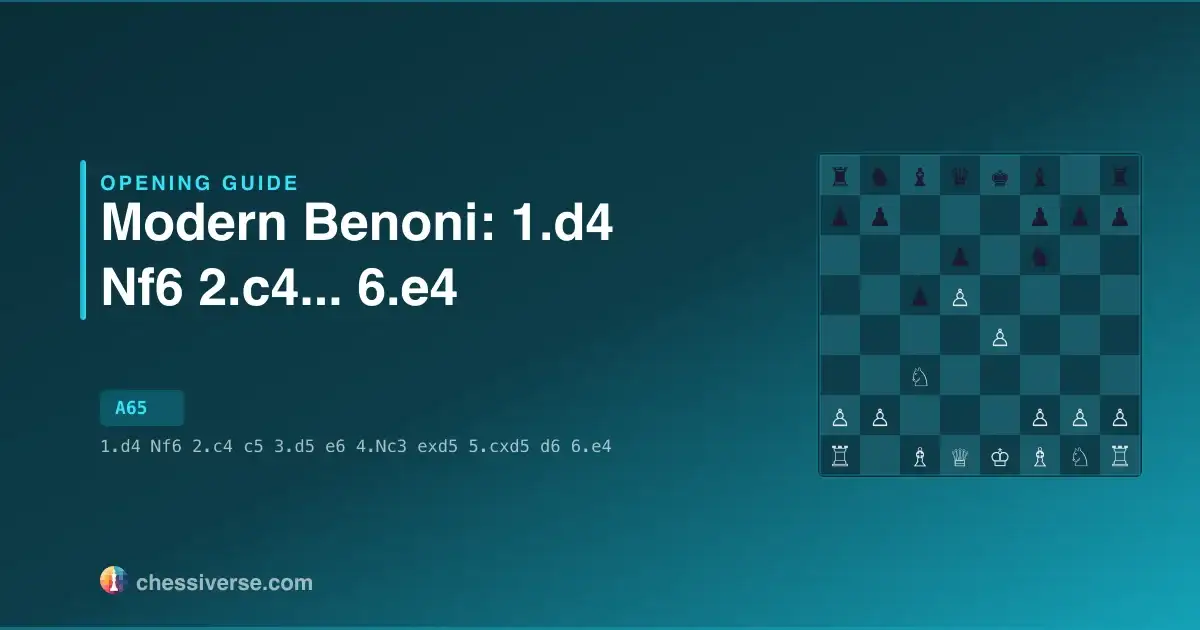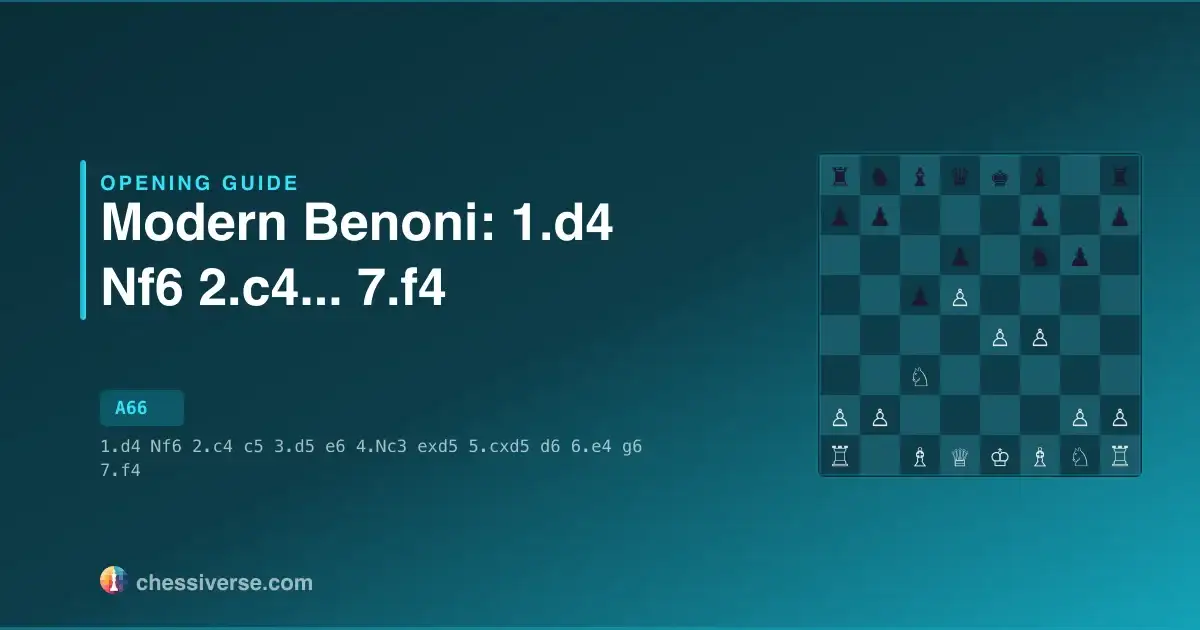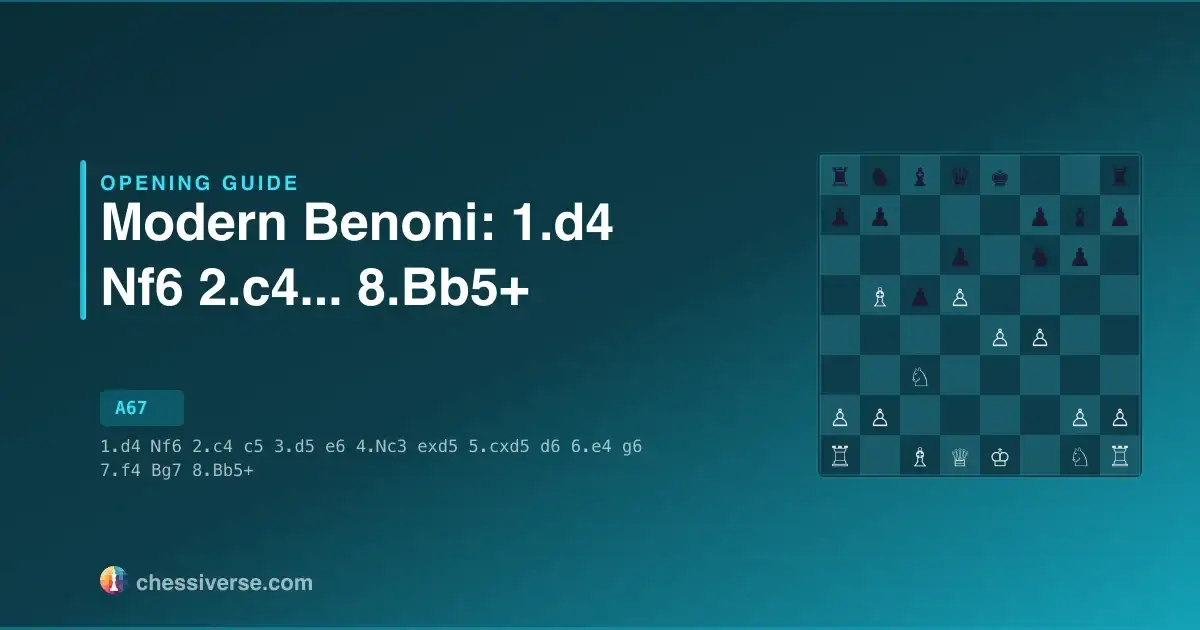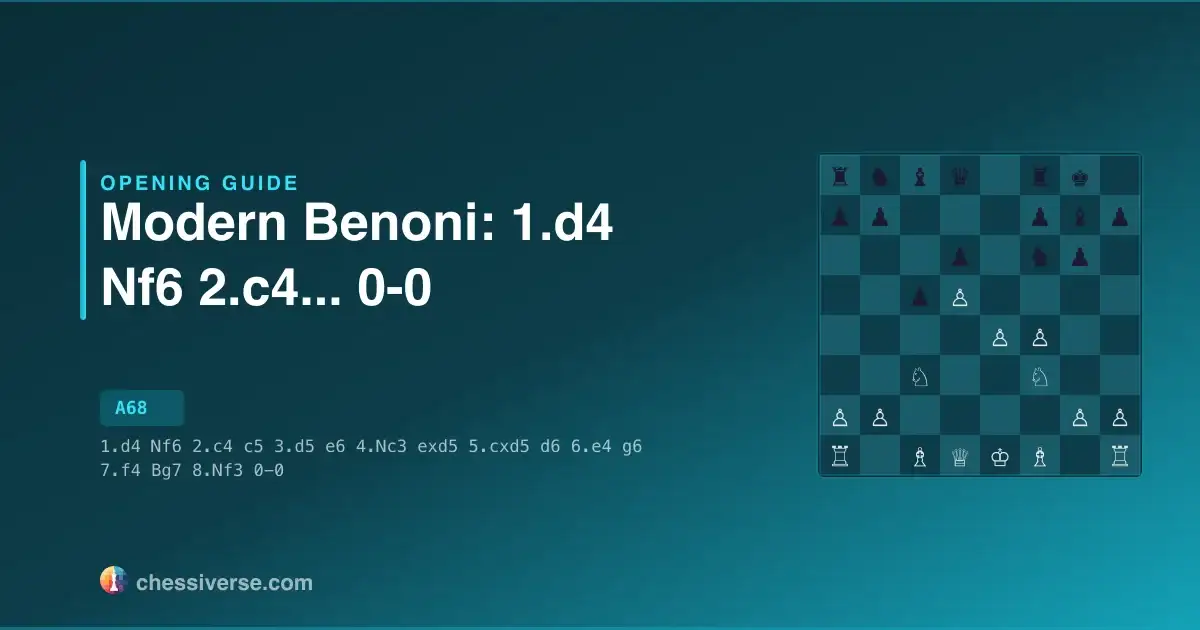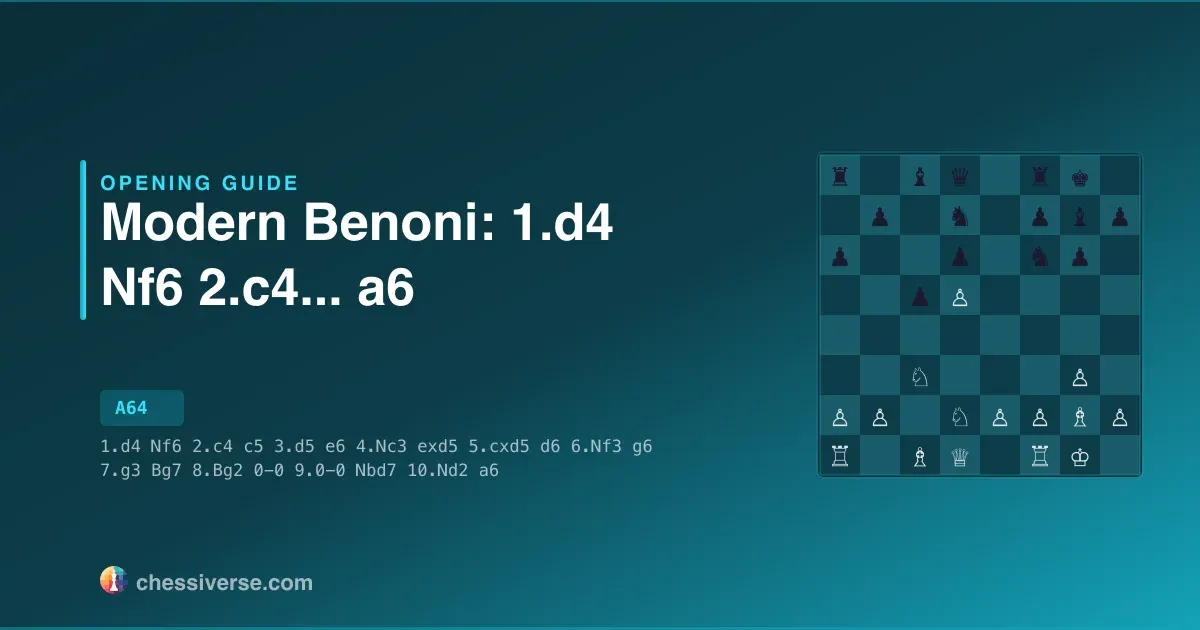
Starting from 1.d4 Nf6 2.c4 c5 3.d5 e6 4.Nc3 exd5 5.cxd5 d6 6.Nf3 g6 7.g3 Bg7 8.Bg2 0-0 9.0-0 Nbd7 10.Nd2 a6, players enter the Benoni Defense: Fianchetto Variation, Hastings Defense (10...a6) — ECO A64. Across rating levels it shows up in 973 recorded games — enough data to map exactly where it succeeds and where it stalls.
History and Notable Players
It arises from the Benoni Defense: Fianchetto Variation, Hastings Defense. Among the most prolific White practitioners are Zlatko Ilincic (21 games), Keith C Arkell (16 games), Victor Mikhalevski (11 games). Black-side regulars include Pavel Simacek (11 games), Mikhail Tal (8 games), Miso Cebalo (8 games).
Move Diversity and Theory Depth
Move choice is far from uniform in the Benoni Defense: Fianchetto Variation, Hastings Defense (10...a6). Below 1800 the samples are small (no games at 1200, 7 at 1400, 17 at 1600), so the comparison starts at 1800, with 107 games. There, the top reply is a4, played 95.3% of the time. No other move reaches 5% of games, and the top three moves account for 99.1% of games. Entropy: 0.34. By 2200 (481 games), a4 dominates at 96.5% of replies; no other move reaches 5%. Entropy drops to 0.22.
Common Mistakes
- Neglecting development — It can feel productive to make extra pawn moves early, but falling behind in piece development is what loses most amateur games — especially in open positions where active pieces find squares fast.
- Letting White own the centre — Hypermodern openings concede central space on purpose, but only if you strike back in time. Delay the counter-blow and you end up squeezed.
Practice on Chessiverse
Ready to try the Benoni Defense: Fianchetto Variation, Hastings Defense (10...a6) against a bot? Pick an opponent at your level and play a game.