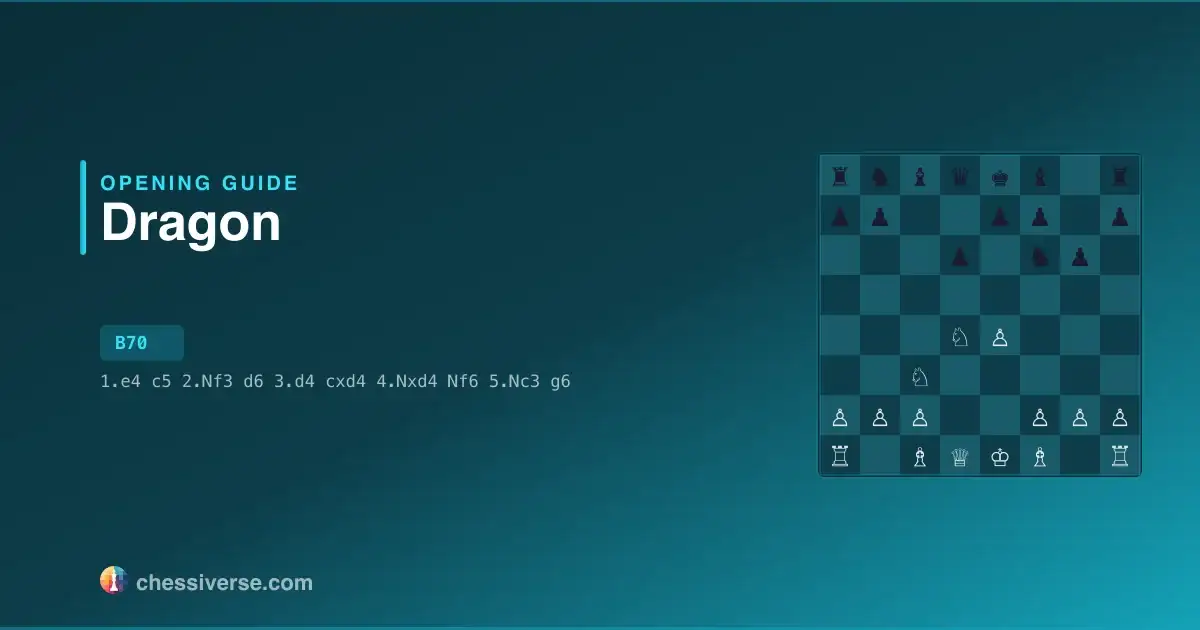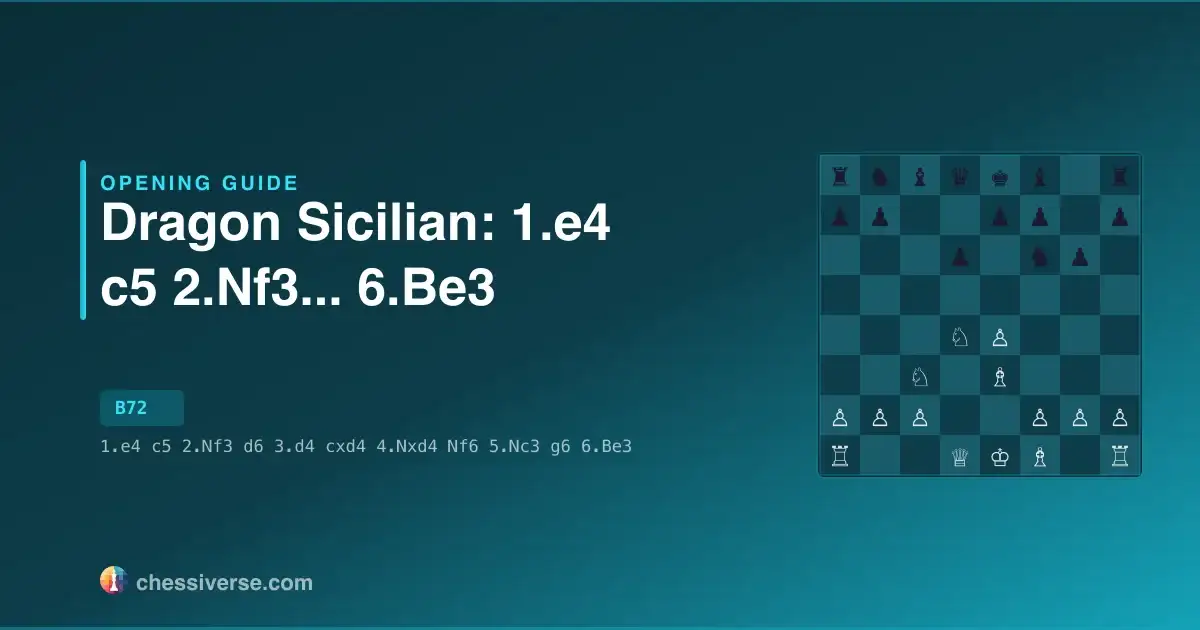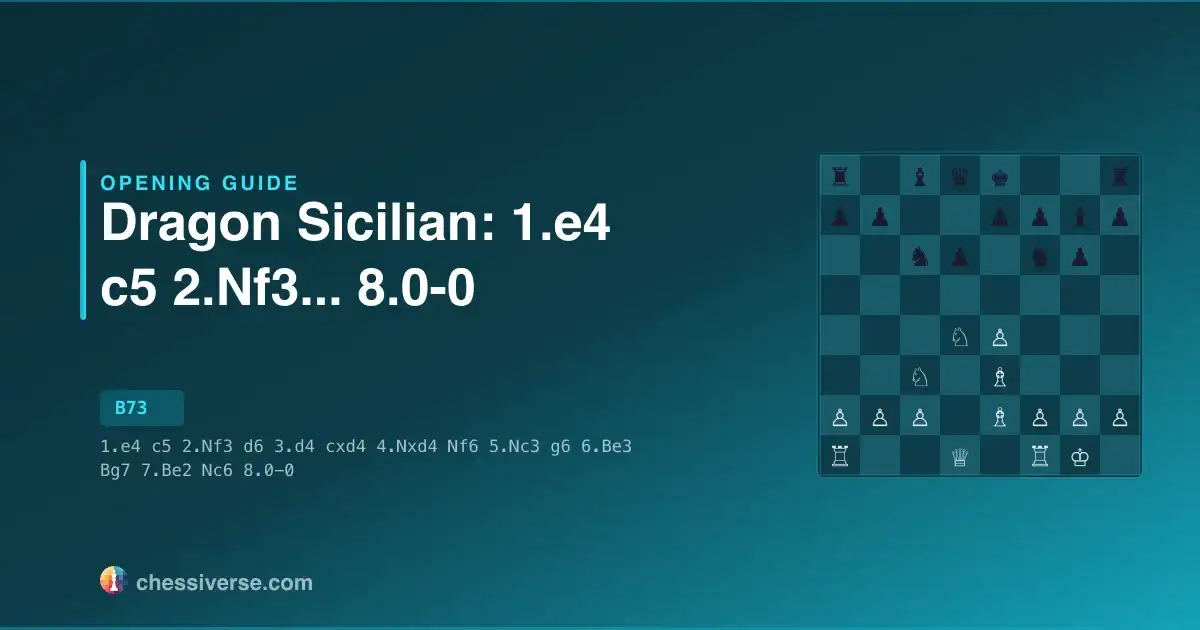




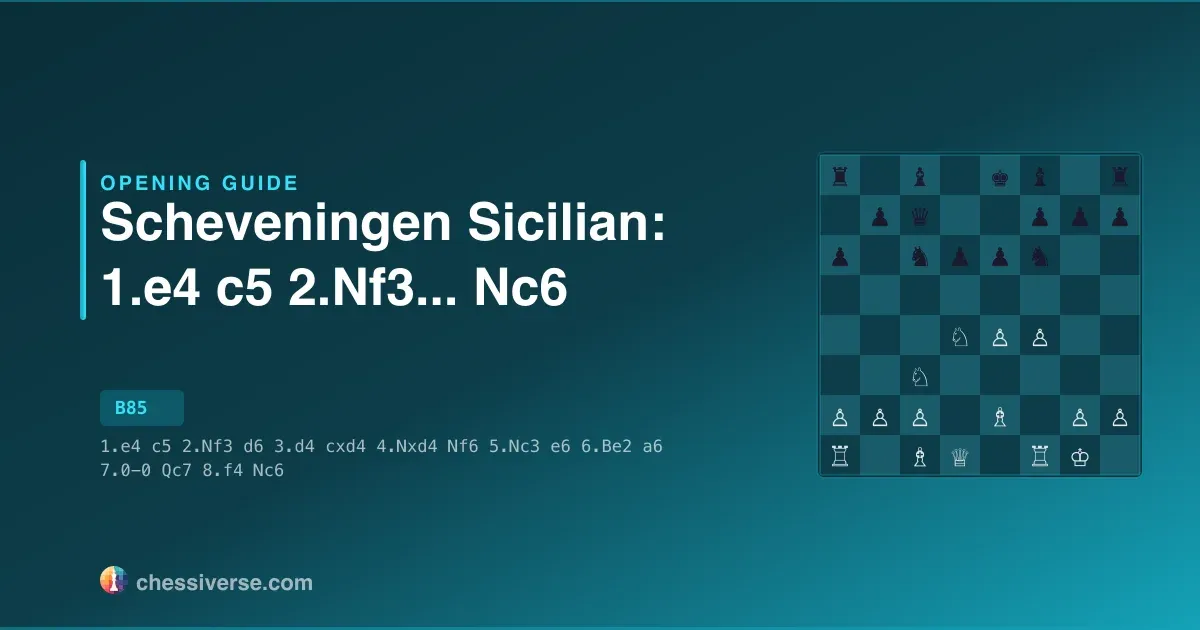
The Sicilian Defense: Scheveningen Variation, Classical Variation, Paulsen Variation begins with 1.e4 c5 2.Nf3 d6 3.d4 cxd4 4.Nxd4 Nf6 5.Nc3 e6 6.Be2 a6 7.0-0 Qc7 8.f4 Nc6 (ECO B85). With 8,253 games on record, the patterns below come from the largest practical sample available.
History and Notable Players
It arises from the Sicilian Defense: Scheveningen Variation, Classical Variation (6...a6). Among the most prolific White practitioners are Isaak Boleslavsky (4 games), Ralf Lau (2 games), Marcos Luckis (2 games). Black-side regulars include Alexander Kotov (11 games), Vasja Pirc (8 games), Sava Vukovic (6 games).
Move Diversity and Theory Depth
Looking at move selection shows how forcing — or not — the position really is. Below 1400 the samples are small (99 games at 1200), so the comparison starts at 1400, with 605 games. There, the top reply is Be3, played 20.7% of the time. Six other moves each take at least 5% of games, and the top three moves account for 55.9% of games. Entropy: 3.06. By 2200 (674 games), Be3 dominates at 53% of replies; only two other moves still reach 5% and the top three moves account for 87.6% of games. Entropy drops to 2.01. The narrowing is significant — strong players consolidate around a small set of best moves, while amateurs scatter across many plausible-looking options.
Common Mistakes
- Neglecting development — It can feel productive to make extra pawn moves early, but falling behind in piece development is what loses most amateur games — especially in open positions where active pieces find squares fast.
- Ignoring the kingside attack — In sharp Sicilian lines, White typically castles long and pushes the h-pawn. Without your own counterplay on the queenside or in the centre, White's attack lands first.
Practice on Chessiverse
Ready to try the Sicilian Defense: Scheveningen Variation, Classical Variation, Paulsen Variation against a bot? Pick an opponent at your level and play a game.