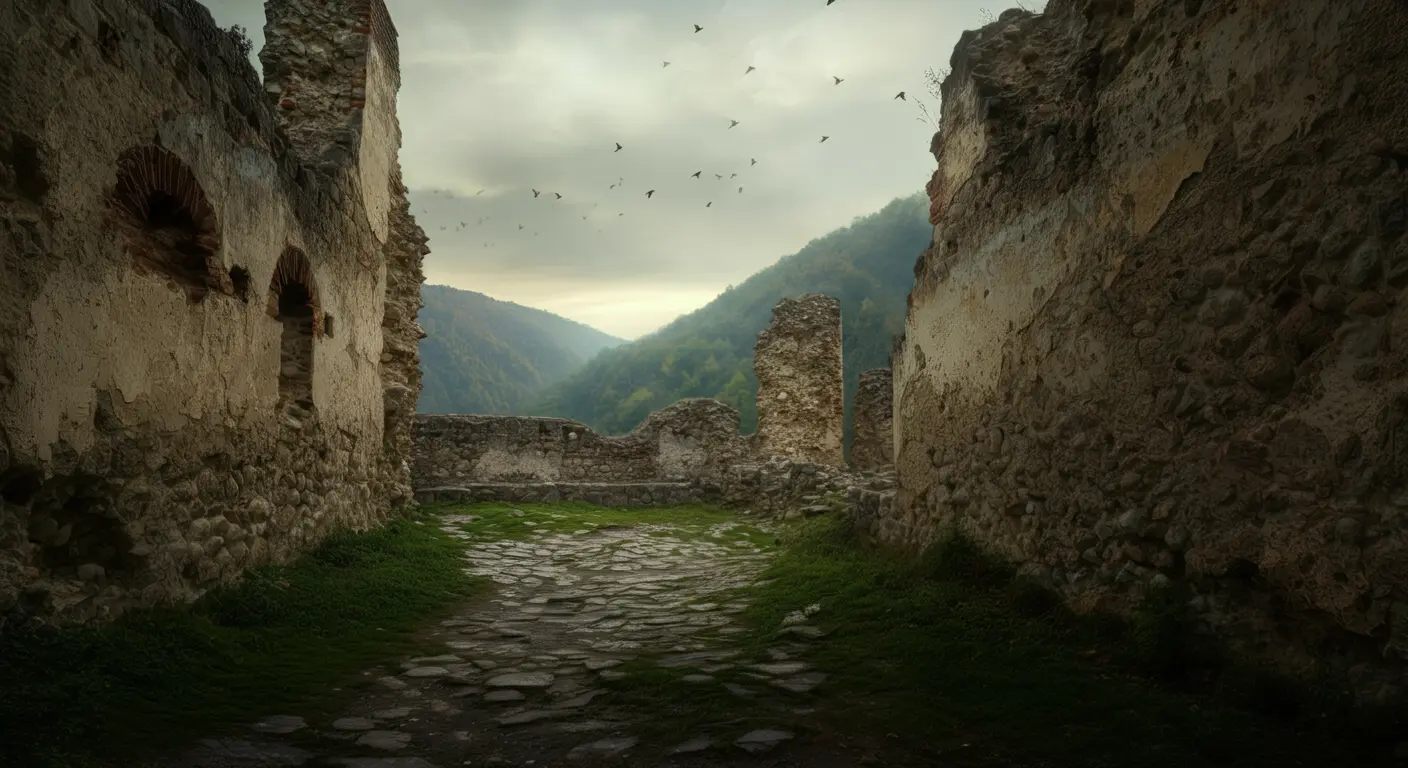
By the ancient stones... welcome, weary traveler, to my hillfort of sixty-four squares; a hiker's sanctuary carved from forgotten might... Sit, study the ramparts, and let us see whether your plans can withstand the slow, patient siege of an entrenched knight;->
Orion Outpost is a 32-year-old chess bot from Romania who works as a Fortress Rebuild Planner, surveying Transylvanian hillforts and drafting stone outposts for hikers along the ridgelines. With an estimated rating of 2129, Orion plays at a candidate master to expert level, calculating accurately, navigating sharp middlegames with confidence, and punishing the inaccuracies that tend to creep into club-level play. The architectural mindset carries onto the board: pieces are placed like watchtowers, knights are entrenched deep in opponent territory, and structural weaknesses are catalogued the way crumbling masonry is catalogued on a survey. Orion is not a flashy attacker so much as a methodical one, treating each game as a careful rebuild rather than a demolition. Opponents should expect a strong, positionally grounded fight where loose moves are exploited and concessions are remembered for the long haul.
How Orion plays
Orion leans aggressive (0.67) and strongly favors keeping tension on the board (0.85) rather than trading into simpler positions, so the middlegame tends to stay rich and combative. Choice between solid and sharp lines is balanced (0.00), as is reliance on mainline theory (0.00), meaning Orion mixes principled play with practical, less-charted decisions. The result is pressure that accumulates slowly, like stone stacked on stone, until structural cracks appear.
Who should play Orion
Players rated roughly 1700 to 2100 will get the most from facing Orion. Anyone who tends to release tension too early, swap pieces to defuse problems, or play passively against a more active opponent will find those habits punished here. The matchup rewards opponents willing to keep complications on the board, calculate concrete lines, and defend accurately under sustained positional and tactical pressure across long games.