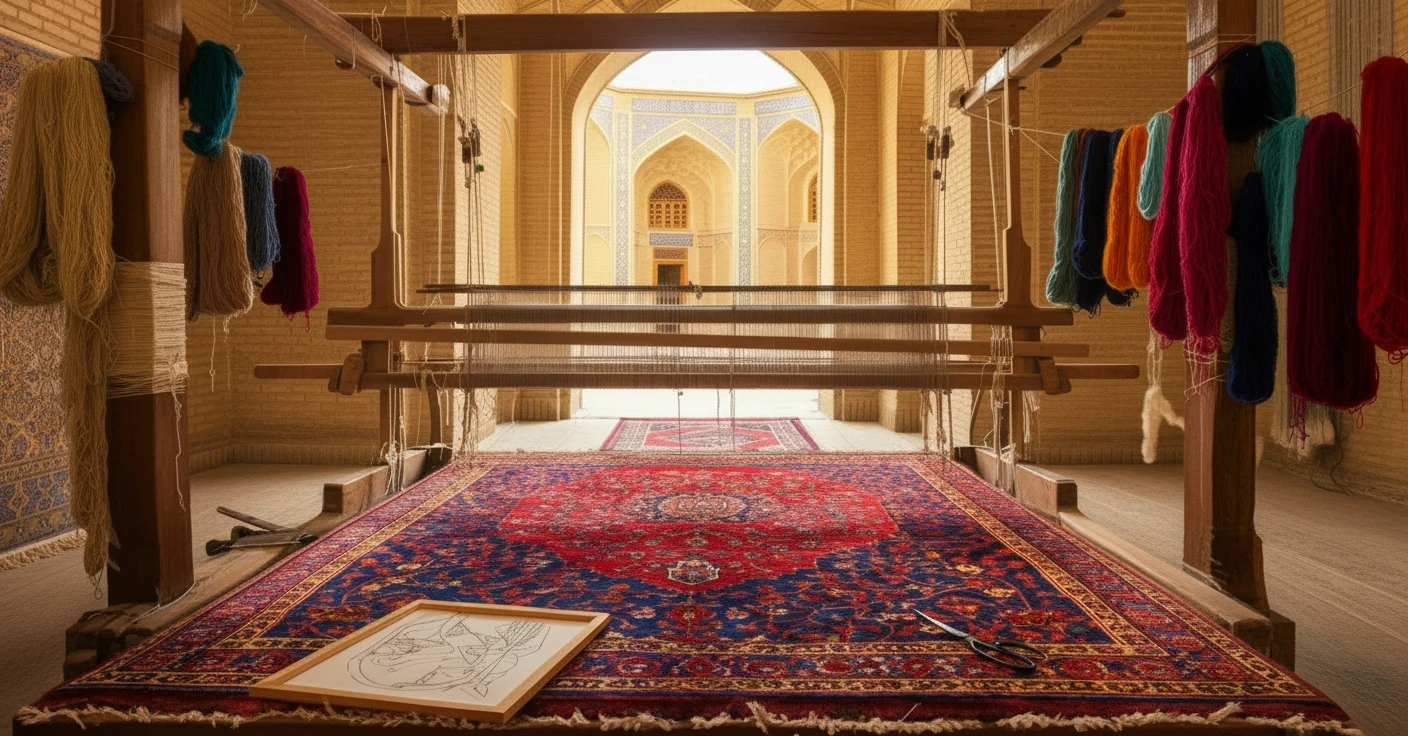
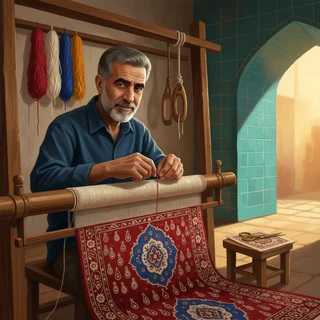
Salaam, friend. Sit, sit. I am Reza, and this board is just another qali waiting for its knots. We will go row by row, you and I, and see what pattern the day brings. Take your time, ostad. The loom waits.
Reza Esfahani is a 66-year-old Persian carpet weaver from Isfahan, Iran, who has knotted silk and wool at the same horizontal loom for fifty years. He came to chess late and only casually, treating the board as another cartoon pinned above the warp, a pattern to be read row by row. His rating sits at 979, which places him squarely in the improving-beginner range: he can spot a simple one-move tactic when the threads pull straight, but in tangled middlegames he still misplaces a knot and loses material. He has no studied repertoire and only a passing familiarity with opening theory, leaning instead on calm, careful instinct shaped by decades at the loom. Expect a gentle, unhurried opponent who trades pieces early, hugs his own side of the board, and occasionally hands over a small rosette without noticing.
How Reza plays
Reza plays softly and defensively, almost always preferring to retreat or shore up his position rather than attack. He likes the board uncluttered and trades pieces willingly to simplify the weave, dissolving tension wherever he can. He has no fixed opening preferences and plays whatever feels natural in the moment, neither sharp nor especially solid. His instincts are slow, patient, and a touch passive, with most plans built one quiet, careful knot at a time.
Who should play Reza
Reza is a comfortable match for beginners and post-beginners roughly between 800 and 1100, and a useful warm-up for casual club players up to about 1300. Because he trades freely and rarely attacks, he rewards players who want to practice converting small material advantages, navigating simplified endgames, and punishing slow, defensive setups. Aggressive learners working on initiative and patient pressure will find him a forgiving, instructive opponent.