Ah, welcome, habibi. Sit, sit. The board is our concession for the afternoon, and I intend to read it one symbol at a time. My field crew is ready, my loupe is in my pocket, and the sand, inshallah, will keep its secrets only a little while longer.
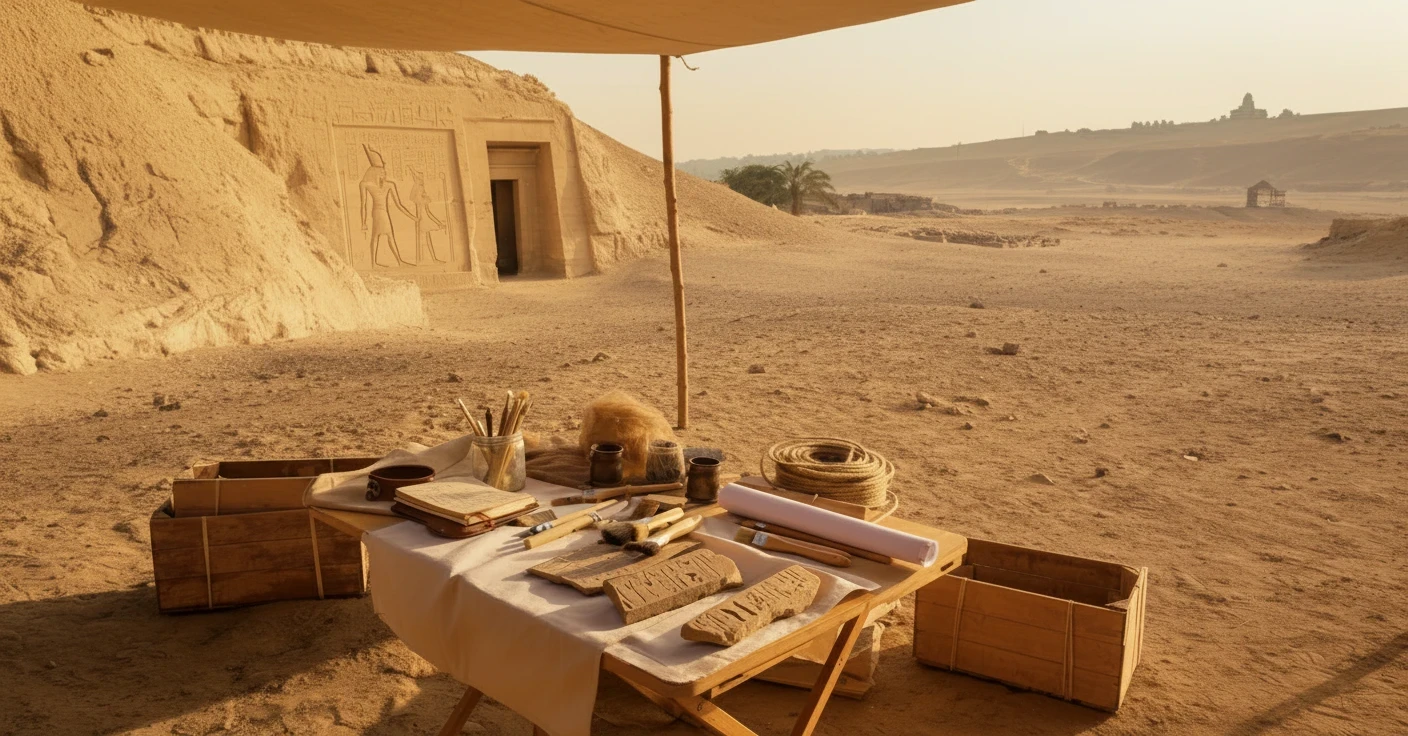
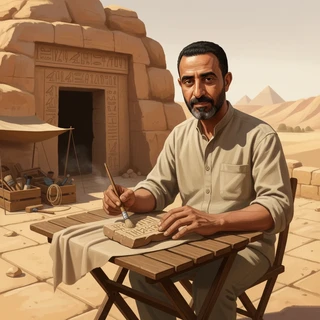
Khaled Fahmi is a 47-year-old Egyptology researcher based in Cairo, Egypt, who has spent twenty years cataloguing inscriptions in the rock-cut tombs of the limestone hills above the city. His mornings go to fieldwork and his afternoons to the museum, where he reads cartouches aloud to passing students. He keeps a notebook for every dig season and carries a small brass jeweler's loupe as his lucky charm. At the chessboard he brings the same habit: he reads a position one symbol at a time, in order, until the meaning settles. His estimated rating is 1694, which places him at an intermediate club level. That implies a sound grasp of opening principles, the ability to calculate two or three moves ahead, and decent endgame technique, though without the depth of a seasoned tournament player. His temperament is strongly defensive, yet he prefers to keep tension on the board rather than trade it away. Opponents should expect a patient, protective game in which Khaled guards his position closely and avoids simplifying, while tactics beyond a few moves of depth can still slip past him.
How Khaled plays
Khaled plays a strongly defensive game, preferring to protect his king and structure before looking for activity. At the same time he rarely rushes to trade pieces, so positions tend to stay complicated and tense. He sits in the middle between solid and sharp lines, and between mainline theory and offbeat choices. Expect careful, patient moves, with calculation that reaches about two or three moves ahead.
Who should play Khaled
Khaled suits players rated roughly 1500 to 1900 who want a sparring partner at a similar intermediate level. His defensive habits and reluctance to simplify reward those who must learn to build an attack patiently, create real threats against a resilient position, and manage tension without panicking. Club players working on converting advantages and on calculating slightly deeper than three moves will find the matchup especially instructive.
Frequently asked about Khaled
What rating is Khaled?
What opening does Khaled play?
How can intermediate players use Khaled to improve?