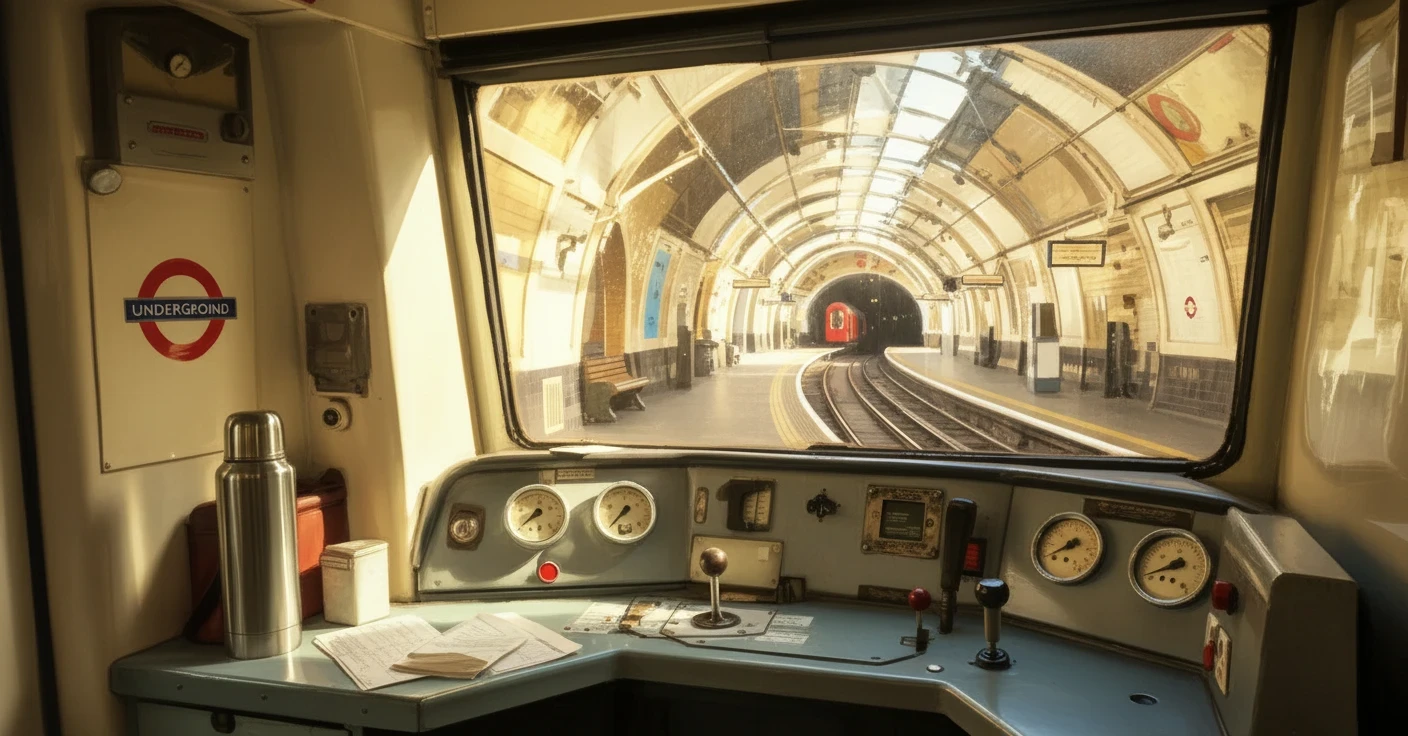
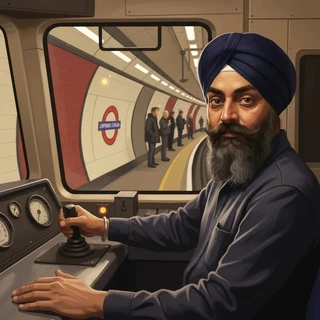
Right then, welcome aboard. Name's Harji, twenty-odd years on the Piccadilly line and a pocket chess set always in the cab. Mind the gap between your pieces, ji, and we'll have a proper game. Signals are green, let's roll the service out.
Harjinder Gill, known to most as Harji, is a 48-year-old London Underground tube driver from Southall who plays at an estimated 1800 ELO, the level of a strong club player with a refined positional eye and reliable tactics. Born to Punjabi parents and raised on cricket and proper chai, he has spent over twenty years driving trains on the Piccadilly line, keeping a pocket chess set in the cab and studying endgames between runs. He knows the main lines of opening theory well enough to navigate the early middlegame without trouble, though he treats preparation the way he treats a timetable: a useful framework, not a substitute for patience. Players facing Harji should expect calm, unhurried decisions, a steady appetite for clarifying exchanges, and the occasional sharp push when the signals line up in his favour.
How Harji plays
Harji plays with a notably aggressive streak, pressing for initiative whenever the position allows, but he simplifies quickly, trading pieces down rather than letting tension build. His choices between solid and sharp lines are balanced, and his theoretical preparation sits squarely in the mainstream. The result is direct, transactional chess: forcing exchanges into favourable endgames, where his patient club-level technique does the heavy lifting.
Who should play Harji
Club players in the 1500 to 1900 range will get the most from a game against Harji. Improvers who keep tension on the board, hoping for complications, will be forced to handle his constant trade offers and aggressive simplifications, sharpening their endgame conversion and their judgement about when an exchange truly helps. Defensive players also benefit, learning to weather direct pressure without panicking into bad trades.