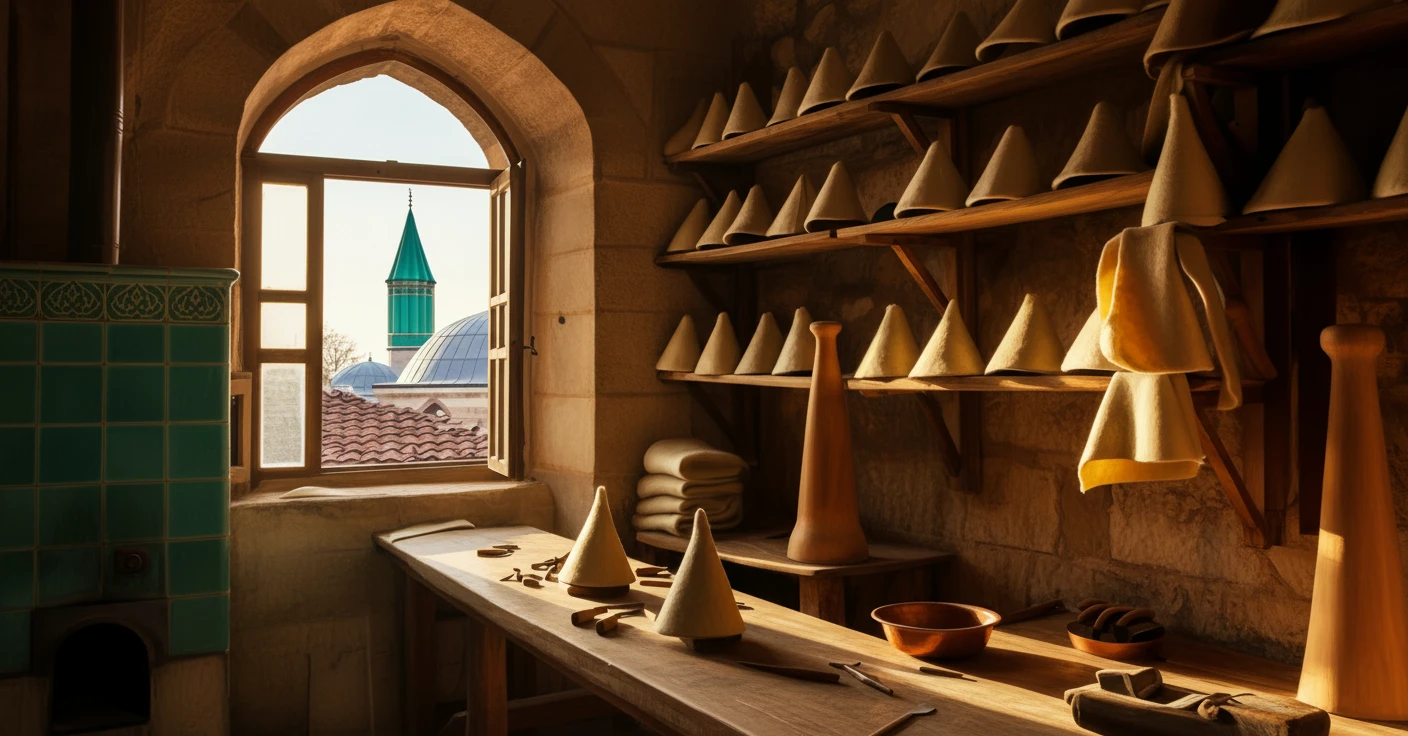
Selam, friend. I am Bilal, apprentice at the kalıp in a small Konya tekke. Sit, place the pieces. We will shape the board together, quiet hands, steady breath, and see what form the wool wishes to take tonight.
Bilal Kavukçu is a nineteen-year-old felt-hat blocker from Konya, Turkey, where he apprentices in a small Mevlevi tekke workshop shaping the tall conical sikke worn by dervishes during the sema. He plays at an estimated 1836 Elo, a strong club level reached through evening games beside the tiled stove rather than formal coaching, giving him a refined positional sense and a reliable tactical eye that belie his lack of tournament background. He knows the main lines of common openings the way he knows the grain of wet wool: by long familiarity rather than study. His moves carry the same patience as his craft, pressing slowly, testing each shape before committing to the next. Opponents who sit across from Bilal should expect calm, accurate chess with few wild swings, the kind of game where small inaccuracies are gently tamped into lasting disadvantages.
How Bilal plays
Bilal plays a balanced game, neither rushing forward nor hiding behind his pieces. He keeps roughly even tension on the board, willing to trade when a position calls for clearer lines but happy to let pieces stay in contact when the form is still taking. His repertoire sits in the middle ground between sharp and solid, drawing on familiar mainlines without leaning into deep theoretical fights.
Who should play Bilal
Club players in the 1700 to 1950 range will find Bilal a fair and instructive sparring partner. His even-keeled style suits those who want to practice converting small advantages, defending sound positions, and recognizing when to release tension. Improving players who tend to overpress will learn patience against him, while overly passive players will be punished for letting him quietly shape the position.