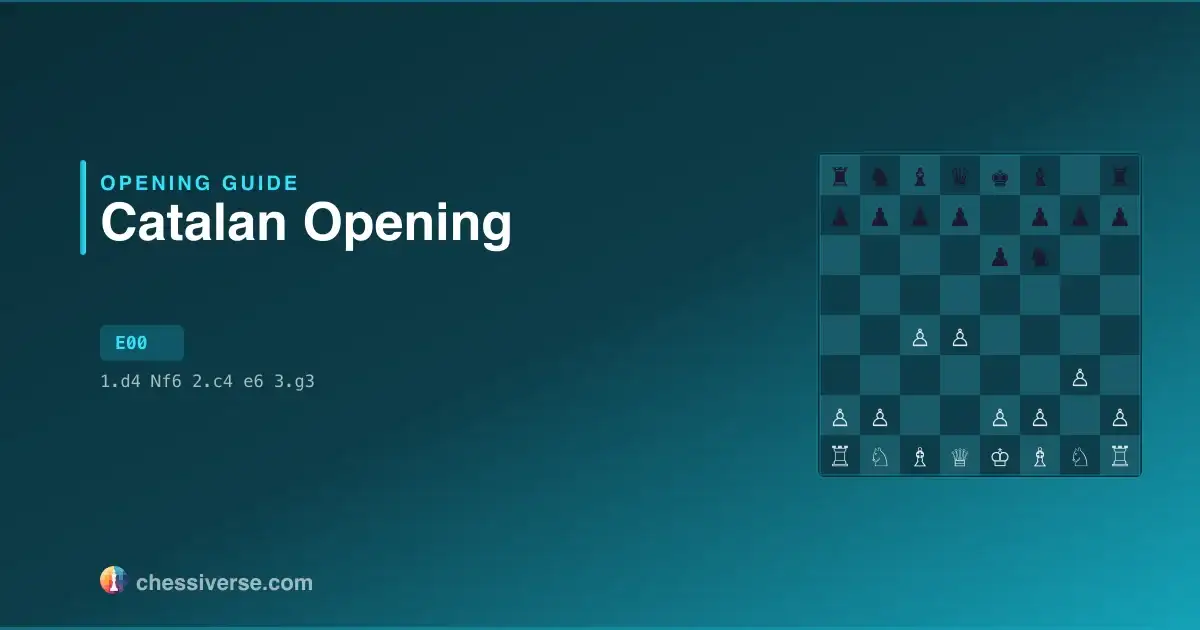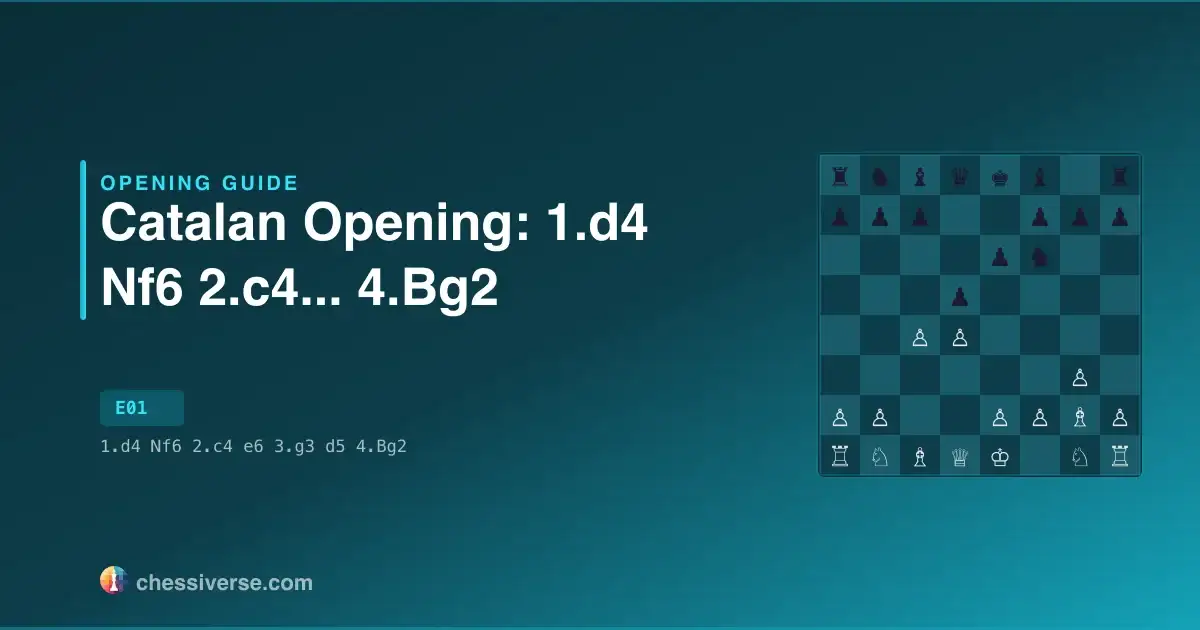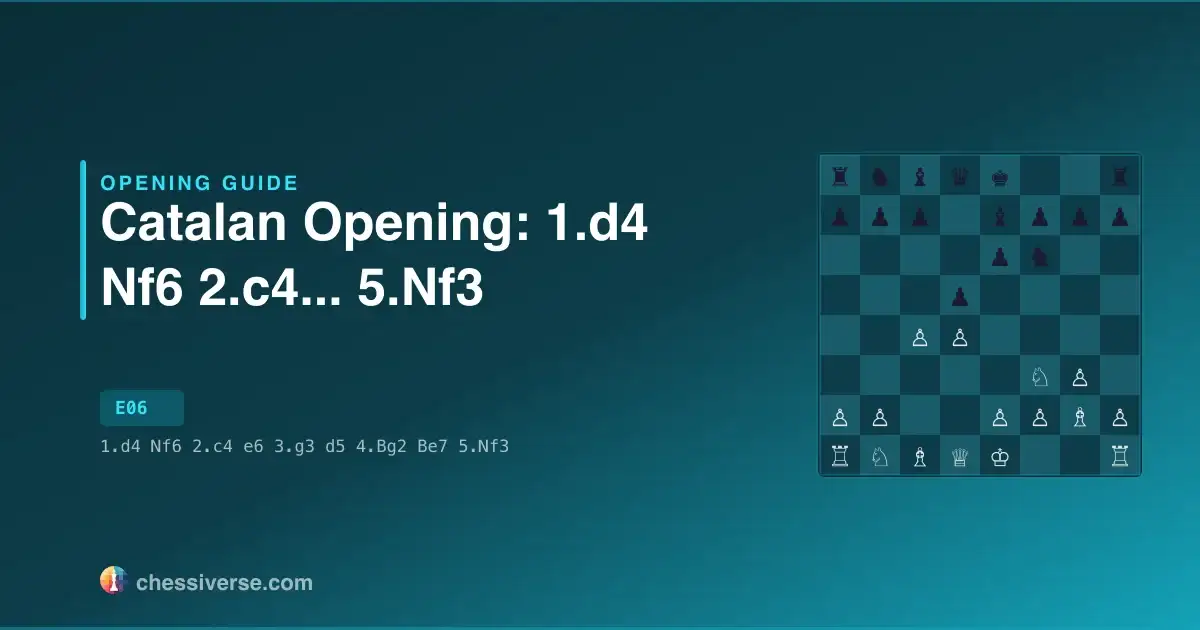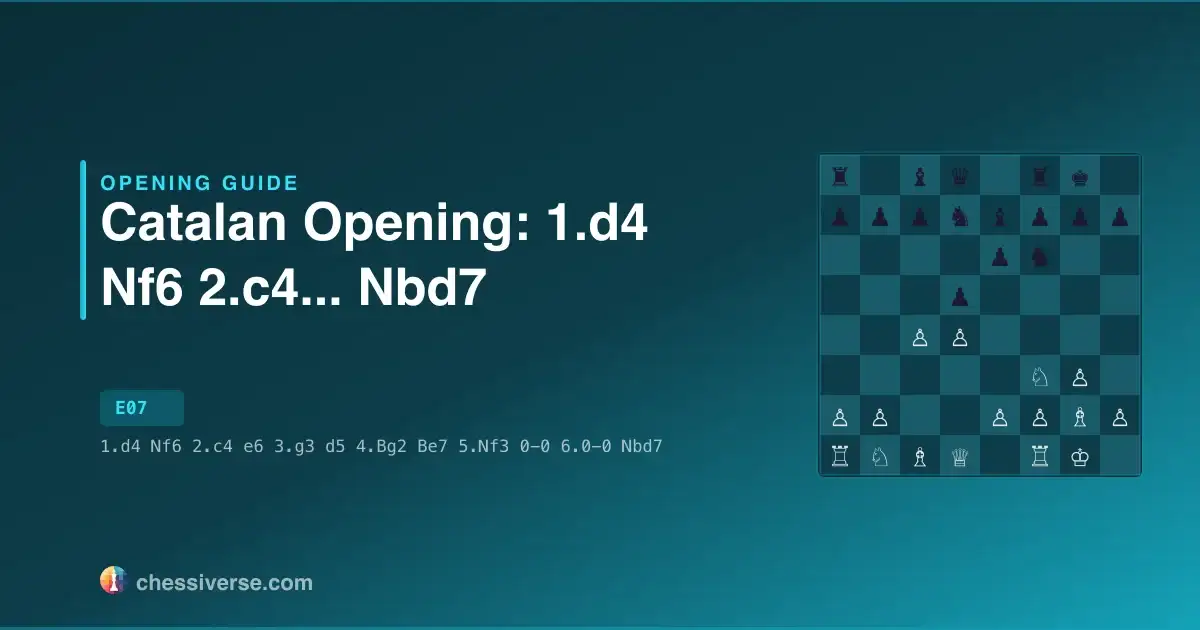




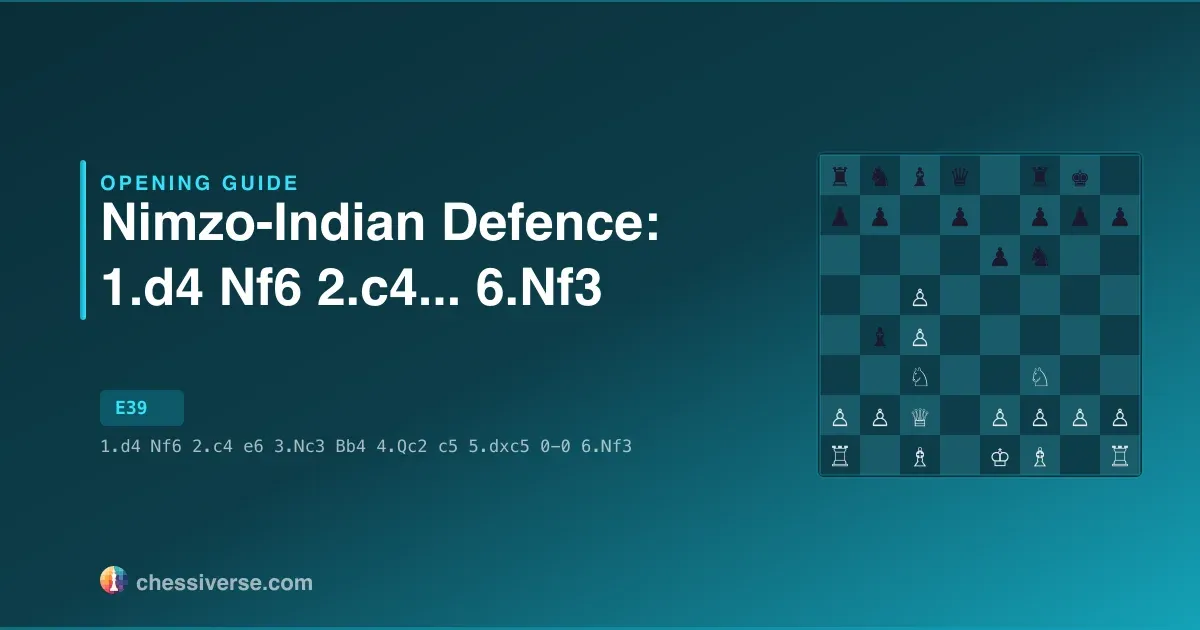
Starting from 1.d4 Nf6 2.c4 e6 3.Nc3 Bb4 4.Qc2 c5 5.dxc5 0-0 6.Nf3, players enter the Nimzo-Indian Defense: Classical Variation, Berlin Variation, Pirc Variation — ECO E39. With 39,913 games on record, the patterns below come from the largest practical sample available.
History and Notable Players
It arises from the Nimzo-Indian Defense: Classical Variation, Berlin Variation. On the White side, Gyozo V Forintos (22 games), Milorad Knezevic (20 games), Mikhail Gurevich (16 games) top the database. Notable Black exponents: Bartlomiej Macieja (29 games), Andrei Sokolov (15 games), Mark E Taimanov (15 games).
Performance Across Rating Levels
Popularity and results vary sharply by rating level. Among 1200-rated players, it appears in 0.00% of games — 101 of them on record — with White winning 50.5% and Black 44.6%. Move up to 1800 Elo and the share shifts to 0.00%, with White winning 48.6% versus Black's 45.3%. At the top end (2500+ Elo), popularity is 0.02% with 12.5% draws — a clear sign of how much theory rules the line at master level. White's edge erodes by 7.4pp from 1200 to 2500 Elo, suggesting Black's counterplay is easier to find with experience.
Move Diversity and Theory Depth
What players actually play after the opening moves depends heavily on rating. At 1200 Elo (101 games), the top reply is Bxc5, played 60.4% of the time. Two other moves each take at least 5% of games, and the top three moves account for 98% of games. Entropy: 1.47. By 2500 (2,515 games), Na6 takes over as the top reply at 78.5%; two other moves reach 5% and the top three moves account for 97.7% of games. Entropy drops to 1.08.
Common Mistakes
- Neglecting development — Extra pawn moves in the opening are tempting, especially when you "know the moves". Developing a piece each turn is the simple correction.
- Letting White own the centre — Hypermodern openings concede central space on purpose, but only if you strike back in time. Delay the counter-blow and you end up squeezed.
Practice on Chessiverse
Ready to try the Nimzo-Indian Defense: Classical Variation, Berlin Variation, Pirc Variation against a bot? Pick an opponent at your level and play a game.