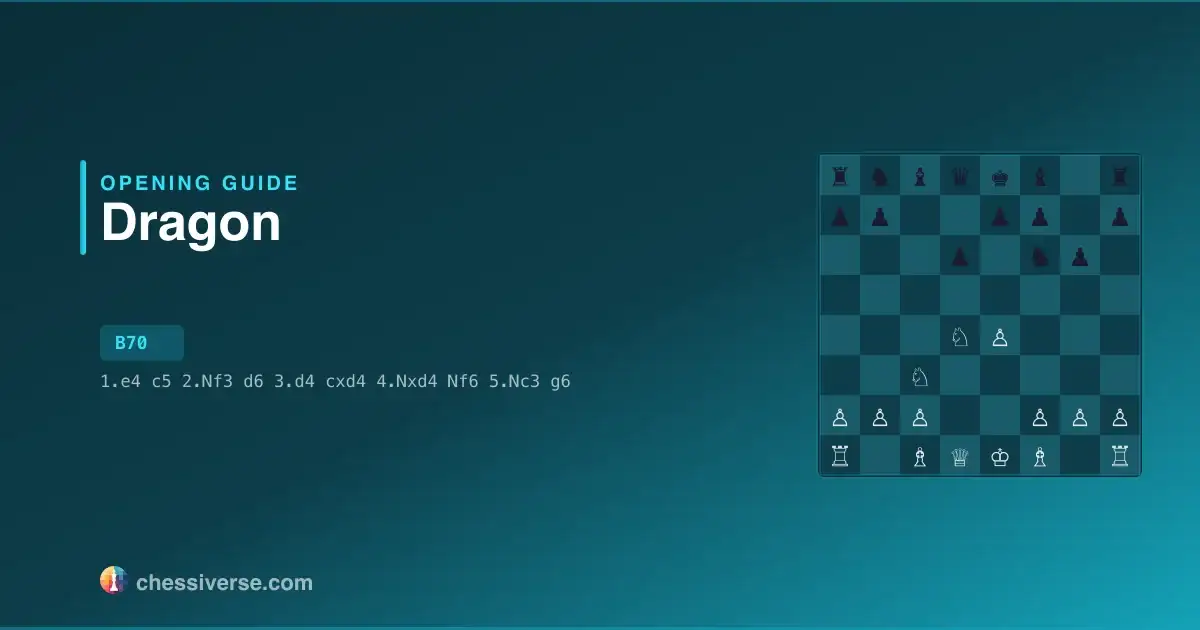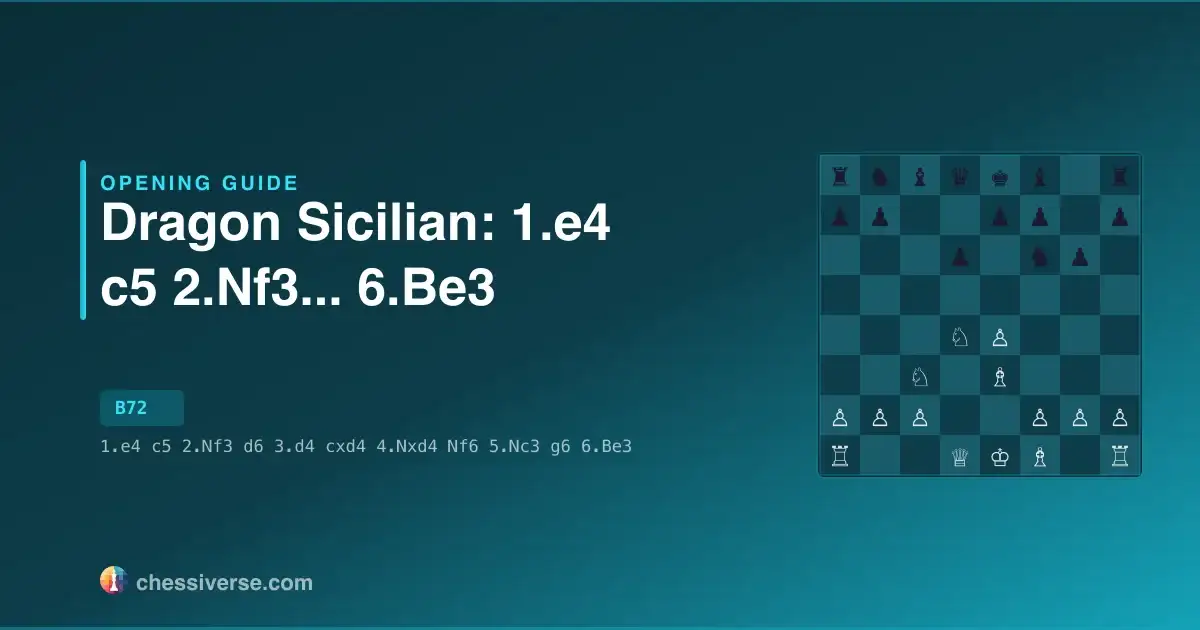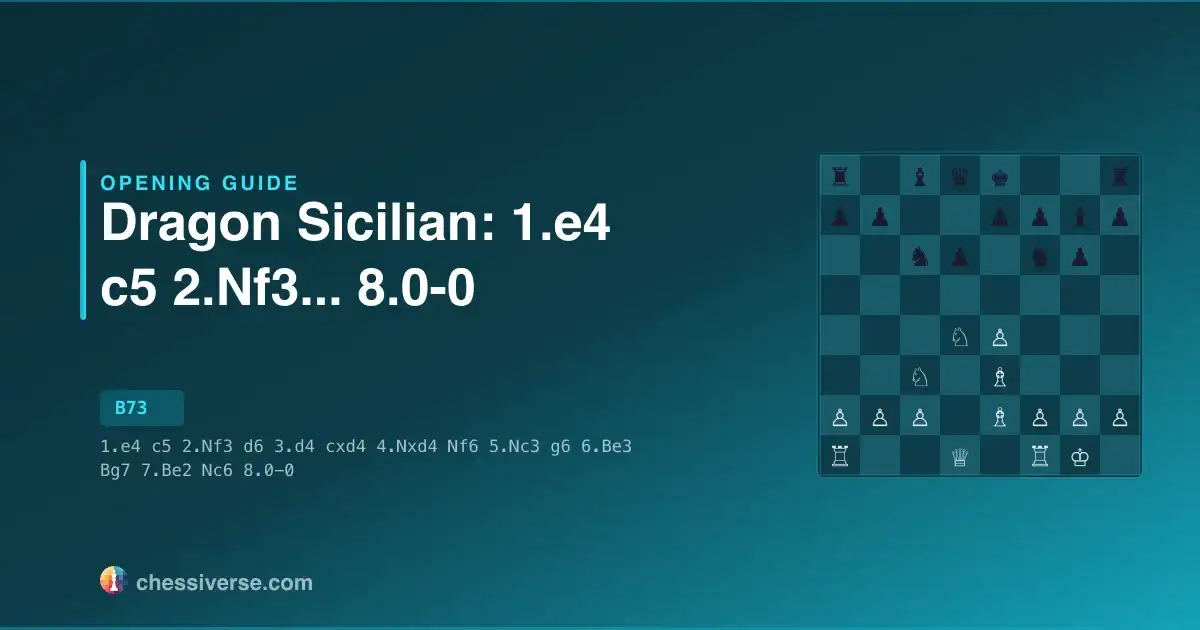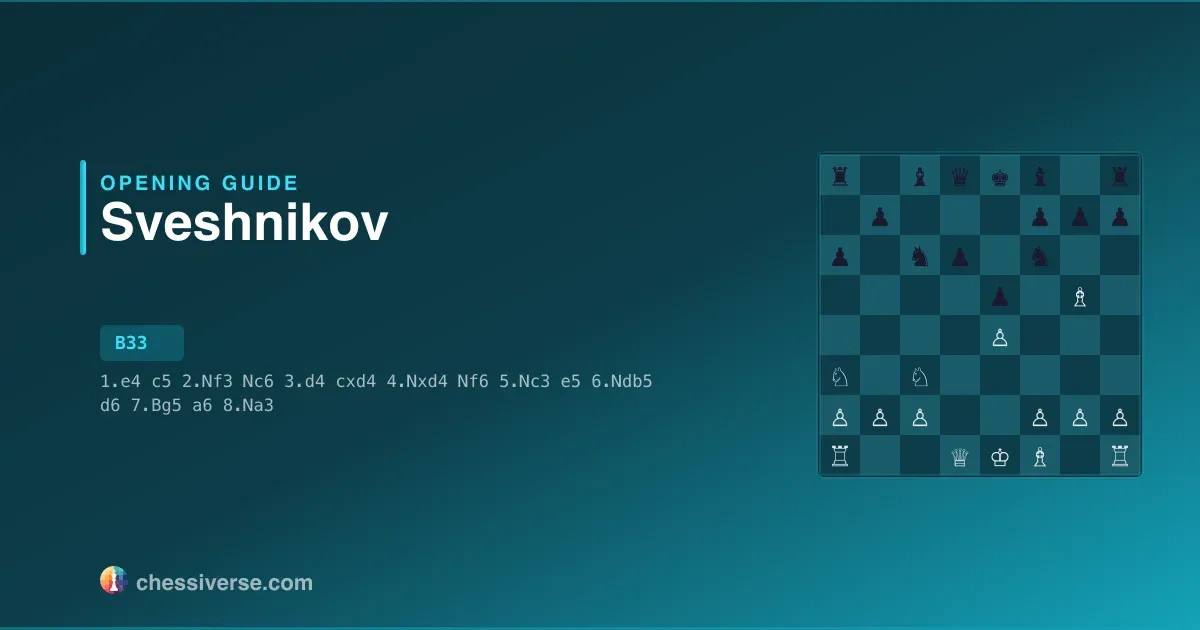
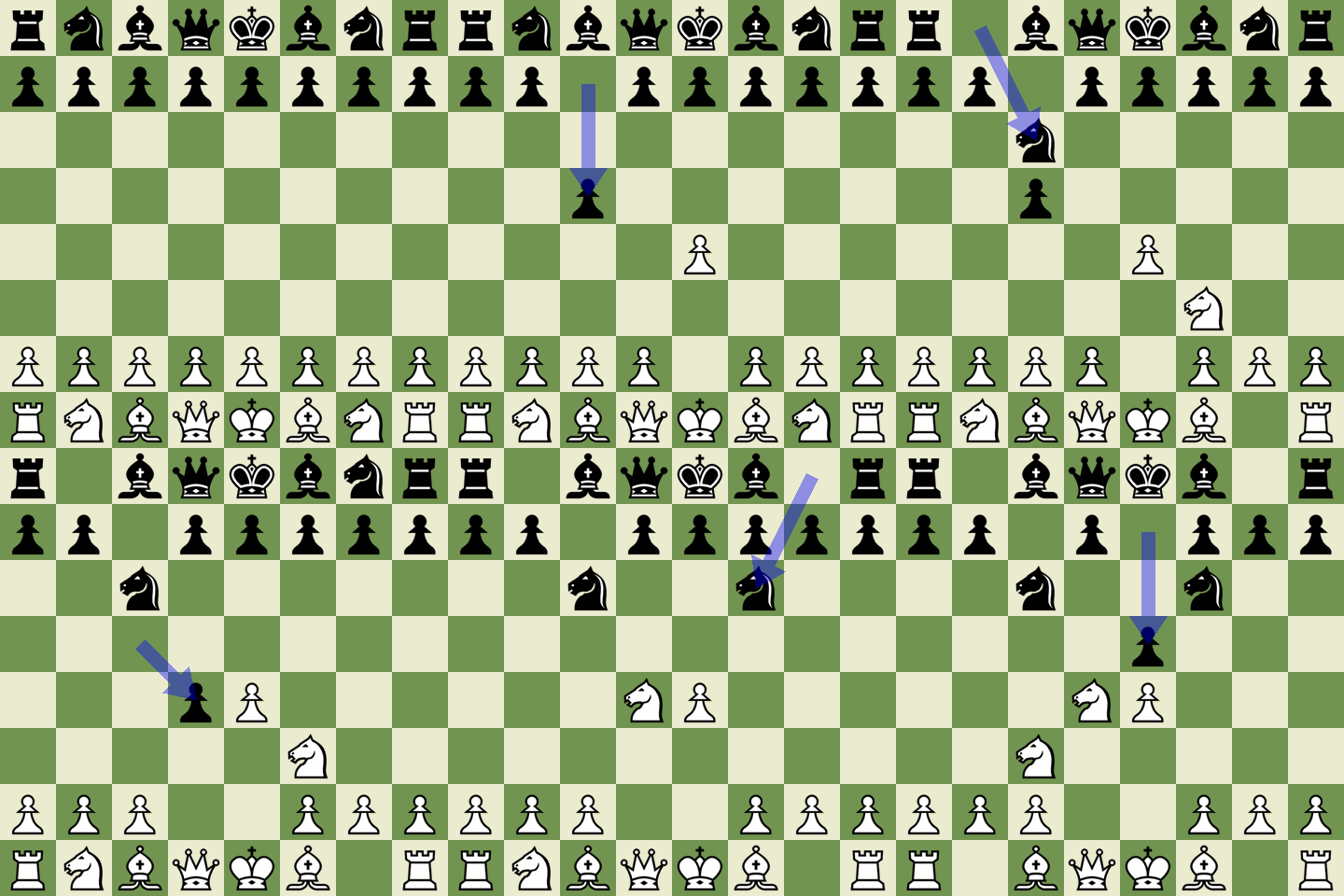
The Sicilian Defense: Sveshnikov Variation arises after 1.e4 c5 2.Nf3 Nc6 3.d4 cxd4 4.Nxd4 Nf6 5.Nc3 e5 6.Ndb5 d6 7.Bg5 a6 8.Na3 and falls under ECO code B33. Named after Latvian GM Evgeny Sveshnikov, this variation features the ambitious 5...e5, which gives Black the desirable Najdorf-style pawn structure without immediately committing to ...d6 and blocking in the dark-squared bishop. Black's strategy is to delay ...d6 long enough for the bishop to develop actively to b4, effectively reaching an enhanced version of the Najdorf. To prevent this, White's key response is Ndb5, which practically compels ...d6 by threatening to occupy the d6 outpost with check. While this knight jump forks Black's king and c8 bishop, the threat is easily manageable after ...Bxd6. With 1.4 million Lichess games across all rating levels, it is a well-established opening choice.
- Black plays ...e5 to boot the d4-knight, accepting a backward d-pawn and a hole on d5 in return for a central foothold and active pieces.
- With ...a6 and ...b5 Black chases White's knights toward the edge of the board, gaining time.
- The ...f5 push is a key plan: after ...fxe4 and a second ...f5, Black gets good control of the centre.
History and Notable Players
It arises from the Sicilian Defense: Lasker-Pelikan Variation. Among the most prolific practitioners on the White side are Oleg Korneev (89 games), Janis Klovans (74 games), Thomas Luther (67 games). On the Black side, notable exponents include Vladimir Kramnik (117 games), Vasilios Kotronias (116 games), Zdenko Kozul (108 games).
Emanuel Lasker tried the ...e5 idea a single time during his world title match with Carl Schlechter, and Jorge Pelikan gave it occasional outings in the 1950s. It stayed a sideline until Sveshnikov and Timoshchenko reworked it in the 1970s, and it has since become hugely popular from club level to the elite.
Named after: Evgeny Sveshnikov, who with Gennadi Timoshchenko turned the line into a serious weapon in the 1970s.
Notable players: Evgeny Sveshnikov, Magnus Carlsen, Vladimir Kramnik, Veselin Topalov
Though named for Sveshnikov's 1970s work, the line is decades older: Lasker played it in a world championship match against Schlechter, and it is also known as the Lasker-Pelikan Variation.
Statistics
Based on 1.4 million Lichess games across all rating levels:
- White wins: 49.2%
- Black wins: 44.2%
- Draws: 6.6%
The statistics show a roughly balanced opening where both sides have equal chances.
Practice on Chessiverse
The best way to learn the Sicilian Defense: Sveshnikov Variation is through practice. On Chessiverse, you can play chess against computer opponents that specialize in this opening. Our AI bots range from beginner to grandmaster level, each with unique playing styles — from aggressive attackers to solid defenders. Choose a bot that matches your rating and work your way up as you master the opening's key ideas.
Performance Across Rating Levels
Popularity and results vary sharply by rating level. Among 1200-rated players, it appears in 0.00% of games — 3,438 of them on record — with White winning 46.7% and Black 49.5%. At 1800 the opening surfaces in 0.04% of games; White wins 49.1%, Black 45.5%, draws 5.5%. At the top end (2500+ Elo), popularity is 0.28% with 10.6% draws — a clear sign of how much theory rules the line at master level.
Time Control Patterns
The Sicilian Defense: Sveshnikov Variation skews toward blitz chess. In bullet, it appears in 0.06% of games (1,569,105); White wins 48.3%. Blitz shows 0.09% adoption across 3,293,095 games, White scoring 47.7%. In rapid, the share rises to 0.05% — 579,588 games, White 46.2%. White's score swings 2.1pp across formats, so time control isn't just a stylistic choice here — it shifts the actual results.
Move Diversity and Theory Depth
Move choice is far from uniform in the Sicilian Defense: Sveshnikov Variation. At 1200 Elo (87,649 games), the top reply is Nxc6, played 46% of the time. Four other moves each take at least 5% of games, and the top three moves account for 78.3% of games. Entropy: 2.12. By 2500 (52,953 games), Ndb5 takes over as the top reply at 92.4%; no other move reaches 5% and the top three moves account for 96.5% of games. Entropy drops to 0.56. The narrowing is significant — strong players consolidate around a small set of best moves, while amateurs scatter across many plausible-looking options.
Historical Trends
Tracking the Sicilian Defense: Sveshnikov Variation year over year shows a clear story. Adoption peaked in 2020 at 0.12% (712,588 games). By 2025 it sits at 0.06%, 49% below the peak and roughly back to its 2013 level, leaving the line flat over the full period.