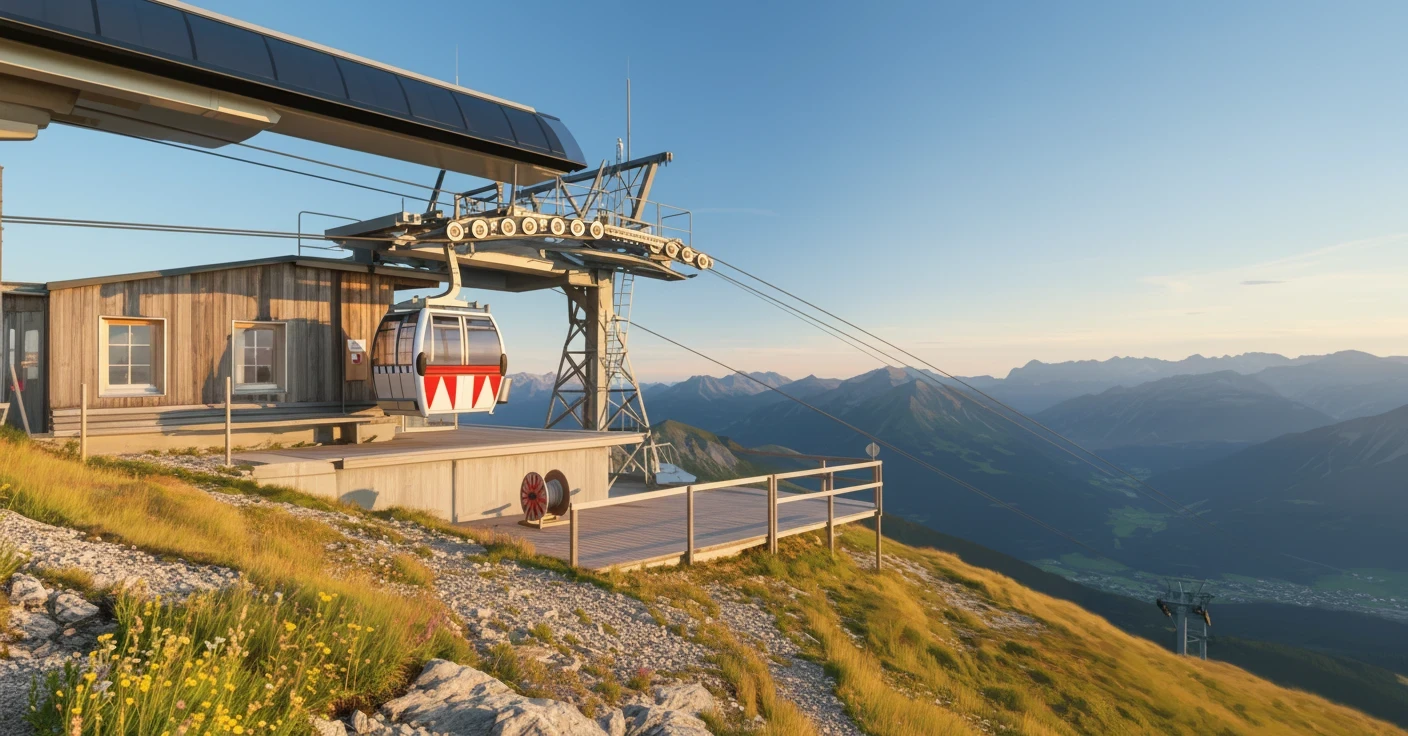
Servus. Andi here, up at the top station, waiting for the next cabin to come up the line. Pull up a stool, we'll send a few cabins out over the board and see how the weather treats us.
Andreas Aigner, known as Andi, is a 40-year-old cable car operator from Tyrol, Austria, who runs the top station of a small alpine line he took over from his uncle fifteen years ago. With an estimated rating of 2837, Andi plays at international master to grandmaster strength, the product of long quiet hours spent reading old chess books in the glass-walled station building between cabin runs. He calculates deep forcing lines with the same patience he brings to watching weather come over the saddle, treating the board the way he treats the cable: nothing rushed, everything checked twice. He grew up in the valley below and knows every föhn wind and sudden spring snowfall on the ridge, and that same quiet attention shows up in his chess. Opponents facing Andi should expect aggressive, tension-filled play from a calm operator who keeps the position complicated and rarely lets the pressure off.
How Andi plays
Andi plays sharply aggressive chess and keeps the tension on the board, almost never trading down to simplify when complications are available. His solid-sharp balance sits in the middle, and his theoretical preparation is broad rather than narrowly committed to one repertoire. The result is a player who pushes hard, calculates deeply, and forces the opponent to navigate complicated middlegames where small inaccuracies are punished immediately.
Who should play Andi
Andi suits strong players in the 2200 and up range who want a stern test against international master to grandmaster level resistance. Because he leans aggressive and keeps positions complicated, he is ideal sparring for players who tend to simplify under pressure or who want practice defending in sharp, tension-heavy middlegames. Lower-rated players can still learn from the games, but should expect to be outcalculated in any tactical sequence.