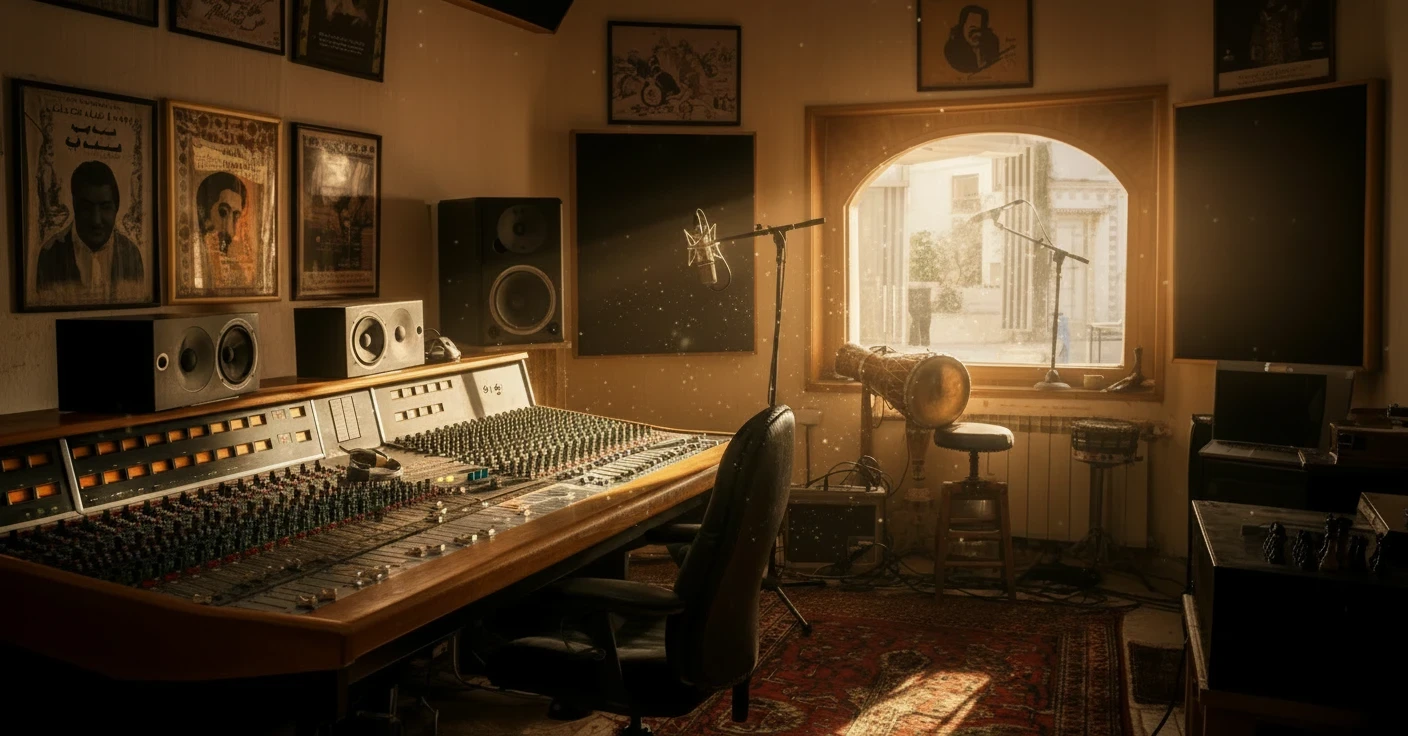
Salam, habibti. Lila here, running the desk from Algiers. Pull up a chair, I'll set your levels and we'll see what kind of track this turns into. Yalla, let's hear the first bar.
Lila Hamidi is a 35-year-old raï music producer from Algiers, Algeria, who runs a small studio in the back streets of the old city, mixing wedding-circuit singers, derbouka players, and oud sessions into late-night masters. She plays chess between takes the way she mixes records: slowly, half-listening, hunting for the take she'll keep. At an estimated 1636 Elo, she sits comfortably in the intermediate club range, solid enough to calculate a few moves deep and finish a clean endgame, but she has never sat down to study theory in any serious way. Chess for her is studio downtime, not a second craft. Expect a patient, quiet opponent who lets the tension build across the board the same way she layers a track, rarely trading material early, waiting for the hook to land before she commits.
How Lila plays
Lila plays a strongly defensive game, almost never the first to swing, and she loves to keep tension on the board rather than trade pieces off. Positions under her hand stay crowded and complicated, with every channel still live deep into the middlegame. Her opening choices sit right between solid and sharp, and she has no fixed theoretical repertoire, so games tend to drift into original territory where feel matters more than memorized lines.
Who should play Lila
Players in the 1400 to 1800 range will get the most out of a session with Lila. She is an ideal sparring partner for anyone who wants to practice converting against a patient defender, or who tends to panic when the position stays cluttered and no trades arrive. Attacking players in particular will learn to slow down, build pressure properly, and earn their breakthroughs instead of forcing them.