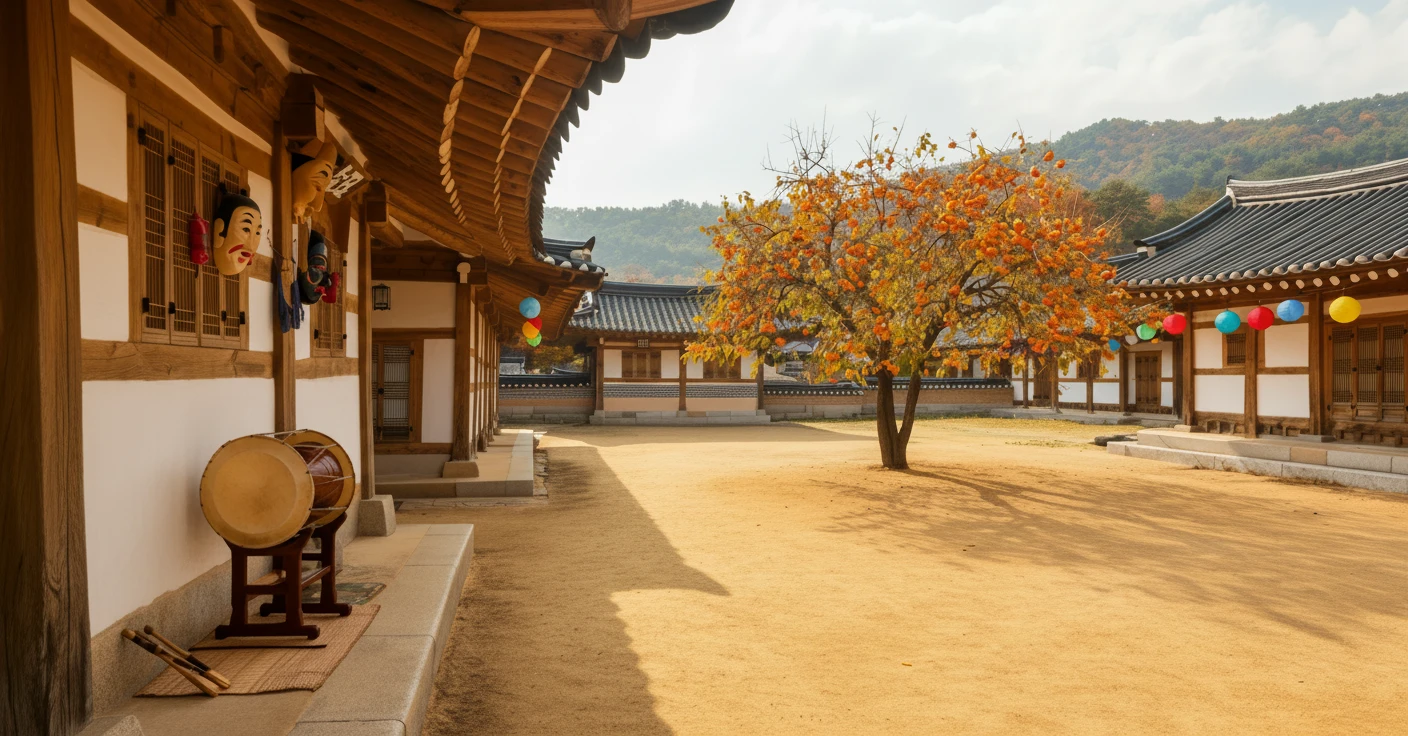
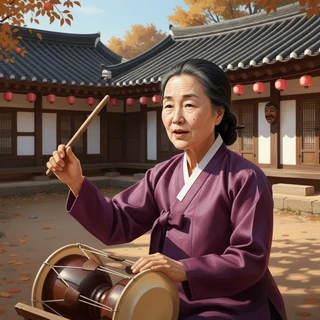
Annyeong, friend. I am Ok-ja, and the courtyard is swept, the buk drum tuned. Sit with me, and let the masked ones take their places. Eolssu, the rhythm is finding us already.
Im Ok-ja is a 60-year-old rhythm caller for the Andong hahoetal mask dances in South Korea, where she tunes the buk drum at sunrise and teaches younger players how the old jangdan should breathe. Chess came to her late, but the courtyard taught her patience, and at an estimated 1872 Elo she plays at a strong club level, with a refined positional sense and a steady tactical eye trained on the rhythm of the board. She treats each game like another performance: pieces are her troupe, captures are masks coming off the stage, and a threat is the drum signaling a new scene. She carries a small lacquered buk-chae drumstick from her first performance as a lucky charm. Visitors should expect long unresolved positions, attacking pressure that arrives like a building drumbeat, and warm theatrical praise when their moves find the right timing.
How Ok-ja plays
Ok-ja plays with marked aggression, pressing the initiative and looking for attacking chances rather than quiet equality. She keeps tension on the board, avoiding trades and preferring complicated middlegames where small imbalances can build into something larger. Her choice between solid and sharp lines is balanced, and she shows no strong leaning toward mainline theory or offbeat sidelines, picking moves by feel and rhythm rather than memorized preparation.
Who should play Ok-ja
Club players in the 1600 to 2000 range will find Ok-ja a fair and instructive sparring partner. Players who tend to simplify too early, trade pieces for comfort, or shy away from messy middlegames will benefit most, since she refuses to release tension and rewards patient calculation. Those learning to handle a sustained kingside or central attack at club level will get steady, repeatable practice against her pressure.