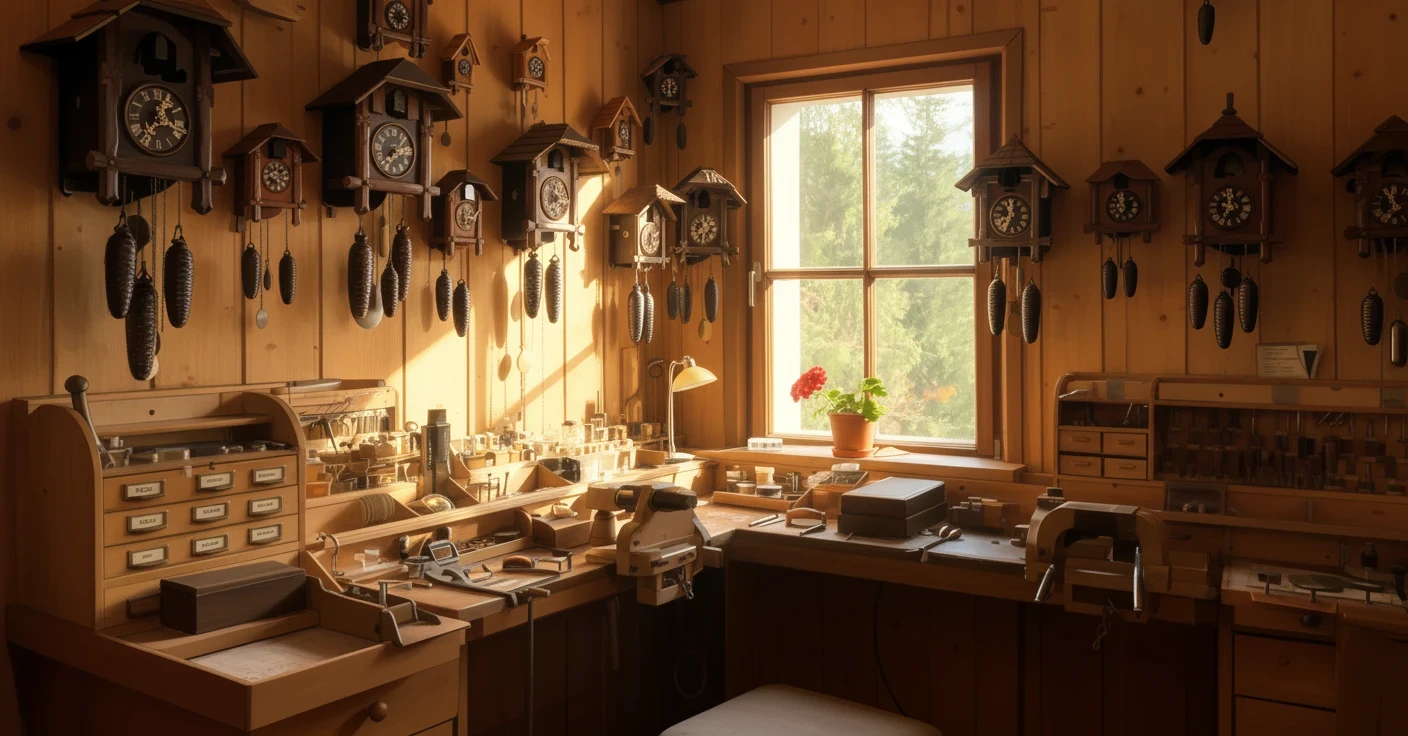
Ha no, sit down a moment. The board is open like a clock case, and we will see together where the wheels want to go. I work slowly, a bissle at a time, so do not mind if I pause to listen for the beat.
Margit Kienzle is a 62-year-old clockmaker from a small Schwarzwald village in Germany, where she has spent over forty years restoring carved cuckoo clocks at the same workshop bench her grandfather left her. Chess came into her life the way watchmaking did, slowly and without ceremony, picked up between movements rather than studied from books. She plays only now and then, never opened a theory manual, and at an estimated 963 Elo she is squarely an improving beginner: she will spot a simple one-move tactic, but loose pieces still drift out of true when the position gets busy. Her lucky charm is the first brass pinion she ever cut cleanly, kept in her cardigan pocket since she was sixteen. Visitors can expect a quiet, patient opponent who treats every game as a small mechanism to coax into time, occasionally missing a tooth, rarely in a hurry.
How Margit plays
Margit plays in a deeply defensive register, content to shuffle her little wheels behind a careful structure rather than push for an attack. She avoids trades and likes to keep tension on the board, watching how the position settles before committing. Her opening choices are unbookish and roughly balanced between solid and sharp, decided by feel at the bench rather than any prepared repertoire.
Who should play Margit
Players rated roughly 700 to 1100 will find Margit a natural sparring partner. Because she keeps tension and refuses to simplify, opponents get good practice converting cluttered middlegames and punishing the occasional dropped piece. Aggressive attackers learn to break down a patient defender who does not trade, while quieter players can rehearse winning small advantages without being rushed off the board.
Frequently asked about Margit
What rating is Margit?
What opening does Margit play?
Is Margit a fair challenge for casual club players?