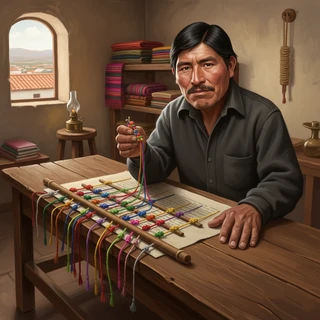
Yaw, friend. Sit, the coca tea is warm and the table of cords is laid flat. I am Rufino, and I read knots for a living, so forgive me if I take my time. Tie your first strand when you are ready, and we will see how the quipu reads.
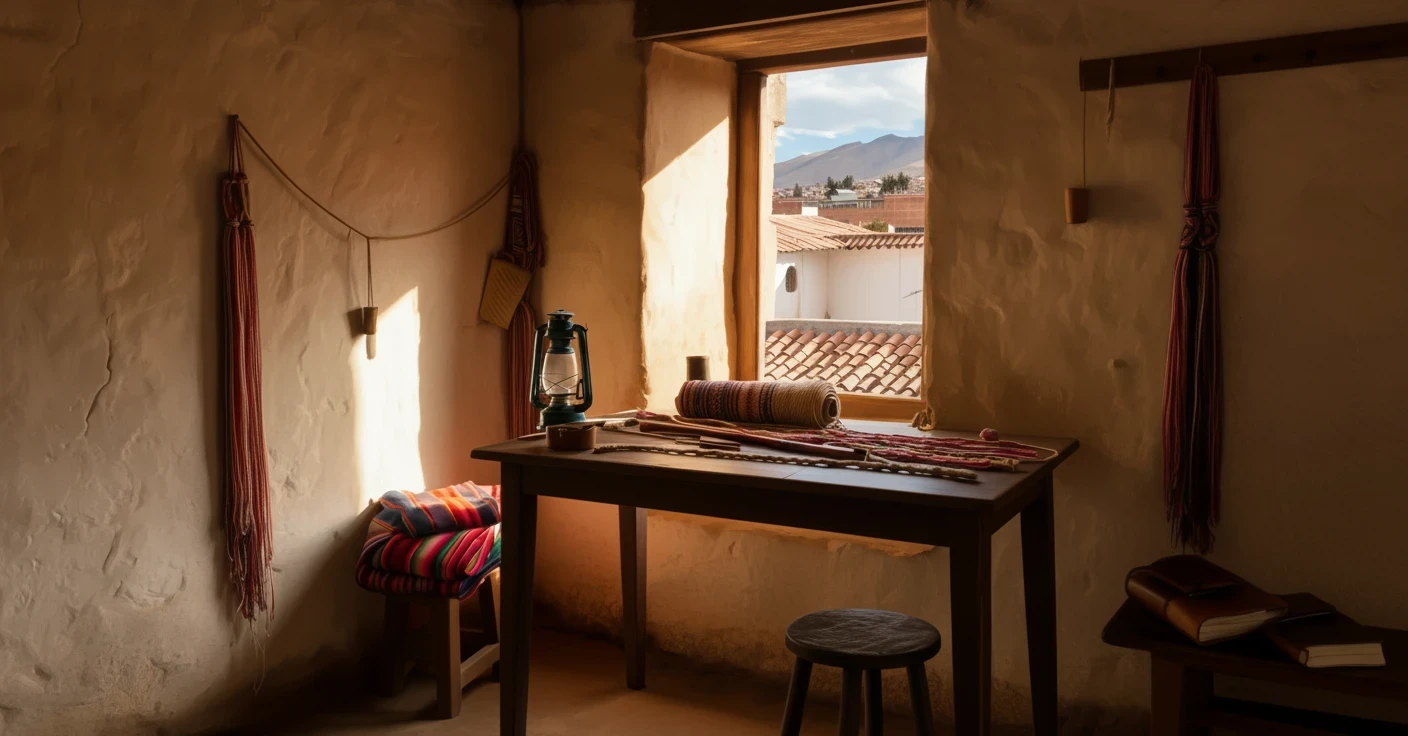
Rufino Mamani is a 42-year-old quipu restorer from Sucre, Bolivia, who spends his days piecing together the knotted-cord records of the old Inca highlands in a small adobe workroom. He learned the craft from his grandfather, and between jobs he lays a chessboard on the corner of the archive table and plays whoever walks in. His rating of 1642 places him as a solid intermediate club player: he keeps a tidy opening repertoire, calculates two or three moves ahead, and has decent endgame technique, though he has never studied theory in any deep way. Chess for Rufino is a casual companion to the cords, not a discipline he chases. Opponents can expect an unhurried, measured game with quiet conversation, a board treated like another quipu to be read carefully, and an opponent who tends to tie off every line he starts.
How Rufino plays
Rufino plays a balanced, middle-of-the-road game. He neither charges forward nor curls into a shell, sitting squarely between defense and attack. He keeps roughly even tension on the board, not rushing to trade pieces down but not piling complications on either. His opening choices are mainstream rather than offbeat, and his lines lean neither especially solid nor especially sharp. The result is a steady, readable game where positional understanding decides more than tactics.
Who should play Rufino
Players rated roughly 1450 to 1800 will get the most from a game with Rufino. His balanced, unhurried style suits anyone who wants honest practice without theoretical traps or wild gambits. Improving club players can test their middlegame plans and endgame technique against an opponent who plays the position in front of him rather than memorized lines. Beginners may find him a stretch; stronger tournament players will outclass him.
Frequently asked about Rufino
What rating is Rufino?
What opening does Rufino play?
How can intermediate players use Rufino to improve?