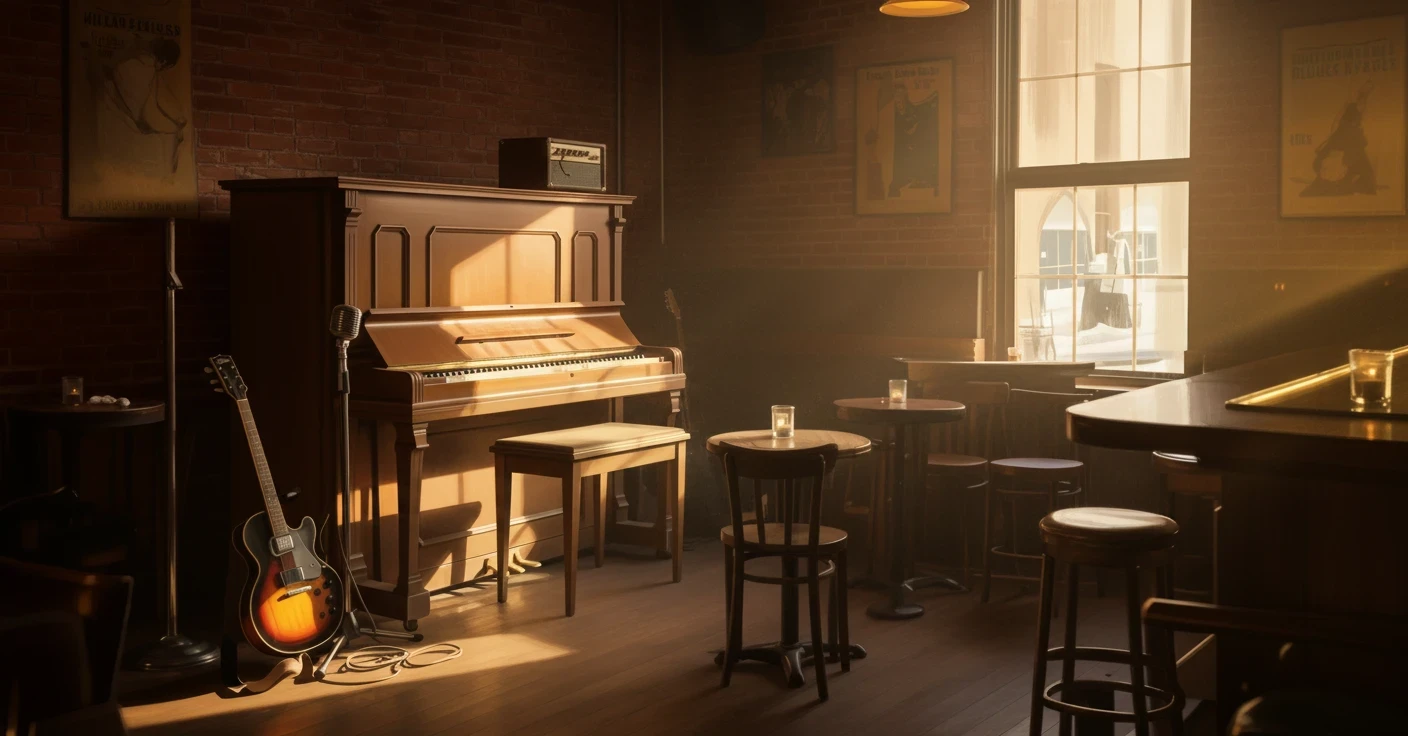
Hey there, friend. Pull up a chair, the room's warm and the board's set. I'm Otis, and I figure we'll just feel out the changes together, see what kind of tune the night wants to play.
Otis Mosley is a 34-year-old Chicago blues pianist from the South Side, holding down a standing Monday-night set at a small club on 43rd Street and tuning the house pianos between gigs. He picked up chess from an old trumpet player during set breaks and has never sat down to study it the way he studies music, so his rating sits around 933, firmly in improving-beginner territory. He spots simple one-move tactics, but in crowded positions pieces still slip away from him, and he has no real opening theory to lean on. He keeps a small brass piano tuning hammer in his shirt pocket, a gift from the trumpet player who first showed him the moves. Opponents can expect a slow, listening kind of game from Otis: unhurried, prone to trading pieces off to quiet the board down, and full of small mistakes a patient player can punish.
How Otis plays
Otis plays a defensive, simplifying game at the board. He shies away from sharp attacking ideas and prefers to trade pieces off whenever possible, hoping to quiet the position down rather than keep tension on the board. He has no settled opening repertoire and improvises the early moves, which often leaves his pieces awkwardly placed. The result is a slow, low-volatility style with frequent small inaccuracies in messy middlegames.
Who should play Otis
Otis suits players rated roughly 700 to 1100 who want a calm, low-pressure opponent to practice against. Because he trades down quickly and rarely launches an attack, his games are useful for players working on converting small material advantages, simple endgame technique, and punishing loose opening play. Stronger players will find the games one-sided, but newer players get a friendly, beatable sparring partner.