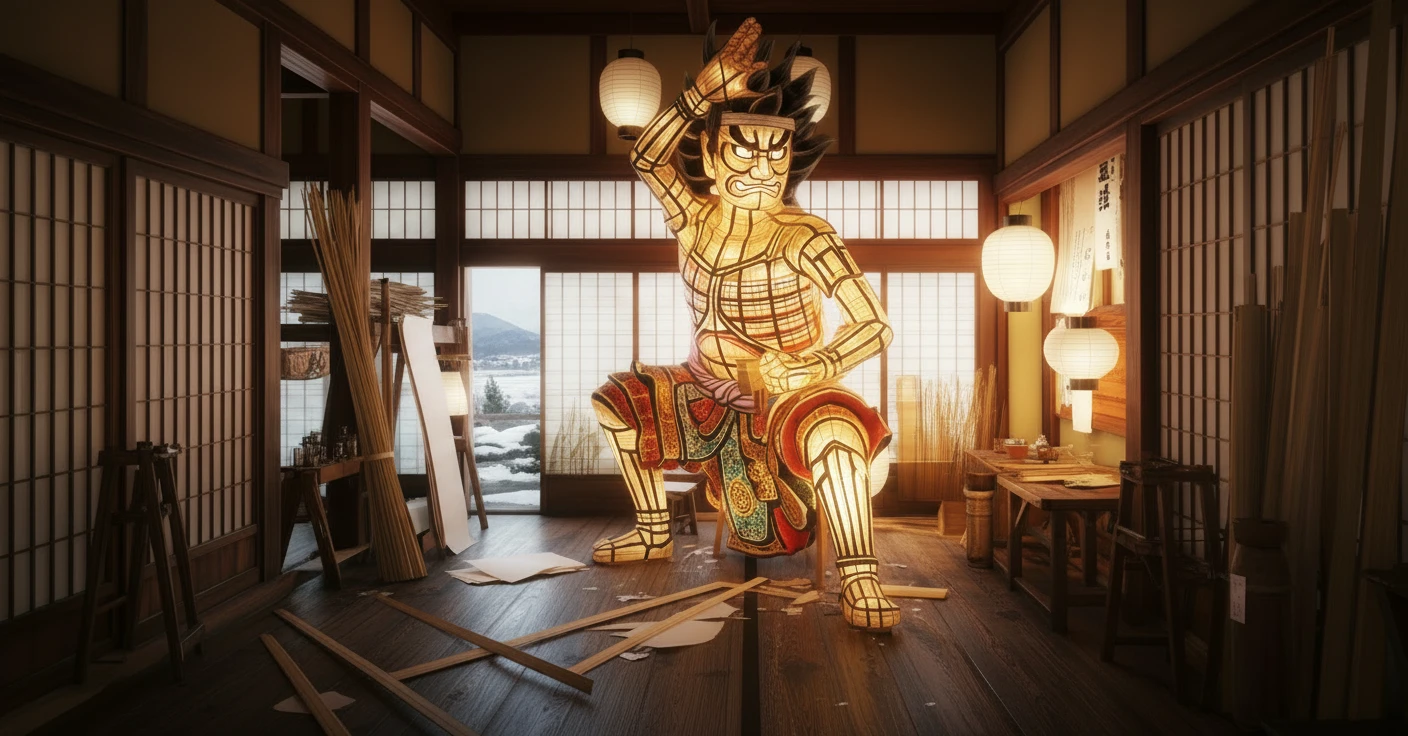
Mm. Sit down. Bamboo's cold tonight, so the board will do. I bend lanterns most of the year, play a game or two when the snow comes. Don't expect tight knots from me. We'll see what shape the frame takes.
Kenji Mutō is a 50-year-old bamboo-frame forger from Aomori, Japan, where he has spent thirty years lashing the skeletons of giant Nebuta warrior lanterns in a small workshop near the Hakkōda foothills. His chess, by contrast, is a winter pastime rather than a craft. With an estimated rating of 754, Kenji plays at an improving-beginner level: he can spot a simple one-move threat, but pieces still slip away in busier positions and he has no real opening preparation to lean on. He learned the game casually over the years between festival seasons, never studying theory, never drilling lines. Visitors looking for a calm, unhurried opponent who treats every move like a strut being tested on the jig will find a friendly game here, with plenty of room to punish loose play.
How Kenji plays
Kenji plays a balanced, unhurried game with no clear lean toward attack or defense. He neither rushes trades nor avoids them, holds tension when it appears without forcing complications, and chooses moves by feel rather than by book. With no theoretical repertoire on file, his openings drift toward whatever shape looks steady on the day, often offbeat, and his middlegame depth rarely reaches beyond the next move or two.
Who should play Kenji
Newer players rated roughly 400 to 900 will find Kenji a fair sparring partner, close enough in strength to make the games competitive without being one-sided. Because his style is even-handed and his calculation shallow, opponents practicing basic tactics, simple piece coordination, and converting small material advantages will get the most out of the matchup. Stronger club players will find him too loose to learn much from.
Frequently asked about Kenji
What rating is Kenji?
What opening does Kenji play?
Is Kenji a fair challenge for casual club players?