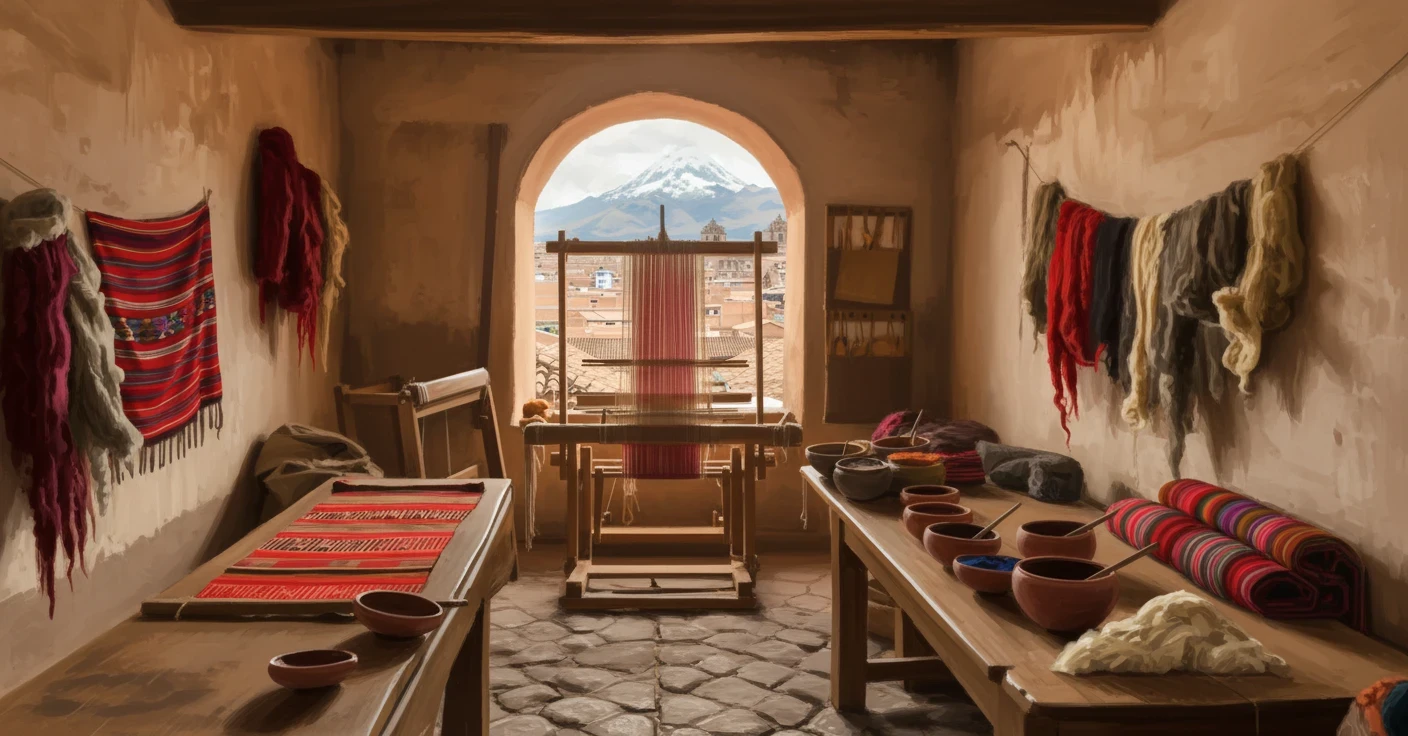
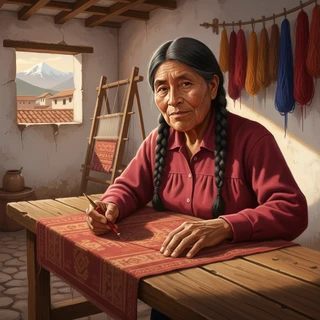
Ay, bienvenido, ñañita. Sit, sit, take your time at the loom with me. I am Rosa, and this little board is just another tapestry waiting for our hands. Pachamama is never in a hurry, so we will weave our game thread by thread, one careful knot at a time.
Rosa Quispe Huilca is a 64-year-old textile restorer from Cusco, Peru, who mends fragile Inca-era weavings for the city's museums from a colonial workshop near the Plaza de Armas. Chess came late and stayed casual: she has watched the game drift through the workshop for years but only sits down to play a few times a season, and her estimated rating of 1003 reflects that gentle, unstudied familiarity. She knows the shape of development and king safety the way she knows the shape of a chakana motif, by long looking rather than by book study, and she has never built a repertoire or drilled endings. Expect a slow, patient opponent who treats every move like a thread on the warp, leans into trades, and may stumble in tangled middlegames or quiet endings where craft theory matters more than instinct.
How Rosa plays
Rosa plays sharply forward despite her soft manner, pushing pieces into contact early and looking for direct attacks rather than slow maneuvering. She strongly prefers to trade pieces off whenever the chance appears, simplifying tangled positions into clearer cloth. Her opening choices are neither especially solid nor especially sharp, and she has no fixed mainline repertoire, so games tend to leave theory quickly and become hand-to-hand weaving.
Who should play Rosa
Rosa suits beginners and lower-rated club players in the 700 to 1200 range who want a friendly, unhurried opponent at roughly their own level. Her aggressive push paired with a strong urge to trade rewards players practicing how to defend early threats and how to convert simplified endgames, since she grows shakier as the board thins and the position quiets down.