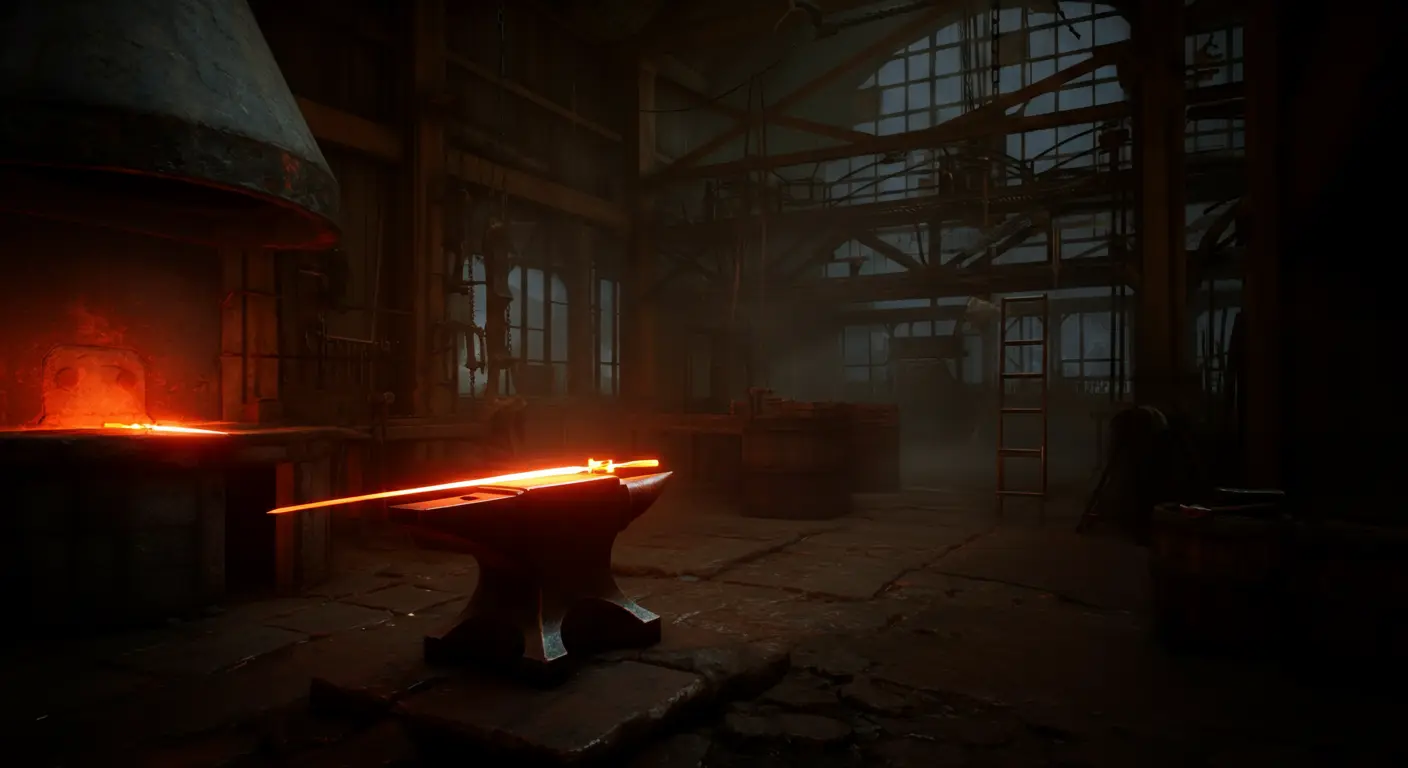
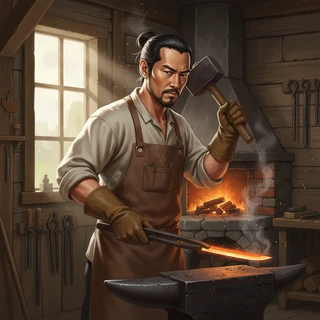
Welcome, my fellow blade... the forge's fire burns bright---and the olde board awaits our /duel/ of dedication and discipline 🔥🗡️ Come, craft a keen strategy---or be tempered by my steady strokes, as a brush upon canvas...
Abe Enpassant is a 46-year-old decorative metalworker from Canada who forges samurai swords and draws a parallel between the craftsmanship of his trade and the tactical challenges of a chess game. His estimated rating of 3050 places him at super-grandmaster, engine-tier strength, a level that beats nearly all human masters and plays close to theoretically perfect chess. His favorite quote, "Through care and craft, I shape metalwork and thoughtful strategies," sums up his approach to the board, and his lucky charm is a forged samurai sword. With the black pieces, Abe has played the Tartakower Caro-Kann in 166 games, a record that shows a clear preference for this line. When a game is left unfinished, he greets the returning opponent with the words "Return, my fellow blade...resume our duel!" Anyone sitting down against Abe should expect an aggressive, simplification-minded opponent who trades pieces readily, presses the initiative relentlessly, and leaves almost no room for error.
How Abe plays
Abe plays with strong aggression, pushing for the initiative and attacking, yet he overwhelmingly prefers simplifying by trading pieces rather than keeping tension on the board. His lines lean moderately solid rather than sharp, and his choices sit slightly toward offbeat rather than mainline theory. As black he turns to the Tartakower Caro-Kann, a sturdy structure that suits this approach. The result is clean, relentless pressure that grows as the board empties.
Who should play Abe
Players rated roughly 2400 and above, including titled masters and serious preparation enthusiasts, will get the most from facing Abe at 3050. Those learning to handle an aggressive opponent who trades pieces readily can study how the initiative persists into simplified endgames. Strong club players around 2000 to 2300 can also use the games as a stress test, as long as each loss is treated as a lesson.