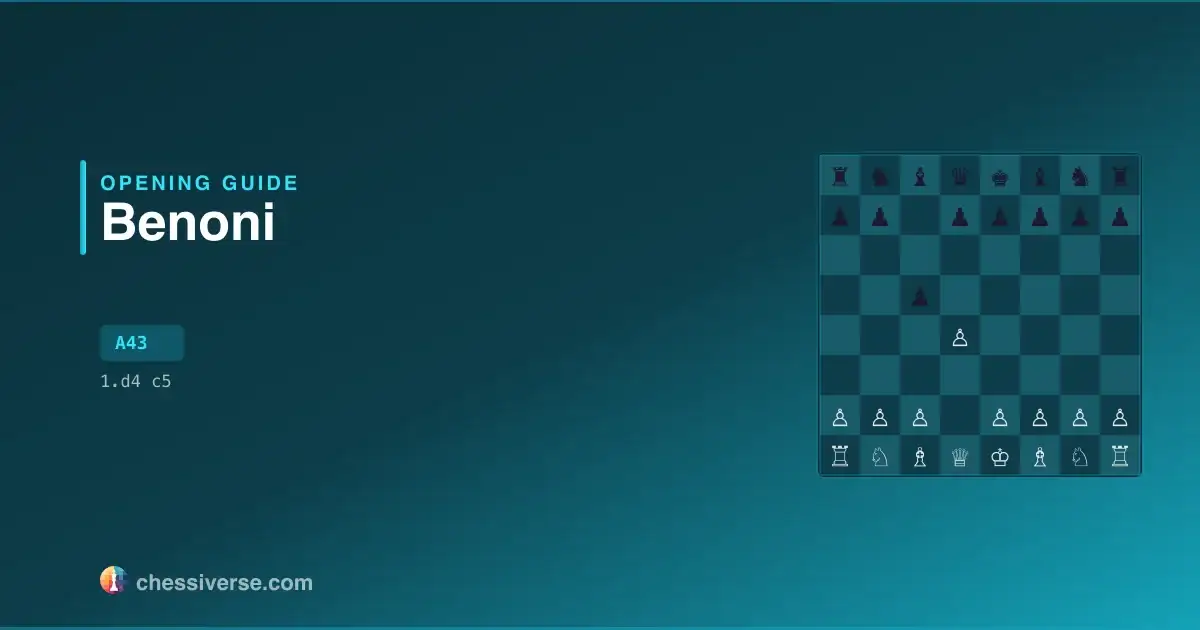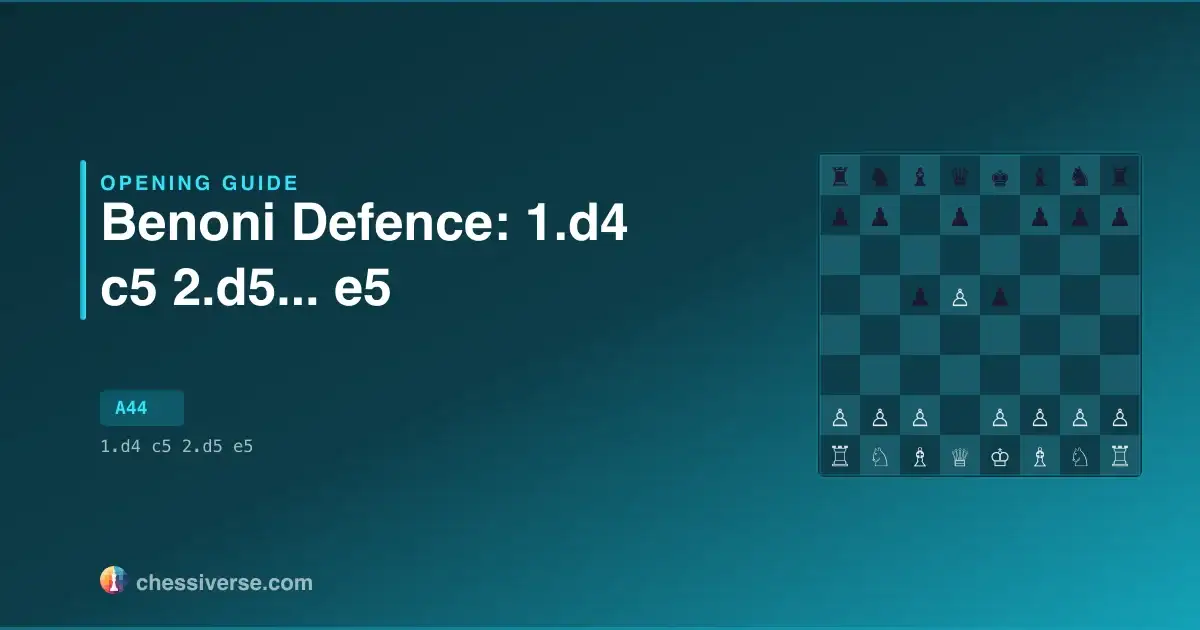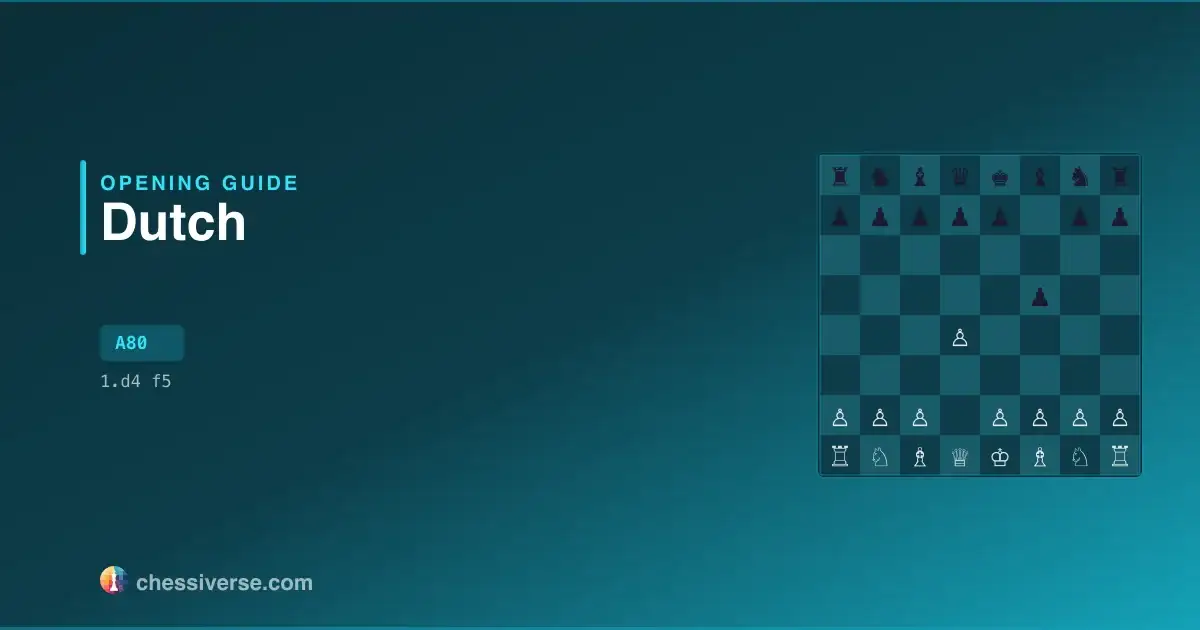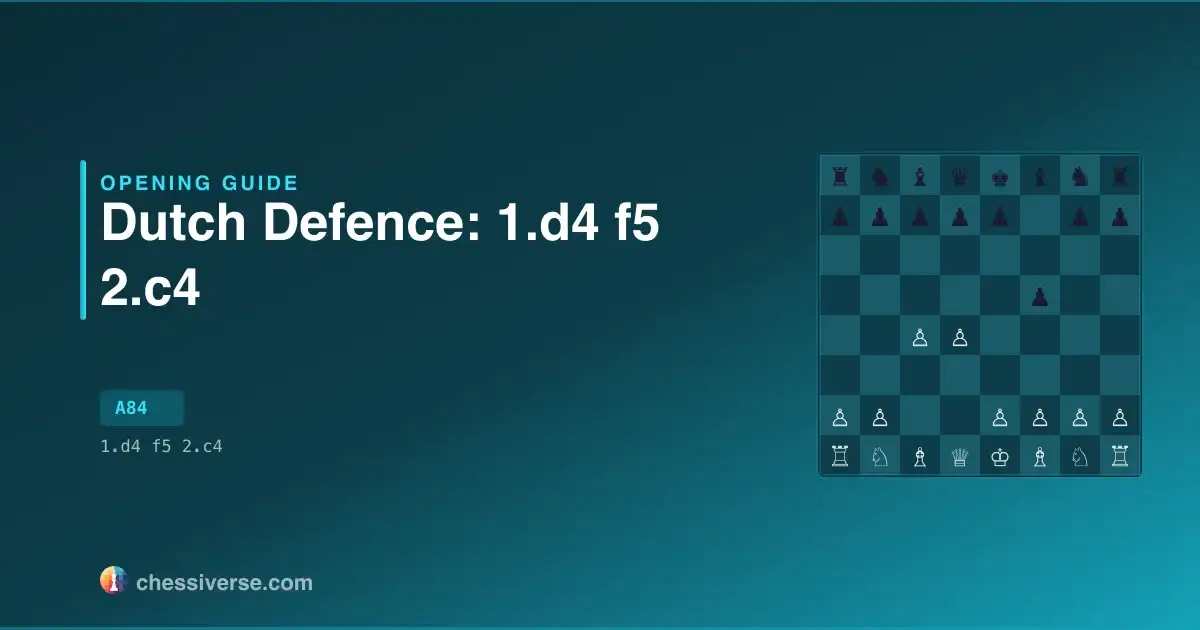


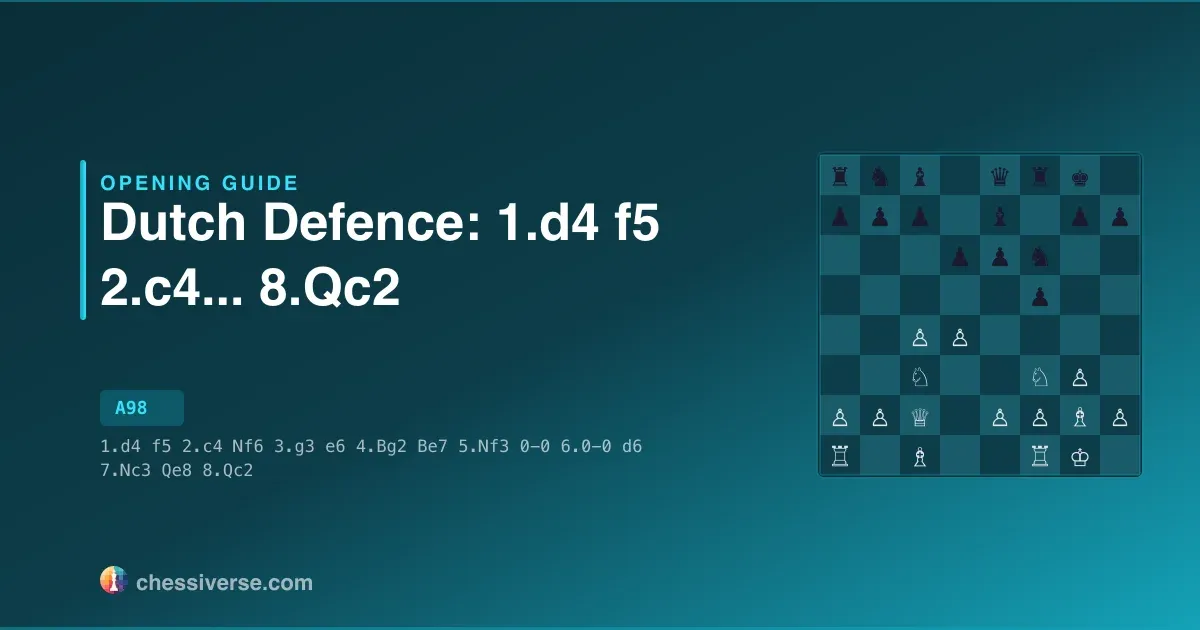
The Dutch Defense: Classical Variation, Ilyin-Zhenevsky Variation, Alatortsev-Lisitsyn Line begins with 1.d4 f5 2.c4 Nf6 3.g3 e6 4.Bg2 Be7 5.Nf3 0-0 6.0-0 d6 7.Nc3 Qe8 8.Qc2 (ECO A98). Across rating levels it shows up in 12,335 recorded games — enough data to map exactly where it succeeds and where it stalls.
History and Notable Players
It arises from the Dutch Defense: Classical Variation, Ilyin-Zhenevsky Variation. Among the most prolific White practitioners are Efim Geller (3 games), Andrea Glaser (3 games), Gyula Kluger (2 games). Black-side regulars include Bassem Amin (8 games), Alan Spice (6 games), Eva Moser (6 games).
Move Diversity and Theory Depth
What players actually play after the opening moves depends heavily on rating. Below 1400 the samples are small (31 games at 1200), so the comparison starts at 1400, with 161 games. There, the top reply is Nc6, played 26.5% of the time. Five other moves each take at least 5% of games, and the top three moves account for 58.1% of games. Entropy: 2.98. By 2500 (397 games), Qh5 takes over as the top reply at 47.1%; only two other moves still reach 5% and the top three moves account for 96% of games. Entropy drops to 1.61. The narrowing is significant — strong players consolidate around a small set of best moves, while amateurs scatter across many plausible-looking options.
Common Mistakes
- Neglecting development — It can feel productive to make extra pawn moves early, but falling behind in piece development is what loses most amateur games — especially in open positions where active pieces find squares fast.
- Playing without a plan — Each Dutch Defense: Classical Variation, Ilyin-Zhenevsky Variation, Alatortsev-Lisitsyn Line middlegame demands a specific approach. Decide whether the position calls for attack, manoeuvre, or simplification before reaching for a move.
Practice on Chessiverse
Ready to try the Dutch Defense: Classical Variation, Ilyin-Zhenevsky Variation, Alatortsev-Lisitsyn Line against a bot? Pick an opponent at your level and play a game.