Najdorf Sicilian: 1.e4 c5 2.Nf3...... Nbd7

+104%
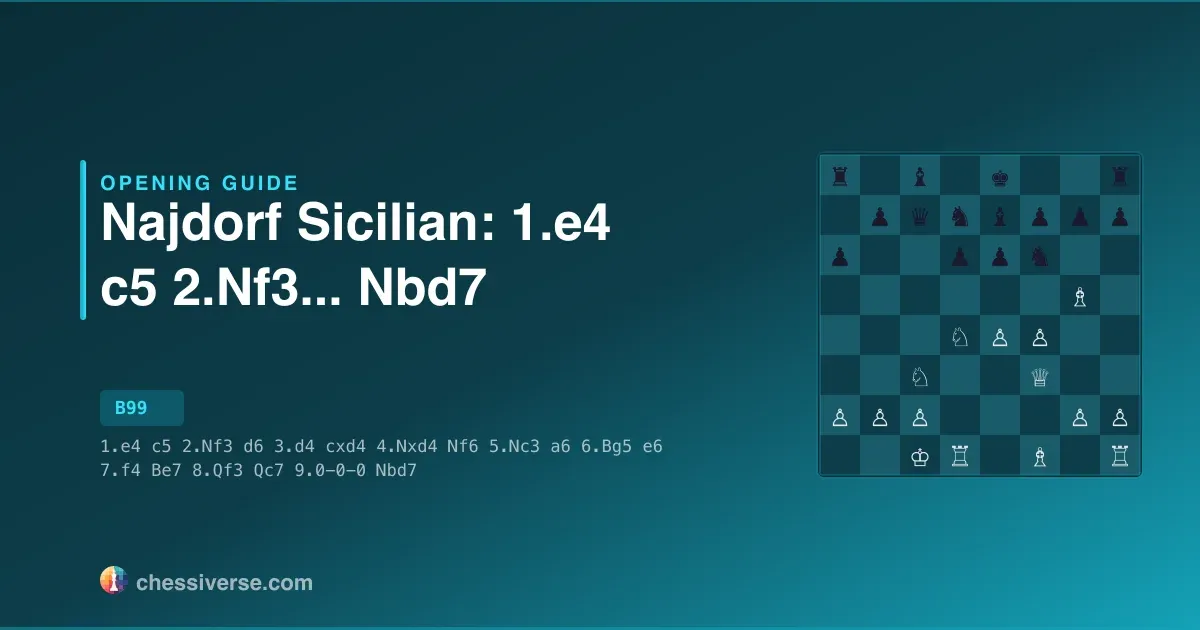
B991.e4 c5 2.Nf3 d6 3.d4 cxd4 4.Nxd4 Nf6 5.Nc3 a6 6.Bg5 e6 7.f4 Be7 8.Qf3 Qc7 9.0-0-0 Nbd7
Jan 31, 2028
TL;DR

Opposite-side castling with both sides racing pawn storms: White's g4-h4 hunts Black's king, while ...b5 and ...Nb6 swarm the queenside. Both kings live in danger from move ten, and concrete preparation matters more than principles.

Reviewed by

IM John Bartholomew
IM John BartholomewCo-Founder & Chess Educator

International Master and chess educator. Co-founded Chessable and joined Chessiverse as co-founder. Best known for his "Climbing the Rating Ladder" YouTube series and structured opening courses.

Najdorf Sicilian: 1.e4 c5 2.Nf3...... Nbd7: A Complete Guide
Najdorf Sicilian: 1.e4 c5 2.Nf3...... Nbd7 - Opening Moves
Summary

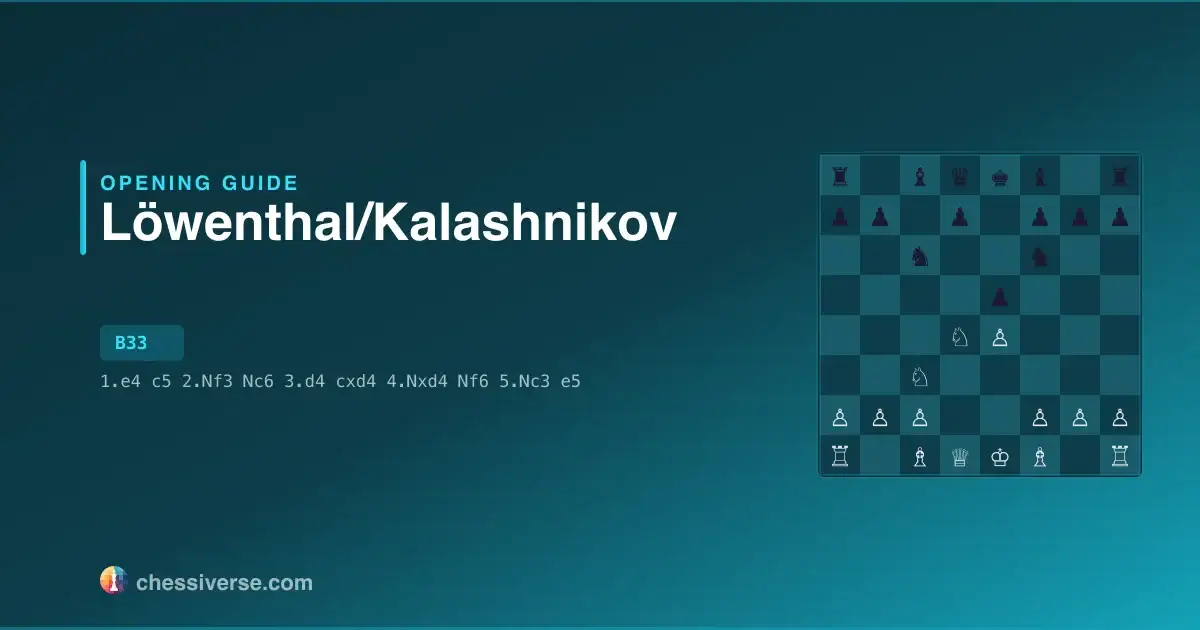
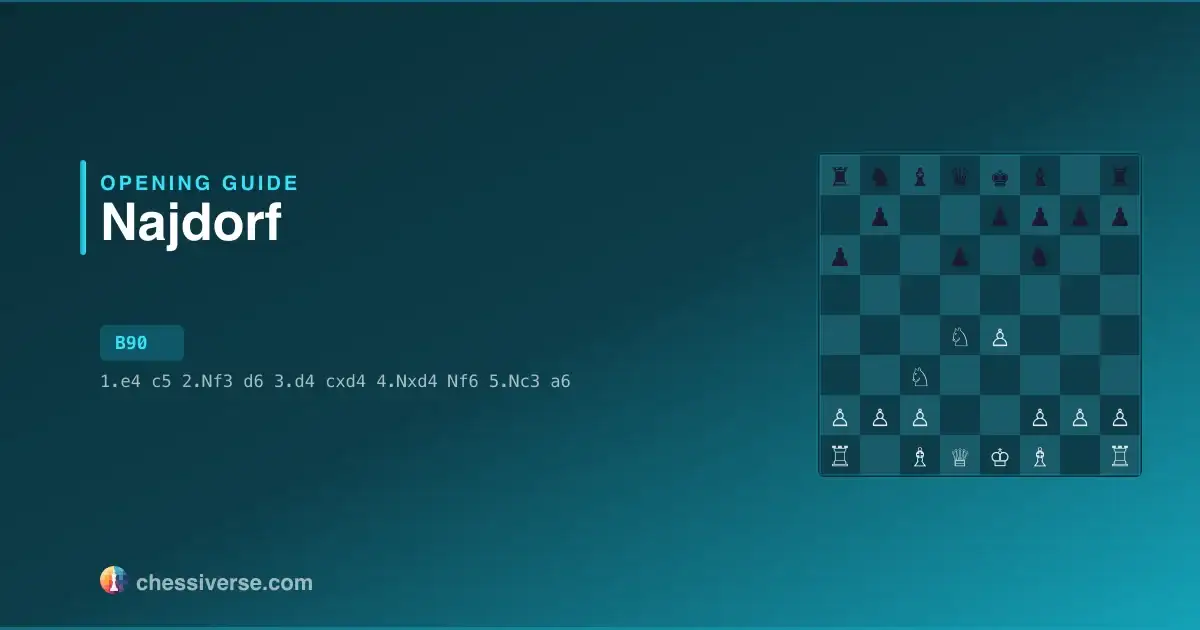
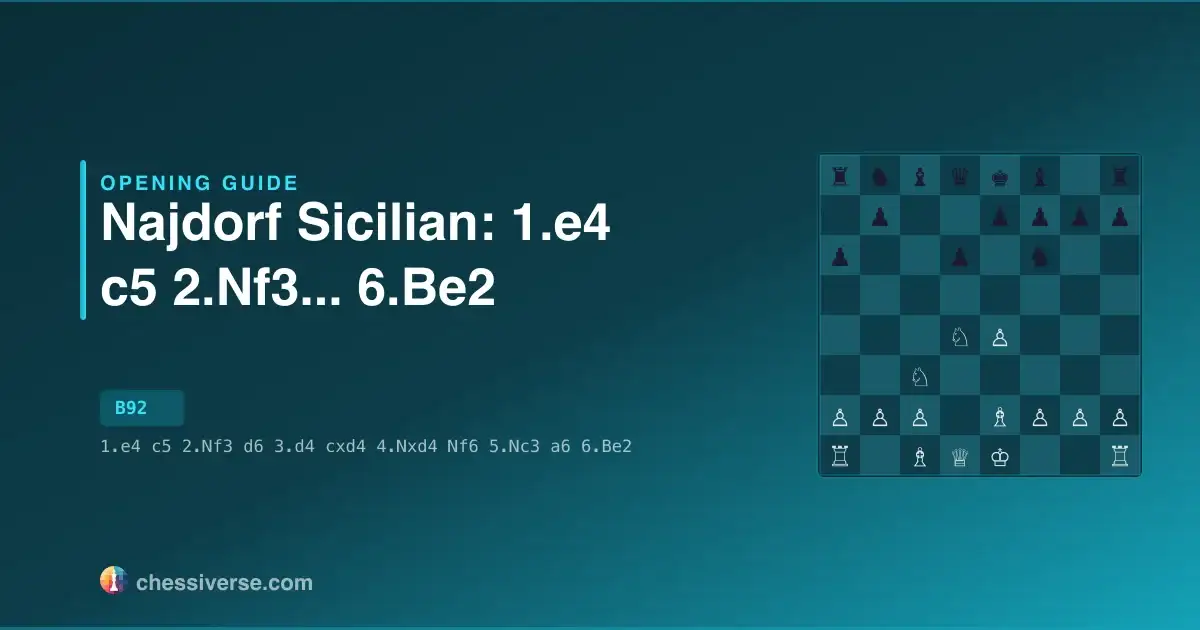
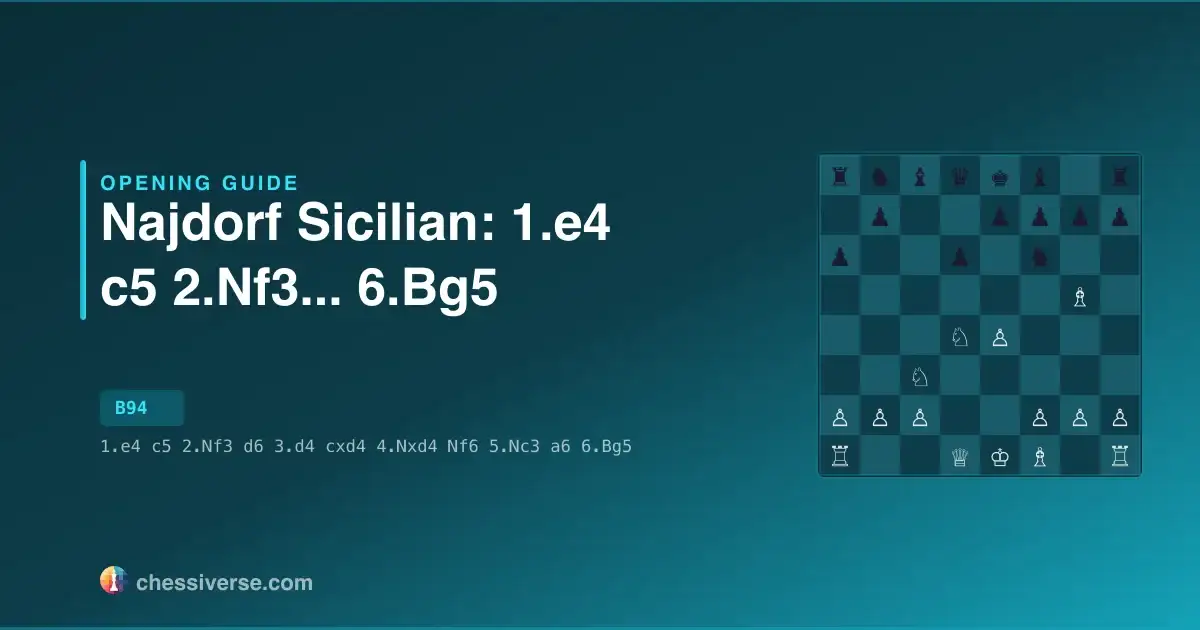
1.e4 c5 2.Nf3 d6 3.d4 cxd4 4.Nxd4 Nf6 5.Nc3 a6 6.Bg5 e6 7.f4 Be7 8.Qf3 Qc7 9.0-0-0 Nbd7 opens the Najdorf Sicilian: 1.e4 c5 2.Nf3... Nbd7, ECO B99. Across rating levels it shows up in 336,600 recorded games — enough data to map exactly where it succeeds and where it stalls.

History and Notable Players

It arises from the Najdorf Sicilian: 1.e4 c5 2.Nf3... Be7. On the White side, Milan Matulovic (12 games), Thomas Luther (11 games), Jan H Timman (11 games) top the database. Notable Black exponents: Walter S Browne (31 games), Nick E De Firmian (24 games), Jan Hein Donner (18 games).

Performance Across Rating Levels

Popularity and results vary sharply by rating level. Among 1200-rated players, it appears in 0.00% of games — 299 of them on record — with White winning 48.2% and Black 46.8%. Move up to 1800 Elo and the share shifts to 0.01%, with White winning 51.5% versus Black's 45%. Among 2500-rated players the line appears in 0.07% of games and draws spike to 8%, indicating tight preparation.

Move Diversity and Theory Depth

Move choice is far from uniform in the Najdorf Sicilian: 1.e4 c5 2.Nf3... Nbd7. At 1200 Elo, the top reply is g4, played 59.5% of the time. There are 2 other moves seeing meaningful share, and 79.7% of games stick to established theory. Entropy: 2.12. By 2500, g4 dominates at 66.7% of replies; only 2 viable alternatives remain and 94.9% of moves are theory. Entropy drops to 1.36. The narrowing is significant — strong players consolidate around a small set of best moves, while amateurs scatter across many plausible-looking options.

Common Mistakes

  • Neglecting development — Extra pawn moves in the opening are tempting, especially when you "know the moves". Developing a piece each turn is the simple correction.
  • Ignoring the kingside attack — In sharp Sicilian lines, White typically castles long and pushes the h-pawn. Without your own counterplay on the queenside or in the centre, White's attack lands first.

Practice on Chessiverse

Ready to try the Najdorf Sicilian: 1.e4 c5 2.Nf3... Nbd7 against a bot? Pick an opponent at your level and play a game.

Quick Facts

Main Line1.e4 c5 2.Nf3 d6 3.d4 cxd4 4.Nxd4 Nf6 5.Nc3 a6 6.Bg5 e6 7.f4 Be7 8.Qf3 Qc7 9.0-0-0 Nbd7
DifficultyExpert
Style

Aggressor openings create immediate tension and look for direct attacks. These lines are designed to put pressure on the opponent from the very first moves, often leading to unbalanced positions.

336,600games on Lichess
51.8%
4.5%
43.6%
White wins Draws Black wins

Top Players

As White
As Black

Data from Lichess opening explorer (blitz & rapid)

Most Popular At2500
SharpnessSharp

Popularity by Rating

Percentage of all games at each rating bracket that feature this opening.

Data from Lichess opening explorer (blitz & rapid games)

Theory Adherence by Rating

How often players choose the single most popular move at this position. Higher = more predictable play.

White to move after the opening line

Popularity Over Time

Share of all Lichess blitz + rapid games featuring this opening, by year.

Top Moves by Rating

White to move after the opening line

RatingMost Popular2nd3rd
400g472.7%Bc49.1%Be29.1%
1000g445.2%Bd328.6%Bxf67.1%
1200g459.5%Bd315.5%Bxf64.7%
1400g453%Bd317.1%Kb18.4%
1600g454.1%Bd319%Kb18.6%
1800g456.2%Bd323.4%Kb17.7%
2000g456.3%Bd327.8%Kb16.1%
2200g459.1%Bd329.4%Kb13.7%
2500g466.7%Bd325.8%f52.3%

Popularity by Time Control

Bullet
<0.01%101K
Blitz
<0.01%298K
Rapid
<0.01%39K
3% more decisive in bullet
Raw data tables (Lichess blitz + rapid)
Najdorf Sicilian: 1.e4 c5 2.Nf3...... Nbd7: popularity and win rates by player rating
Rating (Elo)Share %GamesWhite win %Black win %Draw %Sharpness
4000.001136.463.60.01.000
10000.004240.554.84.80.952
12000.0029948.246.85.00.950
14000.001,92649.247.23.60.964
16000.0012,57948.848.52.70.973
18000.0161,08151.545.03.50.965
20000.03135,23052.543.24.30.957
22000.07115,38651.942.85.30.947
25000.0710,04648.443.68.00.920
Najdorf Sicilian: 1.e4 c5 2.Nf3...... Nbd7: move-choice theory adherence by rating
Rating (Elo)Top moveTop move %Viable movesTheory %Entropy
400g472.7490.91.278
1000g445.2381.02.190
1200g459.5279.72.117
1400g453.0378.52.321
1600g454.1381.72.214
1800g456.2387.31.963
2000g456.3390.21.799
2200g459.1292.21.632
2500g466.7294.91.359
Najdorf Sicilian: 1.e4 c5 2.Nf3...... Nbd7: popularity over time
YearShare %GamesWhite win %Black win %Draw %
20130.008060.036.33.8
20140.0147352.244.63.2
20150.011,83052.744.23.1
20160.015,12051.344.34.4
20170.019,70852.243.64.2
20180.0115,79452.942.94.2
20190.0120,90452.143.94.0
20200.0150,79952.243.14.6
20210.0161,42151.344.04.7
20220.0155,34751.444.14.5
20230.0150,28251.543.94.6
20240.0146,77852.442.94.7
20250.0142,18451.643.74.7
Najdorf Sicilian: 1.e4 c5 2.Nf3...... Nbd7: popularity by time control
FormatShare %GamesWhite win %Black win %Draw %Sharpness
bullet0.00101,22751.445.72.90.971
blitz0.01298,04151.943.74.40.956
rapid0.0038,55951.642.95.50.945
Najdorf Sicilian: 1.e4 c5 2.Nf3...... Nbd7: top candidate moves by rating bracket
Rating (Elo)1st move1st %2nd move2nd %3rd move3rd %
400g472.7Bc49.1Be29.1
1000g445.2Bd328.6Bxf67.1
1200g459.5Bd315.5Bxf64.7
1400g453.0Bd317.1Kb18.4
1600g454.1Bd319.0Kb18.6
1800g456.2Bd323.4Kb17.7
2000g456.3Bd327.8Kb16.1
2200g459.1Bd329.4Kb13.7
2500g466.7Bd325.8f52.3
Najdorf Sicilian: 1.e4 c5 2.Nf3...... Nbd7: top practitioners by side
SidePlayerGames
WhiteMilan Matulovic12
WhiteThomas Luther11
WhiteJan H Timman11
BlackWalter S Browne31
BlackNick E De Firmian24
BlackJan Hein Donner18

Frequently Asked Questions

What is the Najdorf Sicilian: 1.e4 c5 2.Nf3... Nbd7?

The Najdorf Sicilian: 1.e4 c5 2.Nf3... Nbd7 begins with 1.e4 c5 2.Nf3 d6 3.d4 cxd4 4.Nxd4 Nf6 5.Nc3 a6 6.Bg5 e6 7.f4 Be7 8.Qf3 Qc7 9.0-0-0 Nbd7 and is classified under ECO code B99.

Is the Najdorf Sicilian: 1.e4 c5 2.Nf3... Nbd7 suitable for beginners?

The Najdorf Sicilian: 1.e4 c5 2.Nf3... Nbd7 involves significant theoretical preparation and sharp tactical play. While beginners can learn the basic ideas, it is more commonly recommended for intermediate and advanced players who are willing to invest time in studying specific lines. For practice, our lower-rated bots offer a forgiving environment to learn the patterns.

What are the win rates for the Najdorf Sicilian: 1.e4 c5 2.Nf3... Nbd7?

In a database of 336,600 master games, White wins 51.8% of the time, Black wins 43.6%, and 4.5% are drawn. Notable players on the White side include Milan Matulovic and Thomas Luther. On the Black side, Walter S Browne and Nick E De Firmian are among the most frequent practitioners.

How can I practice the Najdorf Sicilian: 1.e4 c5 2.Nf3... Nbd7?

On Chessiverse, you can practice the Najdorf Sicilian: 1.e4 c5 2.Nf3... Nbd7 by playing against our 600+ AI bots. Each bot has a unique playing style and opening repertoire, so you can find the perfect sparring partner for any level.

Reviewed by

IM John Bartholomew
IM John BartholomewCo-Founder & Chess Educator

International Master and chess educator. Co-founded Chessable and joined Chessiverse as co-founder. Best known for his "Climbing the Rating Ladder" YouTube series and structured opening courses.

Practice This Opening on Chessiverse

Play against 1000+ AI bots with unique personalities and opening repertoires. From beginner-friendly to grandmaster-level opponents, find the perfect sparring partner for any opening.

Play Now

Not sure which opening fits you? Take the free chess personality test — your style determines which openings will work with you.

Back to Articles