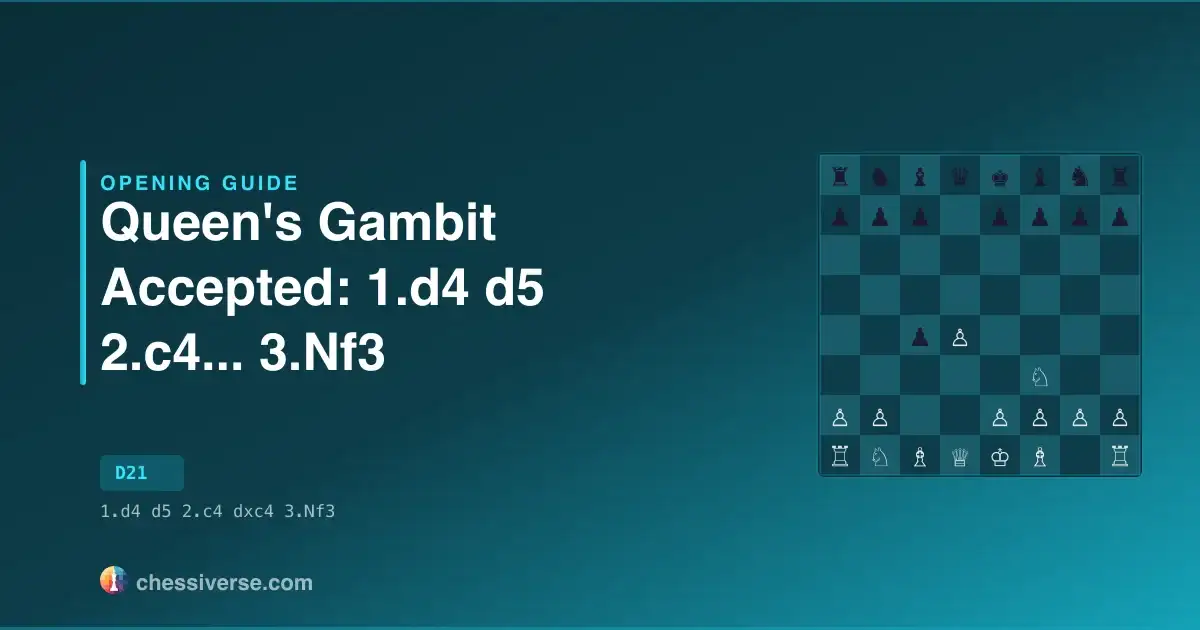





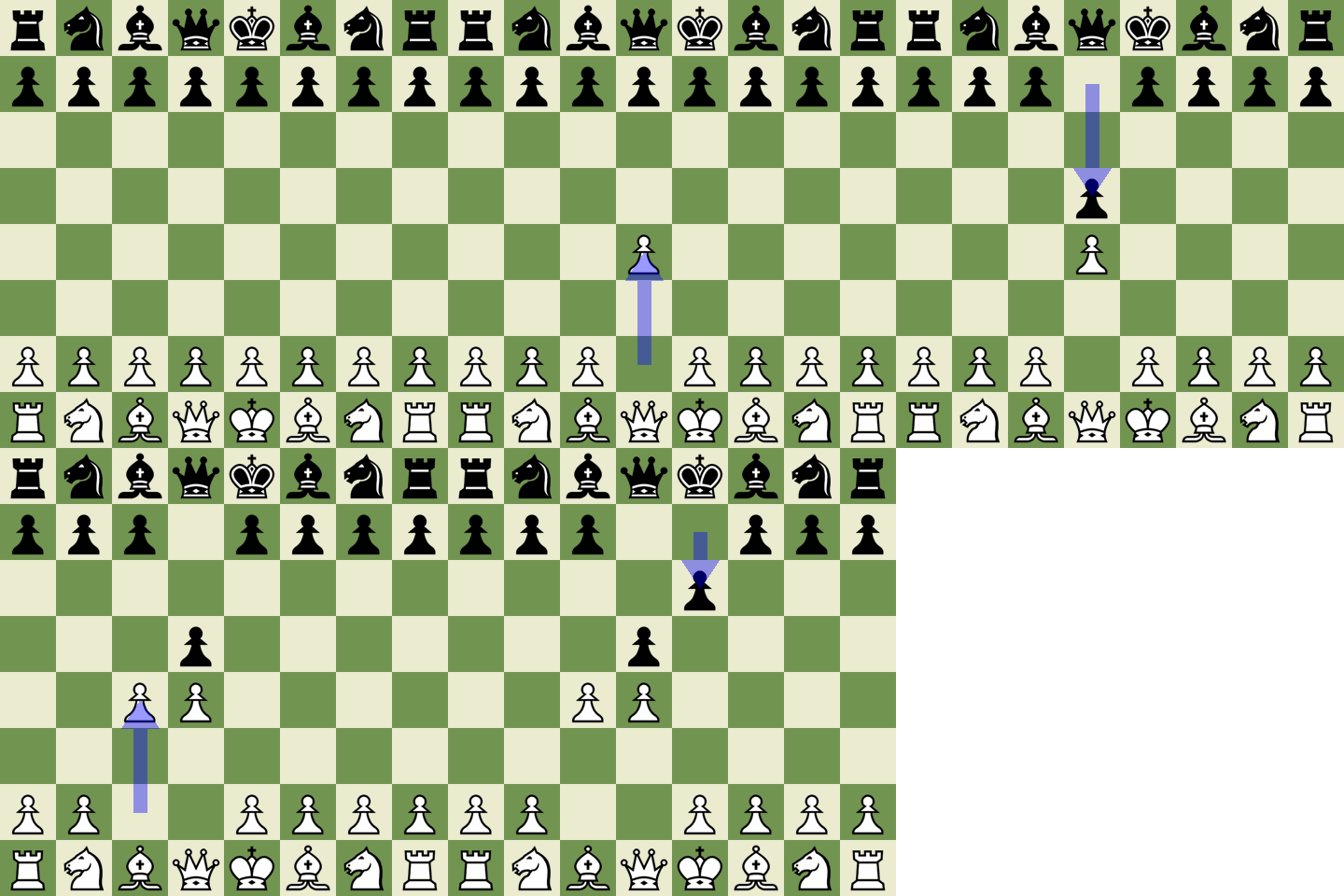
The Queen's Gambit Declined arises after 1.d4 d5 2.c4 e6 and falls under ECO code D30. By playing 2...e6, Black turns down the gambit in the classical manner, reinforcing the d5 pawn while simultaneously opening a diagonal for the dark-squared bishop to develop. The downside is that the e6 pawn obstructs the c8-h3 diagonal, hemming in the light-squared bishop. How to activate this problematic piece remains one of the central strategic questions for Black throughout the QGD. With 68.3 million Lichess games across all rating levels, it is one of the most popular openings.
History and Notable Players
It arises from the Queen's Gambit. Among the most prolific practitioners on the White side are Frank James Marshall (188 games), Ivan Farago (140 games), Alexander Alekhine (126 games). On the Black side, notable exponents include Evgeny Sveshnikov (328 games), Oleg Korneev (285 games), Boris Grachev (181 games).
Statistics
Based on 68.3 million Lichess games across all rating levels:
- White wins: 51.3%
- Black wins: 43.7%
- Draws: 5%
White holds a moderate edge statistically, though Black has good practical chances.
Main Lines and Variations
After 1.d4 d5 2.c4 e6, the main continuations include:
Each of these lines leads to distinct types of positions and requires its own understanding of the resulting pawn structures and piece placements.
Common Mistakes to Avoid
- Releasing central tension too early: The tension between the d5 and c4 pawns is a central feature of this opening. Capturing or pushing too early can give your opponent a free hand in the center.
Practice on Chessiverse
The best way to learn the Queen's Gambit Declined is through practice. On Chessiverse, you can play chess against computer opponents that specialize in this opening. Our AI bots range from beginner to grandmaster level, each with unique playing styles — from aggressive attackers to solid defenders. Choose a bot that matches your rating and work your way up as you master the opening's key ideas.
Performance Across Rating Levels
Popularity and results vary sharply by rating level. At 1200 Elo, the opening shows up in 0.94% of games (6,355,481 samples). White scores 52.1%, Black 44%, draws 3.8%. By 1800, popularity is 1.98% and White's score is 50.9% to Black's 43.8%. At the top end (2500+ Elo), popularity is 2.65% with 10.9% draws — a clear sign of how much theory rules the line at master level. White's edge erodes by 4.6pp from 1200 to 2500 Elo, suggesting Black's counterplay is easier to find with experience.
Time Control Patterns
Look at the same opening across time controls and blitz stands out. In bullet, it appears in 1.46% of games (38,931,994); White wins 52.3%. Blitz shows 1.53% adoption across 54,846,005 games, White scoring 51.3%. In rapid, the share rises to 1.22% — 13,442,920 games, White 51.3%.
Move Diversity and Theory Depth
Move choice is far from uniform in the Queen's Gambit Declined. At 1200 Elo (6,355,481 games), the top reply is Nc3, played 46.3% of the time. Three other moves each take at least 5% of games, and the top three moves account for 74.7% of games. Entropy: 2.35. By 2500 (361,183 games), Nc3 dominates at 55% of replies; only one other move still reaches 5% and the top three moves account for 97.1% of games. Entropy drops to 1.33. The narrowing is significant — strong players consolidate around a small set of best moves, while amateurs scatter across many plausible-looking options.
Historical Trends
Long-term, the trajectory of this opening is informative. Adoption peaked in 2015 at 1.81% (402,990 games). By 2025 it sits at 1.33%, 27% below the peak and 23% under its 2013 level, leaving the line in decline.