

Summary
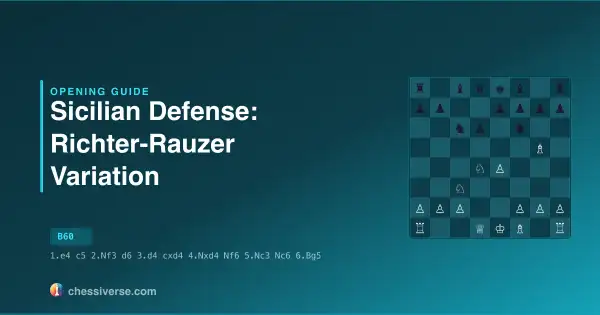
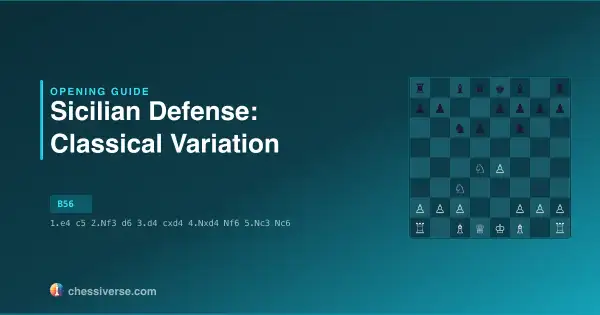
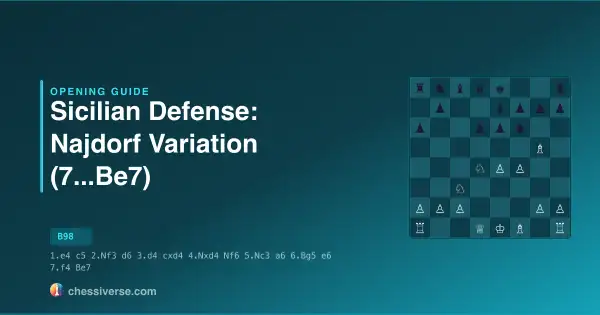
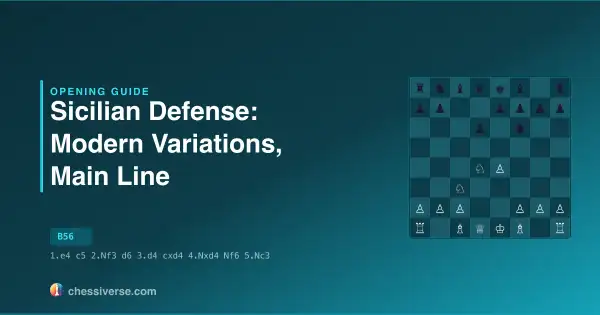
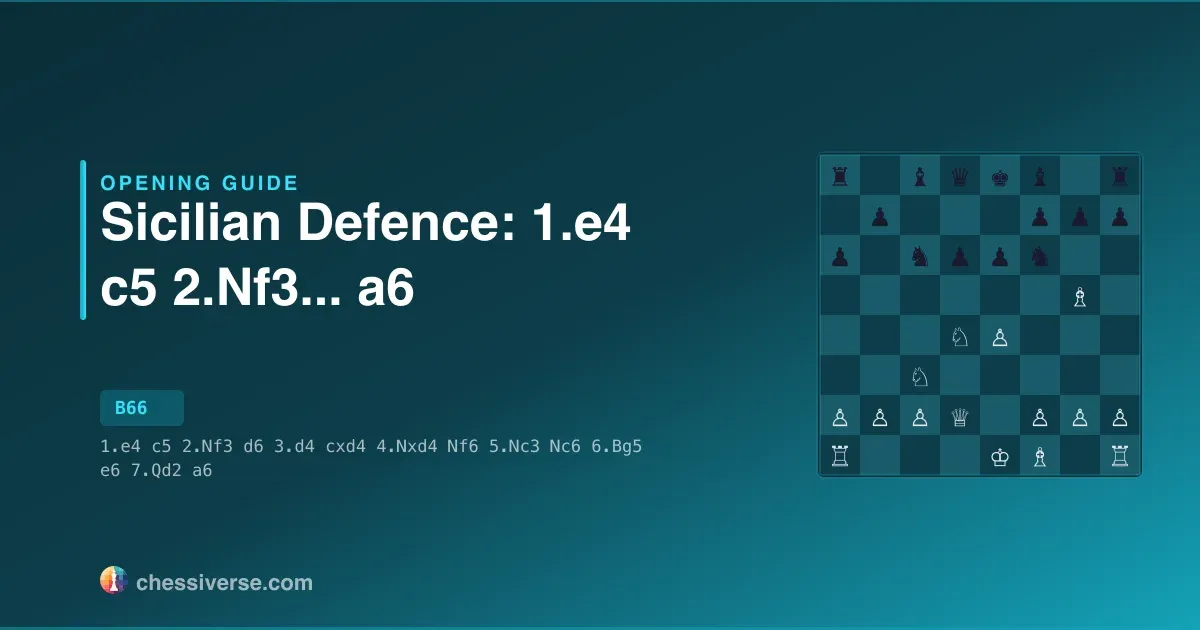
Starting from 1.e4 c5 2.Nf3 d6 3.d4 cxd4 4.Nxd4 Nf6 5.Nc3 Nc6 6.Bg5 e6 7.Qd2 a6, players enter the Sicilian Defense: Richter-Rauzer Variation, Neo-Modern Variation, Early Deviations — ECO B66. Lichess records 146,775 games in this line, which gives us a reliable view of how it actually performs in practice.
History and Notable Players
It arises from the Sicilian Defense: Richter-Rauzer Variation, Traditional Variation. Among the most prolific White practitioners are Semen I Dvoirys (41 games), Thomas Luther (39 games), Oleg Korneev (36 games). Black-side regulars include Zdenko Kozul (188 games), Istvan Csom (74 games), Konstantin Z Lerner (69 games).
Main Lines and Variations
The main branches off 1.e4 c5 2.Nf3 d6 3.d4 cxd4 4.Nxd4 Nf6 5.Nc3 Nc6 6.Bg5 e6 7.Qd2 a6 include:
Each branch leads to a different middlegame character — the resulting pawn structure decides what kind of game you get.
Common Mistakes
- Drifting away from main theory — At 1200 Elo, the three most-played moves cover 89.1% of games, against 94.5% at 2000. The most popular deviation is Nxc6 (played 11.3% of the time at 1200, much less so up top). It looks fine but quietly hands the better-prepared side an edge.
- Neglecting development — It can feel productive to make extra pawn moves early, but falling behind in piece development is what loses most amateur games — especially in open positions where active pieces find squares fast.
- Ignoring the kingside attack — In sharp Sicilian lines, White typically castles long and pushes the h-pawn. Without your own counterplay on the queenside or in the centre, White's attack lands first.
Practice on Chessiverse
Ready to try the Sicilian Defense: Richter-Rauzer Variation, Neo-Modern Variation, Early Deviations against a bot? Pick an opponent at your level and play a game.