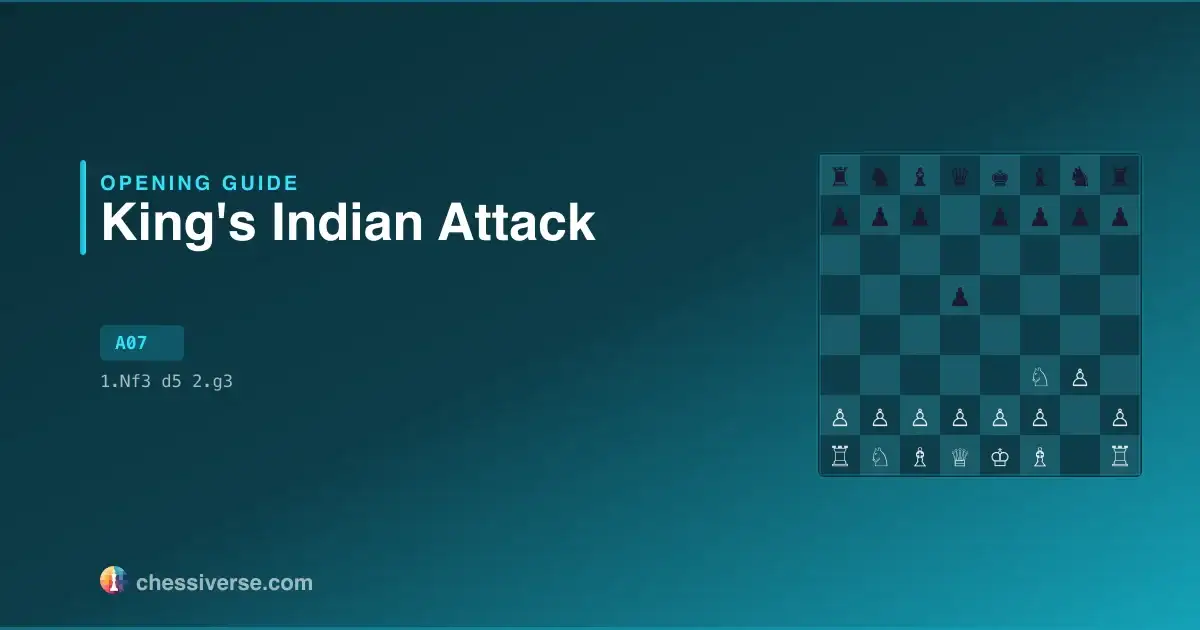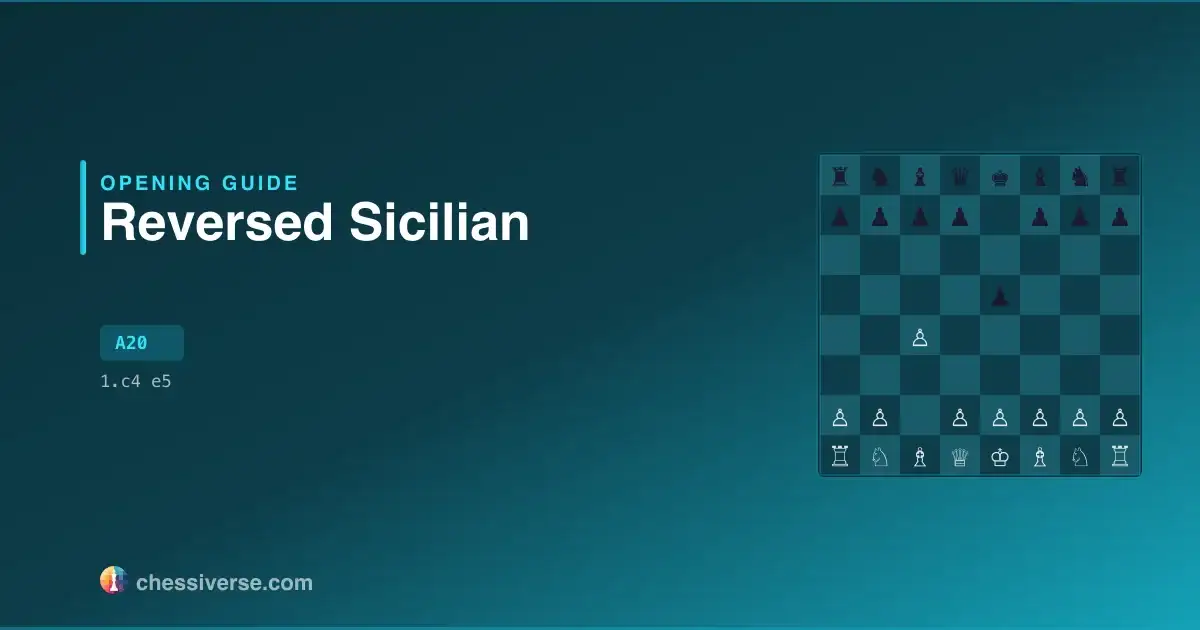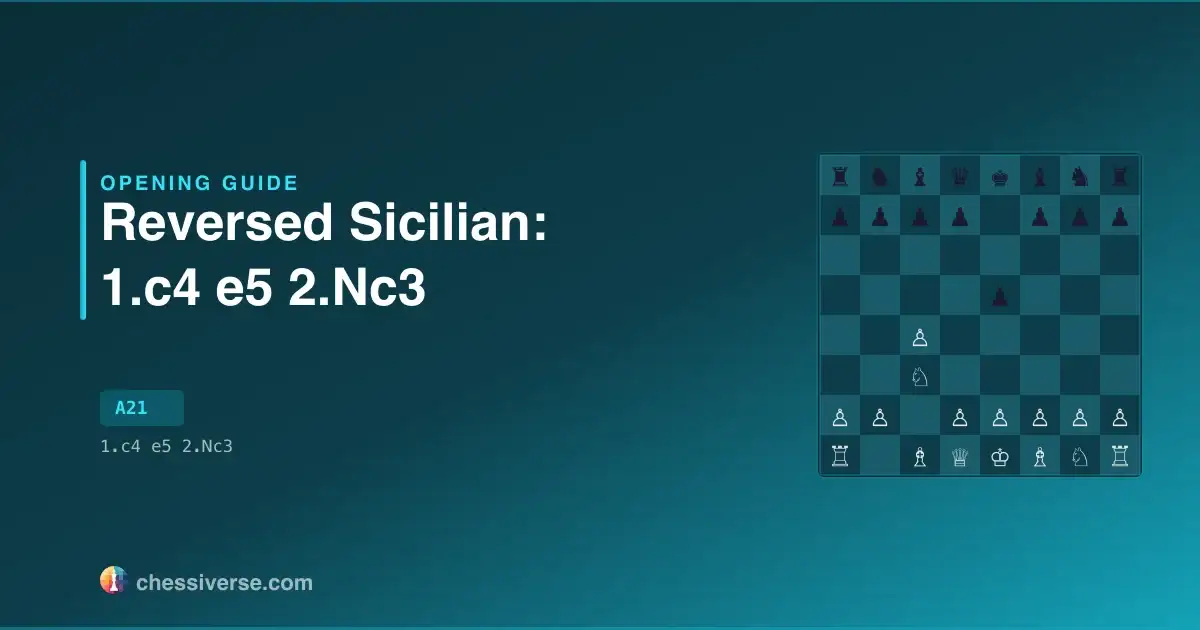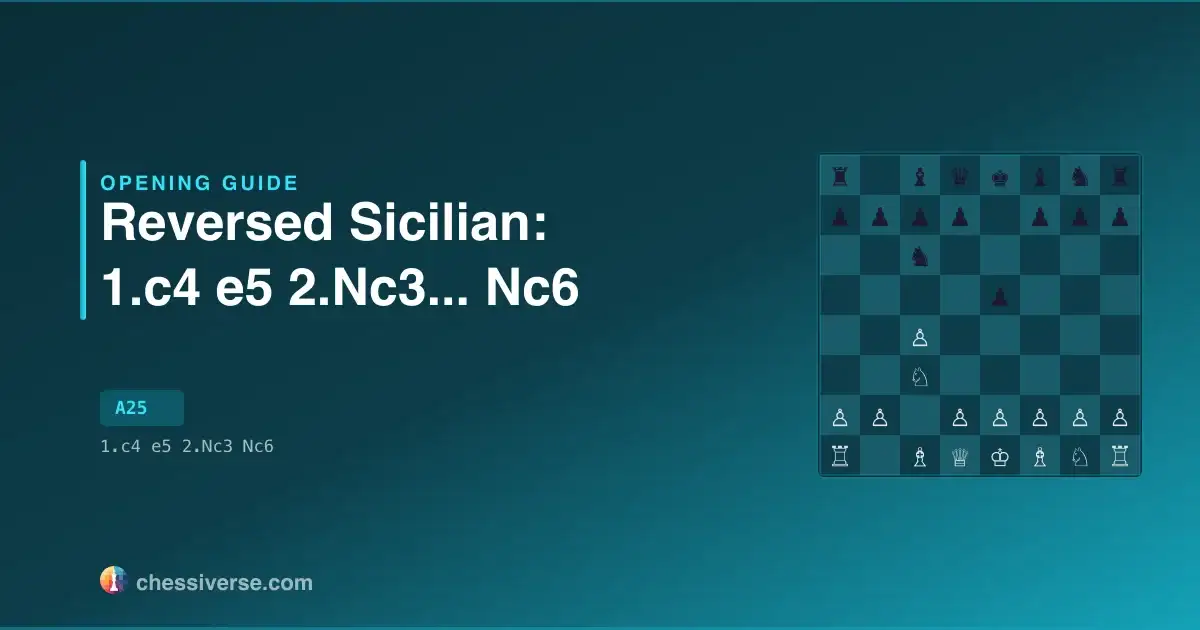




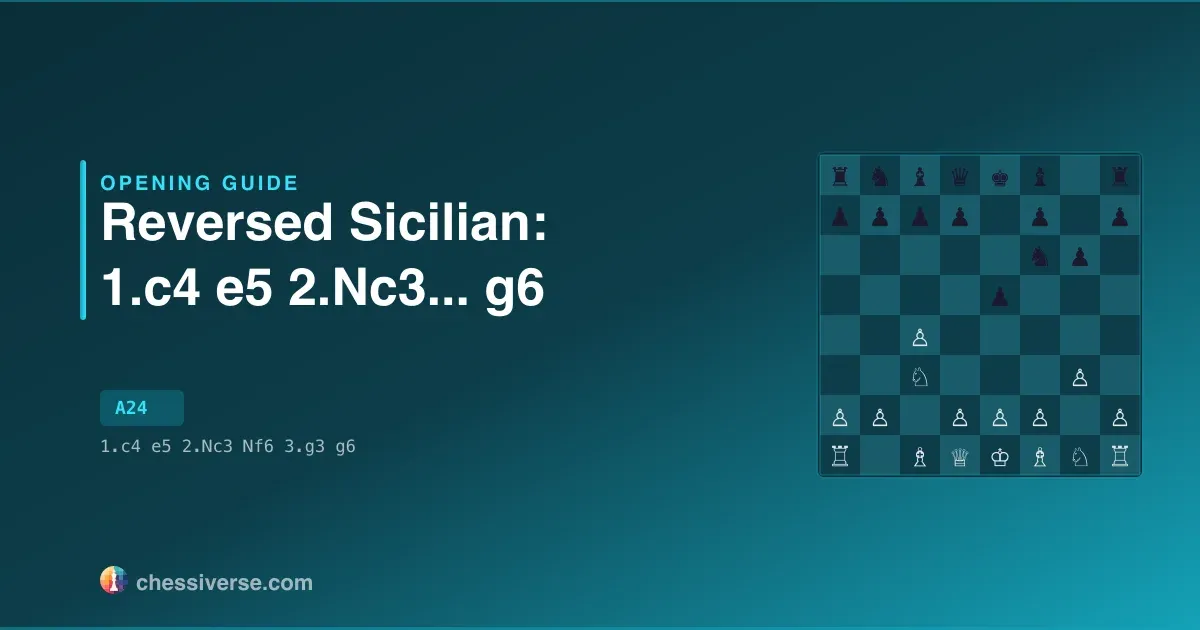
1.c4 e5 2.Nc3 Nf6 3.g3 g6 opens the English Opening: King's English Variation, Two Knights Variation, Fianchetto Line, ECO A24. Both sides fianchetto and lean into a Closed Sicilian structure with reversed colors. The long diagonals point at each other and the game becomes a slow-burn fight over central squares.
Strategic Overview
Double fianchetto positions are about patience. Black mirrors White's setup with ...g6 and ...Bg7, and the resulting structure has both dark-squared bishops staring down the long diagonals while pawn breaks decide the long-term character. White's main plans involve preparing the d4 break with e3 and Nge2, or playing more flexibly with Nf3 and d3 keeping the center fluid. Black has equivalent options: ...d6, ...Nc6, ...0-0, and then either ...f5 for a kingside attack or ...c6 and ...d5 to challenge the center. The middlegame typically revolves around who can land their central pawn break first and on better terms. White's slight tempo advantage matters here — White can often get the d4 push in one tempo earlier than Black gets ...d5, which is usually enough for a small edge. That said, Black is structurally fine and has plenty of resources. The kings end up on opposite sides only rarely; both usually castle short and the fight happens in the center and on the kingside. This is a strategic opening where understanding pawn structure dynamics matters far more than memorizing concrete lines.
Key Ideas
The recurring motifs below distinguish a confident handler of this opening from a beginner:
- Long diagonals dominate the middlegame — Both fianchettoed bishops will matter for the entire game. Trades on the long diagonals often define who has the better minor pieces in the endgame.
- Whoever lands their pawn break first wins the tempo war — White aims for d4, Black for ...d5 or ...f5. The side that gets their break in first and on good terms keeps the initiative.
- Patience beats aggression here — Premature attacks usually backfire. Both sides need to finish development, contest central squares, and wait for the right moment to commit to a pawn break.
- White's tempo can translate to a small edge — Having moved first matters in these symmetrical structures because it usually means White can execute the central break one move earlier than Black.
History and Notable Players
It arises from the English Opening: King's English Variation, Two Knights Variation. On the White side, Mark E Taimanov (3 games), Vitaly Chekhover (3 games), Lutz Riedel (3 games) top the database. Notable Black exponents: Vladimir Akopian (5 games), Viktor Hudecz (4 games), Olga Korchevska (3 games).
Move Diversity and Theory Depth
Move choice is far from uniform in the English Opening: King's English Variation, Two Knights Variation, Fianchetto Line. At 1200 Elo (10,987 games), the top reply is Bg2, played 93.1% of the time. No other move reaches 5% of games, and the top three moves account for 97% of games. Entropy: 0.54. By 2500 (256 games), Bg2 dominates at 95.3% of replies; no other move reaches 5% and the top three moves account for 99.6% of games. Entropy drops to 0.31.
Common Mistakes
- Neglecting development — Extra pawn moves in the opening are tempting, especially when you "know the moves". Developing a piece each turn is the simple correction.
- Ignoring the kingside attack — In sharp Sicilian lines, White typically castles long and pushes the h-pawn. Without your own counterplay on the queenside or in the centre, White's attack lands first.
Practice on Chessiverse
Ready to try the English Opening: King's English Variation, Two Knights Variation, Fianchetto Line against a bot? Pick an opponent at your level and play a game.