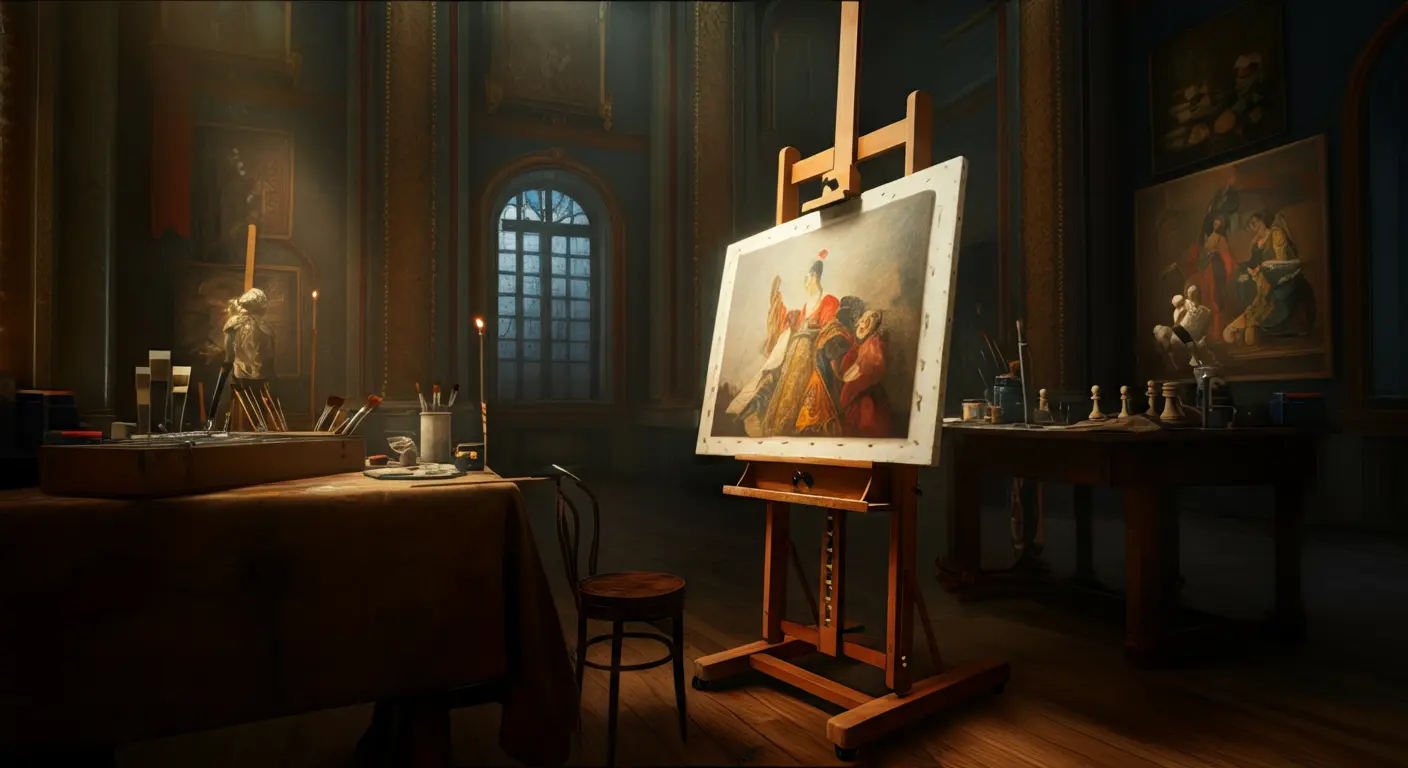
Ah, benvenuto, my friend, step into my atelier, where the marble warriors wait like time-frozen dreams beneath layers of varnish!! Leonardo said simplicity is the ultimate sophistication, so shall we restore this board together, stroke by stroke? 🎨❤️
Mona Liso is a 50-year-old restoration expert from Italy who revives faded works of ancient Italian art, and she brings the same patience to the chessboard. Her estimated rating of 2664 places her in the national master to FIDE master range, which means near-professional strength, very few blunders, and consistent wins against most non-titled players. Mona's persona draws on her craft, describing each game as the careful uncovering of a masterpiece beneath layers of varnish, and her lucky charm is an antique paintbrush. Her most played opening is the Petrov Defense as Black, with 475 games on record, followed by the Vienna Game as White and the Slav as Black. Her results reflect a defensive approach that favors simplification over complexity. Rather than chasing wild attacks, she trades pieces, neutralizes threats, and waits for opponents to overreach. Anyone sitting down against Mona should expect a patient, solid game where every exchange is deliberate and mistakes are punished with quiet precision.
How Mona plays
Mona plays an extremely defensive game and strongly prefers simplifying trades over keeping tension, so the board tends to clear as exchanges pile up. Her style sits near the middle between solid and sharp, with a slight lean toward mainline theory. As Black she relies on the Petrov Defense, and as White she often turns to the Vienna Game, steering toward stable positions where she can grind patiently.
Who should play Mona
Mona suits strong club players, candidate masters, and titled hopefuls in roughly the 2200 to 2700 rating band. Because she defends stubbornly and trades pieces at every opportunity, the matchup rewards attacking players who need practice creating winning chances against a resilient opponent. It also helps those who want to sharpen endgame technique, since most games will simplify into reduced-material positions where small advantages must be converted accurately.