

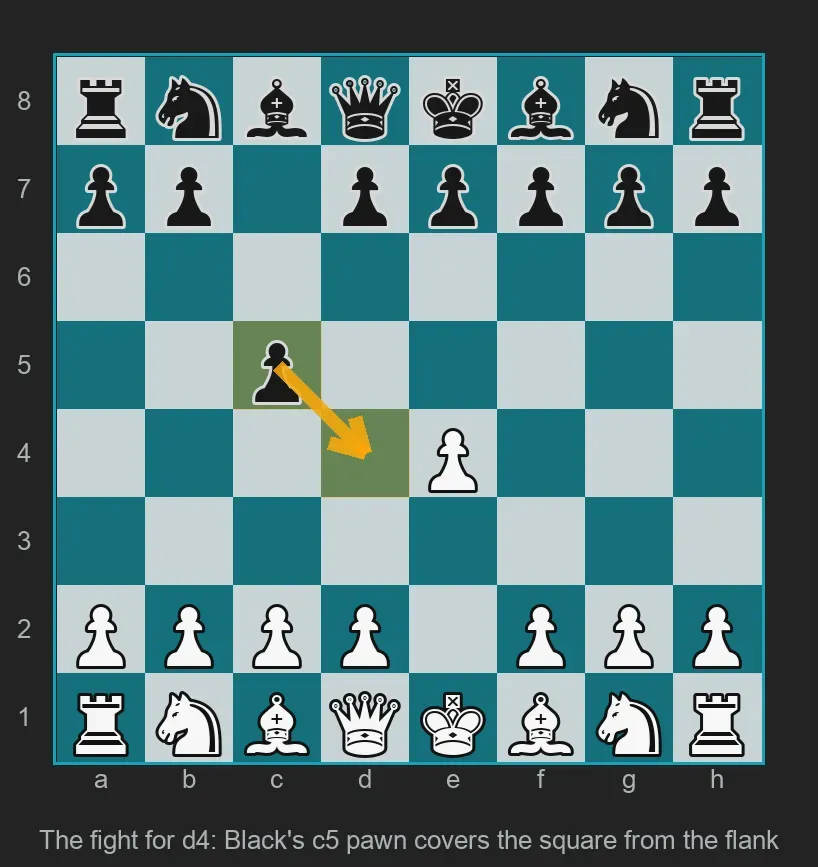
The Sicilian Defense is a chess opening that begins 1.e4 c5. Instead of mirroring White in the center, Black fights for the d4 square from the flank, creating an unbalanced position with real winning chances. It is the most played of Black's asymmetrical answers to 1.e4 and a main weapon at every level.
What This Guide Covers
We start with the idea behind 1...c5 and why it works, then split the opening into its two halves: the Open Sicilian and the Closed Sicilian. After that we walk through the nine main variations Black can choose, the six anti-Sicilians White uses to dodge them, two traps worth knowing, and a three step plan for learning the opening properly.
What Is the Sicilian Defense?
The Sicilian Defense is Black's answer to 1.e4 with 1...c5. It is a counterattacking opening rather than a defensive one, and it covers a huge family of systems, classified from B20 to B99 in the ECO index. It is also the most played of Black's asymmetrical replies to 1.e4, which makes it the single most important opening for any 1.e4 player to understand.
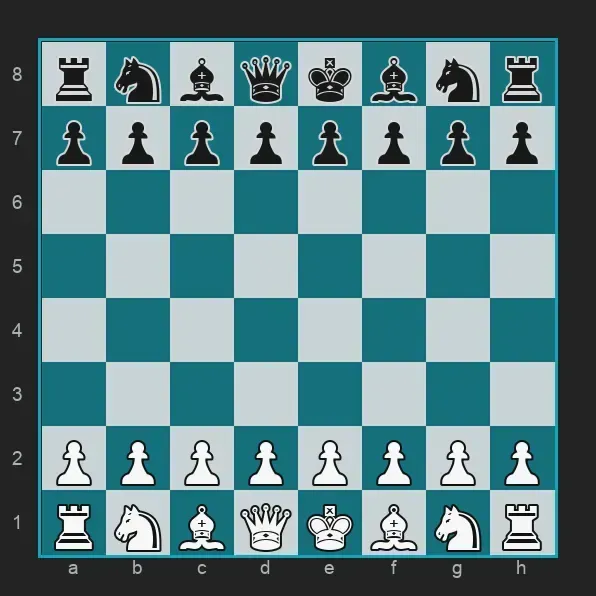

The Starting Position: 1.e4 c5
White has one pawn in the center and Black has none. That looks like a concession, but Black is not trying to occupy the center yet. The pawn on c5 controls d4, which is the square White wants for a pawn or a knight. Black postpones the fight for space and prepares to strike back once White commits.
Why the c-Pawn and Not the e-Pawn
After 1...e5 the position is symmetrical, and symmetry favors the player who moves first. After 1...c5 the pawn structure is lopsided from move one. Black gives up the chance of a quick equal game and takes on a slightly worse position out of the opening in exchange for something better: a game with two results still available.
How Common Is It?
Common enough that ignoring it is expensive. Lichess publishes the breakdown of Black's answers across its whole database, and its opening statistics for 1.e4 put 1...e5 at around 40 percent and 1...c5 at around 18 percent, ahead of every other reply. If you open 1.e4 and never learn what to do against the Sicilian, roughly one game in five lands in a structure you never studied.

Why Play the Sicilian? The Core Idea
The Sicilian is built on one trade: Black swaps a wing pawn for one of White's center pawns. That exchange looks small and changes everything about the game that follows. Black accepts less space and a slower development in exchange for a permanent structural asset and an open file pointing straight at White's queenside. Everything else in this guide grows out of that single deal.
Black Trades a Wing Pawn for a Center Pawn
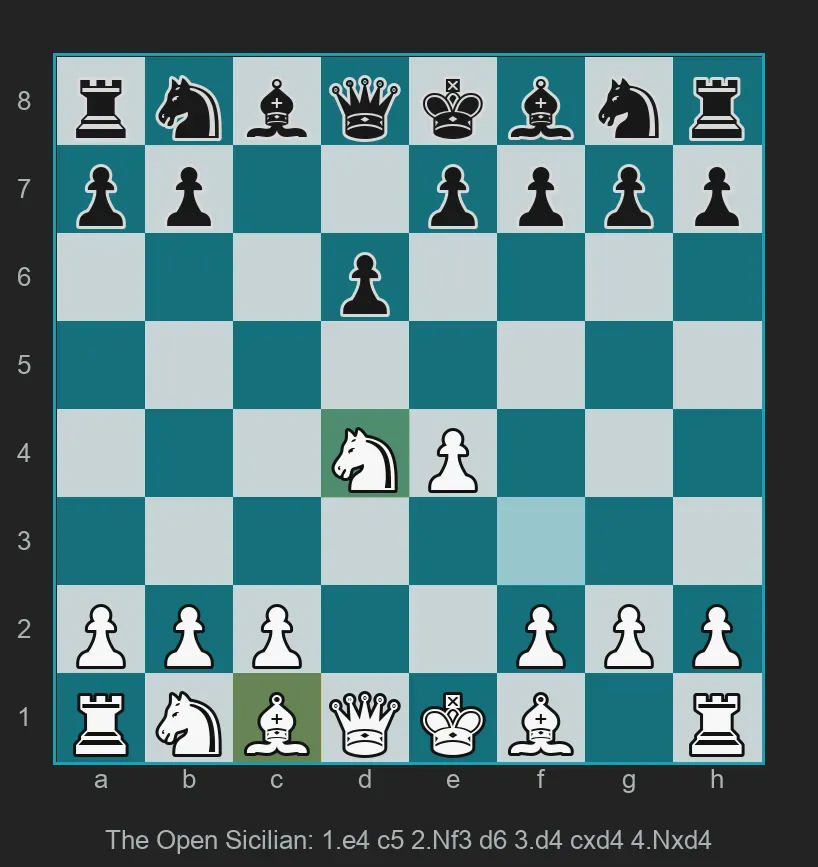
In the Open Sicilian the c5 pawn captures on d4, and White recaptures with a knight. Count the pawns: White has three on the queenside against Black's two, and Black has two in the center against White's one. Black owns a central pawn majority, which matters enormously if the game reaches an endgame.
The Half-Open c-File Is the Engine
Once the c-pawn is gone, Black's rook and queen look down an open c-file at White's knight on c3 and, behind it, White's king if it castles queenside. This is why so many Sicilian games feature the move ...Rc8 and the exchange sacrifice ...Rxc3. Black is not being clever. Black is using the file the opening handed over on move three.
Unbalanced Means Winning Chances
Most openings ask how Black can equalize. The Sicilian asks a different question: which side's plan is faster? White usually attacks on the kingside, Black on the queenside, and the two races run at the same time. That is why the Sicilian draws less often than 1...e5 and why players who need a win with Black keep coming back to it.
Practice It Instead of Reading About It
Reading about the Sicilian will not make it yours. The structures only make sense once you have felt a kingside attack arrive two moves before your counterplay. Take 1...c5 out for a test drive. Bots that make human mistakes give you the counterattacking chances a perfect engine never will.
A Short History: From Dismissed to Elite Mainstay
The Sicilian is one of the oldest recorded chess openings and one of the last to be taken seriously. It spent two centuries as a curiosity, another century as a defense for eccentrics, and only became mainstream after the Second World War. Wikipedia holds the long version of that story; here is the short one that explains the reputation.
Sixteenth-Century Roots
The earliest recorded notes on 1.e4 c5 come from the Italian players Giulio Polerio in the 1590s, and Gioachino Greco in the 1620s. The English name was standardized in 1813 by the English master Jacob Henry Sarratt, who was translating an old Italian manuscript that called the line il gioco siciliano, the Sicilian game. The country in the name belongs to that manuscript, not to the opening.
The Nineteenth-Century Doubts
For most of the 1800s the opening had a poor reputation. Masters of the romantic era wanted open games with fast development and quick attacks, and 1...c5 refuses to give them one. Black's setup was called passive and cramped, which it is, right up until the moment Black's queenside counterplay starts. The critics were describing move ten and stopping there.
Fischer, Kasparov and the Modern Era
Bobby Fischer made the Najdorf his main weapon and demonstrated that Black's cramped position is a coiled spring. Garry Kasparov built a career on the Najdorf and the Scheveningen. Through their work the Sicilian came to be seen as the defense that offers Black the most winning chances against 1.e4. Magnus Carlsen is a regular practitioner, and the opening is now standard at the very top.
Open Sicilian vs Closed Sicilian: The First Fork in the Road
White's second and third moves decide what kind of game you get, and the split is cleaner than in almost any other opening. Either White opens the center with an early d4, or White refuses to and plays a slower system. Everything Black studies depends on which of the two roads White takes.
The Open Sicilian: 2.Nf3 and 3.d4
This is the main road and the reason the Sicilian has so much theory. White plays 2.Nf3, then 3.d4, invites the exchange on d4 and recaptures with the knight. In return for the structural concession, White gets a lead in development, more space in the center and a clear attacking target on the kingside. Most of this guide covers what happens next.
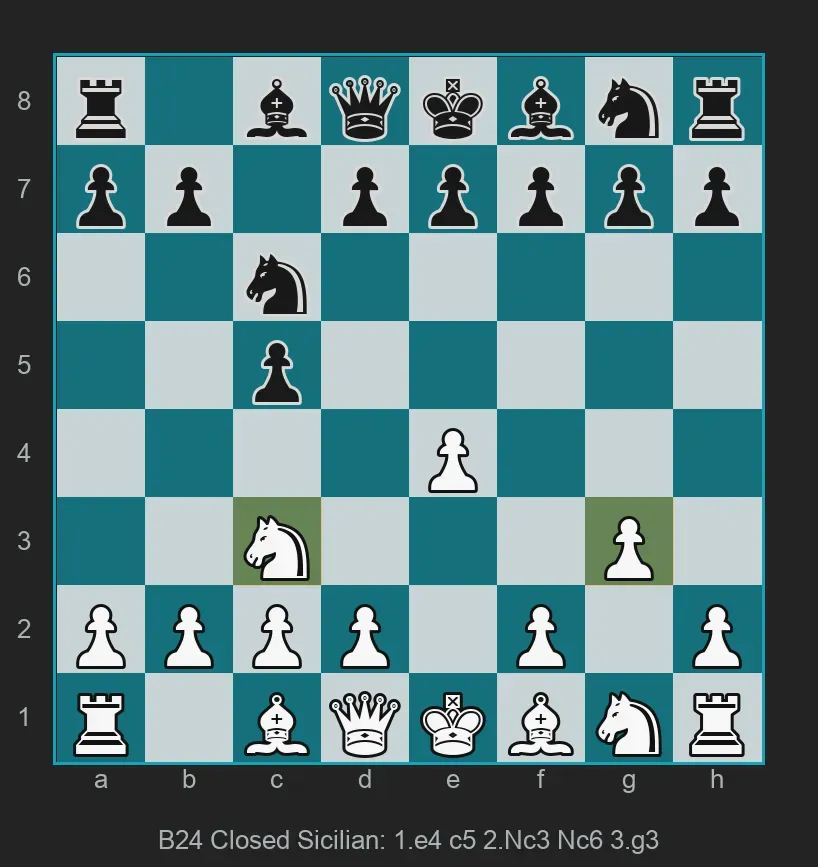
The Closed Sicilian: 2.Nc3 and g3
Here White declines the whole argument. The knight goes to c3, the bishop is fianchettoed on g2, and the center stays locked. Play becomes a slow maneuvering game where White expands with f4 and f5 and Black expands with ...b5 and ...b4. It is a legitimate system, not a beginner's dodge, and it needs completely different preparation.
What White's Choice Tells You
An opponent who enters the Open Sicilian is willing to compete on theory and usually has a favorite system prepared. An opponent who plays a closed setup or an anti-Sicilian is usually trying to avoid your preparation rather than beat it. Neither is better. Knowing which one you are facing after move three tells you how sharp the game will be.

The Main Variations of the Sicilian Defense
Black's choice of variation is really a choice of pawn structure and of which piece stands where. All nine systems below arise from the Open Sicilian and are named after the move that defines them. Pick one and learn it properly, because the Sicilian punishes players who sample everything and understand nothing.
The Nine Variations at a Glance
- Najdorf: 5...a6, the most analyzed system in all of chess.
- Dragon: 5...g6, a fianchetto and opposite side castling.
- Accelerated Dragon: 4...g6, the same bishop, one tempo sooner.
- Sveshnikov: 5...e5, a bold structural concession for piece activity.
- Scheveningen: 5...d6 and ...e6, the small center.
- Classical: 5...Nc6, natural development first.
- Taimanov: 4...Nc6 with ...e6, flexible and modern.
- Kan: 4...a6, maximum flexibility, minimum commitment.
- Kalashnikov: 4...e5, the Sveshnikov's blunter cousin.
Najdorf Variation: 5...a6
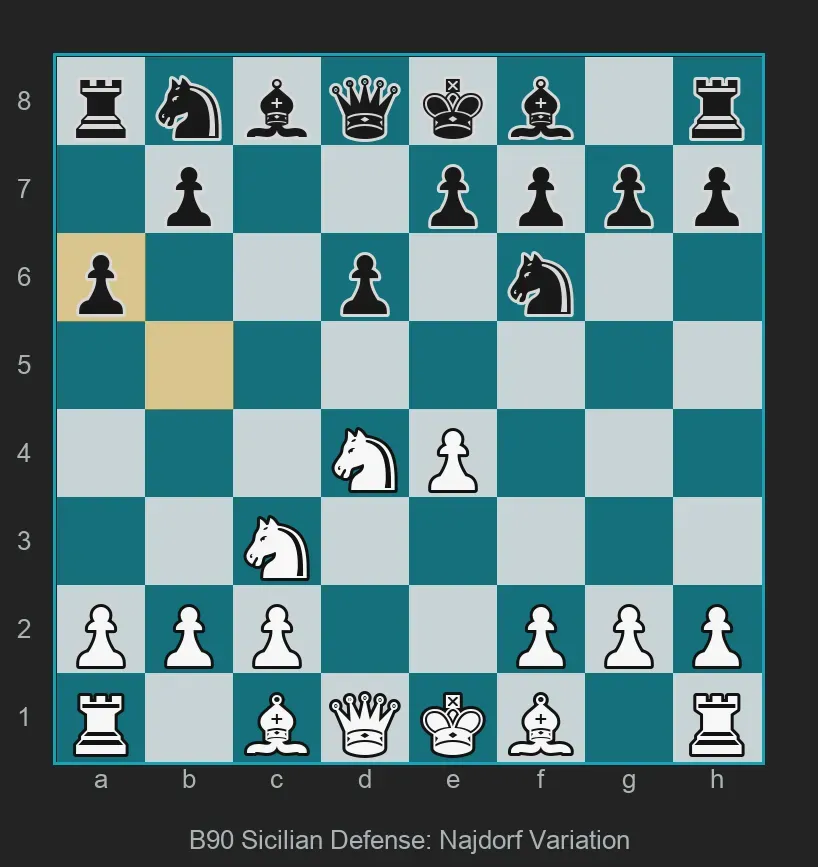
The Najdorf arises after 1.e4 c5 2.Nf3 d6 3.d4 cxd4 4.Nxd4 Nf6 5.Nc3 a6. The little pawn move looks slow, and it is the most studied move in chess. It takes the b5 square away from White's knight and bishop, which buys Black the time to play ...e5 or ...e6 next without being harassed.
Plans in the Najdorf
White has three serious tries: 6.Be3 with the English Attack and a pawn storm, 6.Bg5 pressuring the f6 knight, and the quieter 6.Be2. Black answers with ...e5, gaining space at the cost of the d5 square, or ...e6 for a Scheveningen structure. Black's counterplay is ...b5, ...Bb7 and pressure down the c-file.
Dragon Variation: 5...g6
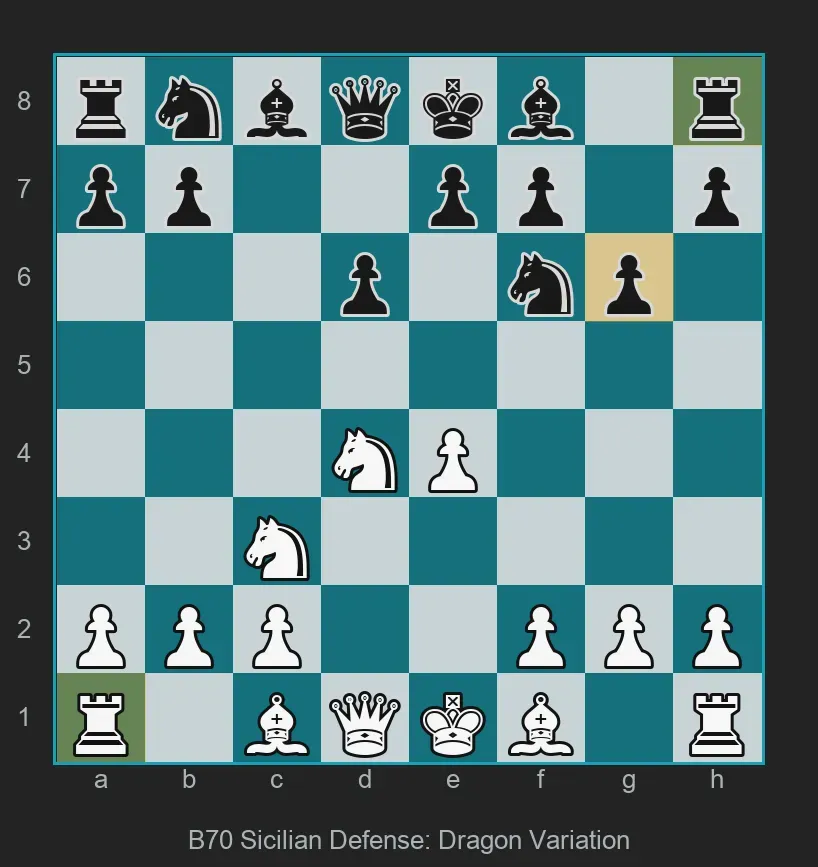
After 1.e4 c5 2.Nf3 d6 3.d4 cxd4 4.Nxd4 Nf6 5.Nc3 g6 Black prepares the fianchetto ...Bg7. The bishop stares down the long diagonal at White's queenside, and the pawn skeleton on d6, e7, f7, g6 and h7 is said to resemble a dragon. Black castles short and attacks the queenside while White does the exact opposite.
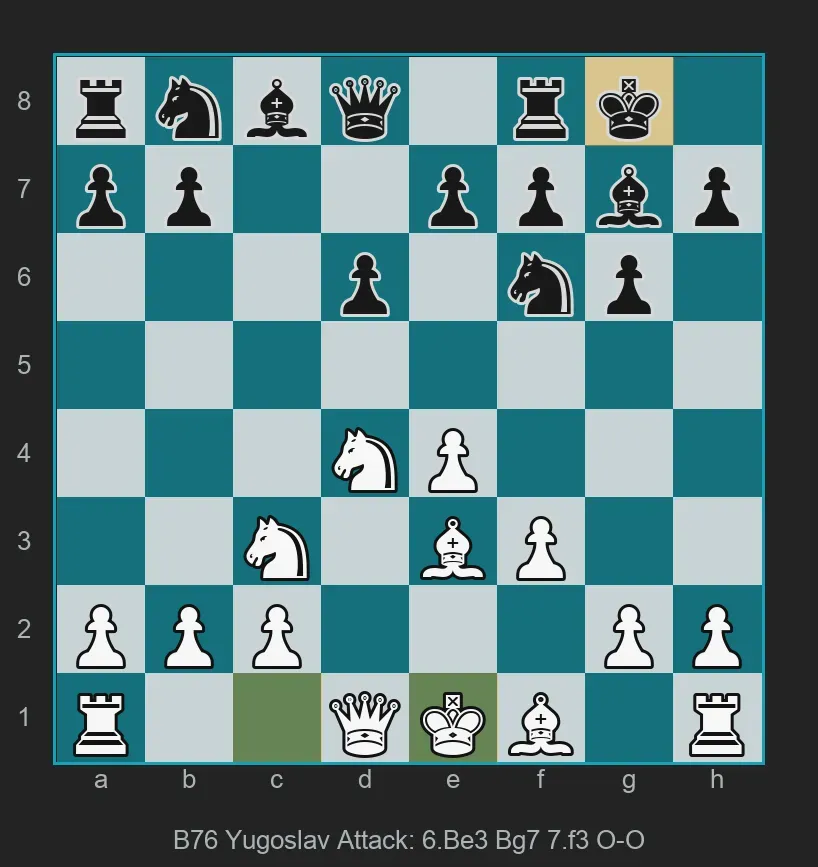
Plans in the Dragon: The Yugoslav Attack
White's critical try is the Yugoslav Attack: 6.Be3 Bg7 7.f3 O-O, then queenside castling and h4 and h5. Both kings run in opposite directions, so every tempo counts and neither side can afford a quiet move. Black's standard resources are ...Rc8, the exchange sacrifice ...Rxc3 and the ...d5 break.
Opposite Side Castling in Practice
Opposite side castling is what makes the Dragon frightening and what makes it fun. You are not defending, you are racing, and the loser is usually the player who spends a move on safety. If you are unsure when you may still castle in a position like this, our guide to why you sometimes cannot castle runs the six point check.
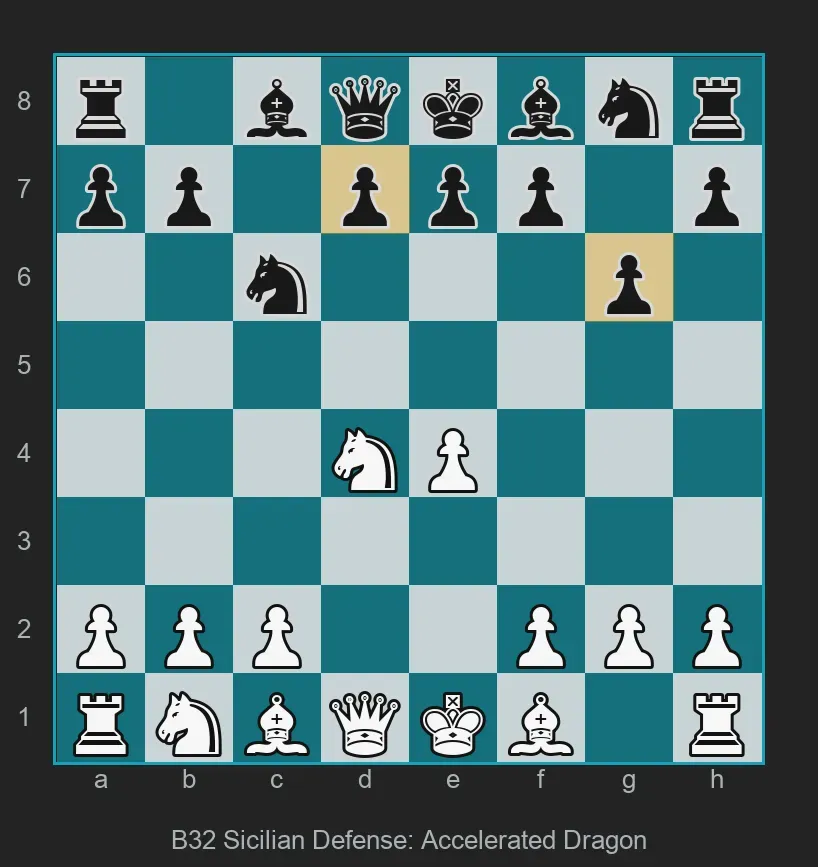
Accelerated Dragon: 4...g6
The Accelerated Dragon reaches a similar structure a move earlier: 1.e4 c5 2.Nf3 Nc6 3.d4 cxd4 4.Nxd4 g6. Black has not played ...d6 yet, which keeps the option of ...d5 in one move instead of two. That saved tempo is the whole point, and it takes the sting out of the Yugoslav Attack.
Plans in the Accelerated Dragon
White's main answer is 5.c4, the Maroczy Bind, clamping down on d5 with two pawns and steering the game into a slow squeeze. Black lives with less space and works toward ...Nxd4 and ...Bxc3, trading pieces to make the cramp bearable. It is a quieter Sicilian, which is exactly why some players prefer it.
Sveshnikov Variation: 5...e5
After 1.e4 c5 2.Nf3 Nc6 3.d4 cxd4 4.Nxd4 Nf6 5.Nc3 e5 Black kicks the centralized knight and voluntarily accepts a hole on d5. In older books this appears as the Lasker-Pelikan Variation, after Emanuel Lasker and Jorge Pelikan, and both names refer to the same system. Evgeny Sveshnikov's analysis in the 1970s is why almost everyone now uses his name.
Plans in the Sveshnikov
The main line runs 6.Ndb5 d6 7.Bg5 a6 8.Na3 b5, and Black often ends up with doubled f-pawns after Bxf6. In return Black gets the bishop pair, the ...b5 to ...b4 space gain and long term pressure. White plays around the d5 square and tries to prove the hole is permanent. The doubled pawns look terrible and the position is perfectly sound, which is the entire lesson of this variation.
Scheveningen Variation: ...d6 and ...e6
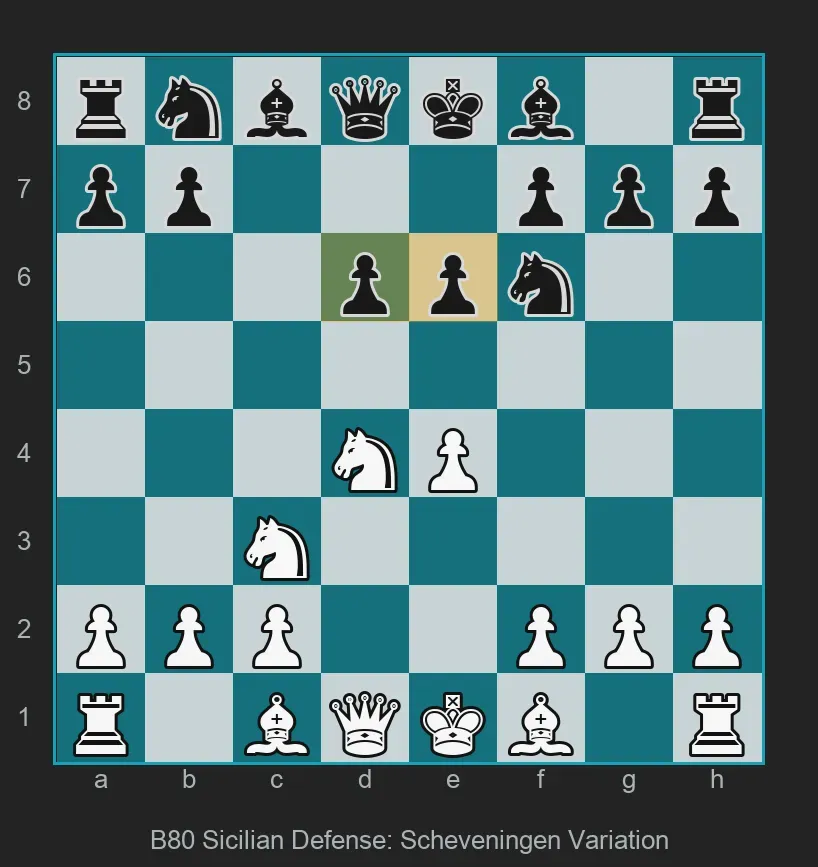
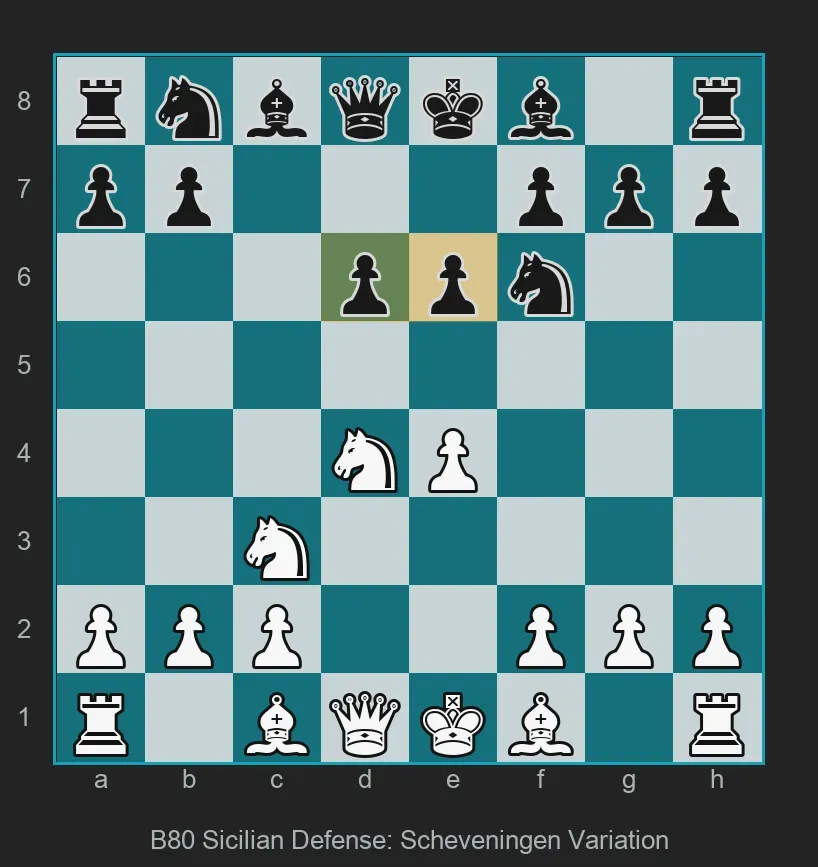
The Scheveningen is defined by its structure rather than a single move: pawns on d6 and e6 form a small, flexible center, reached for example by 1.e4 c5 2.Nf3 e6 3.d4 cxd4 4.Nxd4 Nf6 5.Nc3 d6. Nothing is loose, nothing is committed, and Black waits for White to overextend before opening lines.
Plans in the Scheveningen
White's sharpest weapon is the Keres Attack, 6.g4, launching the h-pawn and g-pawn before castling. Black's standard setup is ...Be7, ...O-O, ...a6 and ...Qc7, followed by the freeing breaks ...b5 or ...d5. Many players reach this structure through the Najdorf move order to sidestep 6.g4 entirely, which tells you how respected that attack is.
Classical Variation: 5...Nc6
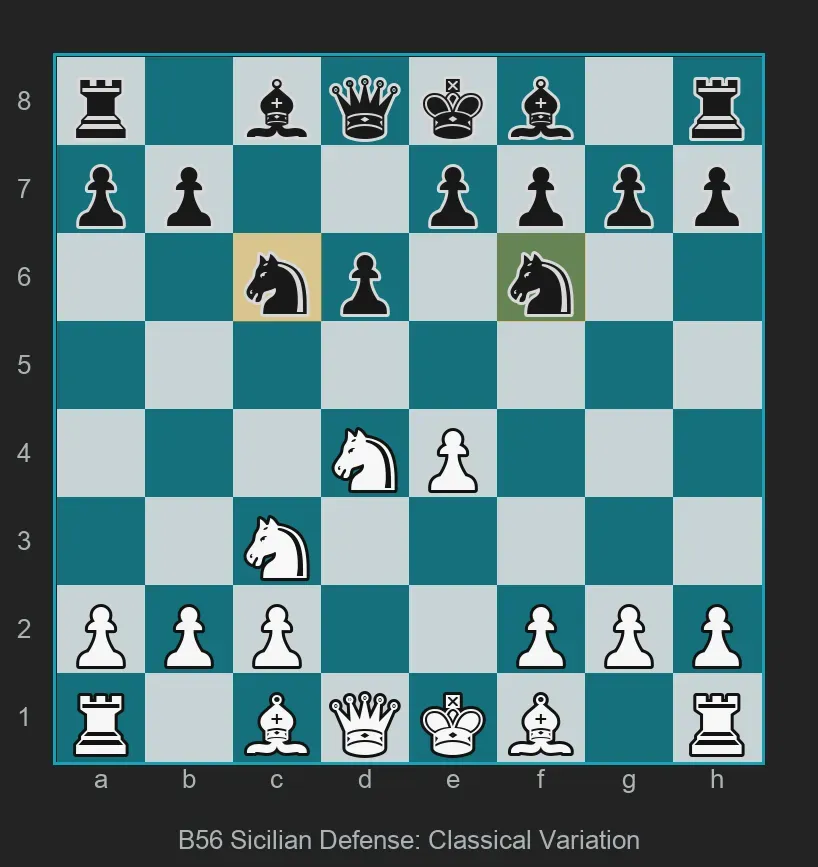
The Classical is the most natural looking Sicilian: 1.e4 c5 2.Nf3 d6 3.d4 cxd4 4.Nxd4 Nf6 5.Nc3 Nc6 simply develops both knights to their best squares. There is no clever pawn move to remember on move five. That makes it a sensible first Sicilian for a player who wants normal chess rather than a theoretical duel.
Plans in the Classical
White's two main tries are 6.Bc4, the Sozin Attack aiming at f7, and the calmer 6.Be2. Black chooses between ...e5 for space, ...e6 for a Scheveningen structure, and ...g6 to transpose into a Dragon. Trading the c6 knight for the d4 knight often eases Black's position at the price of some central control.
Taimanov Variation: 4...Nc6 with ...e6
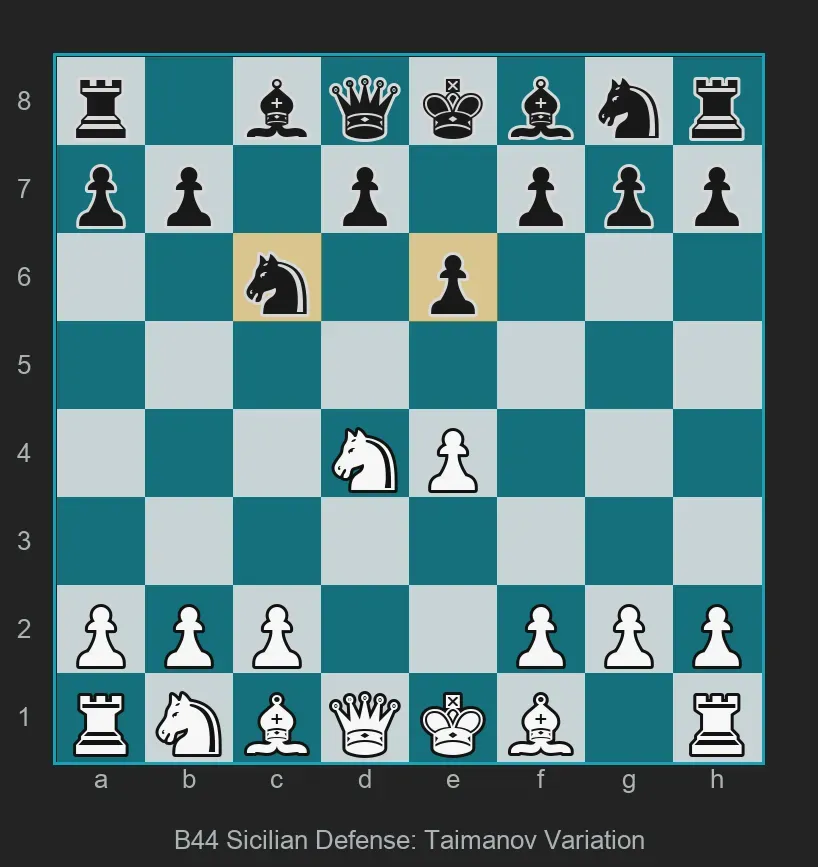
The Taimanov begins 1.e4 c5 2.Nf3 e6 3.d4 cxd4 4.Nxd4 Nc6 and leaves Black's kingside deliberately undeclared. The queen often goes to c7, the pawn to a6, and only then does Black decide whether the bishop belongs on e7, b4 or d6. Flexibility is the system, and it is popular at grandmaster level for that reason.
Plans in the Taimanov
White commonly plays 5.Nc3 followed by the English Attack setup with Be3 and Qd2, or 5.Nb5 to provoke ...d6. Black aims for ...a6, ...Qc7 and ...b5, then either ...Bb7 with pressure on e4 or a quick ...d5 break. Because Black commits so little, White has to keep several plans in mind at once.
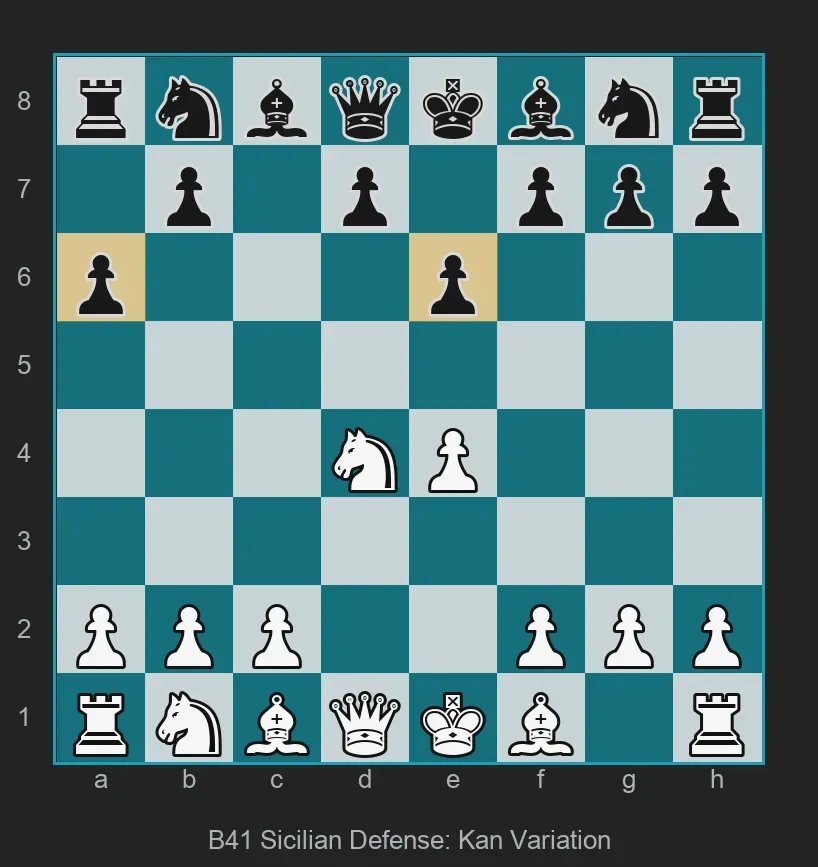
Kan Variation: 4...a6
The Kan takes flexibility one step further: 1.e4 c5 2.Nf3 e6 3.d4 cxd4 4.Nxd4 a6 develops nothing at all and simply denies White the b5 square. Black will fill in the pieces later, in whatever configuration White's setup invites. The theory load is genuinely light, which makes the Kan attractive for club players.
Plans in the Kan
White's most testing reply is 5.c4, the Maroczy Bind again, taking the d5 square before Black can use it. Black answers with the hedgehog setup: pawns on a6, b6, d6 and e6, pieces coiled behind them, and the breaks ...b5 and ...d5 held in reserve. It is a system you play by understanding, not by memory.
Kalashnikov Variation: 4...e5
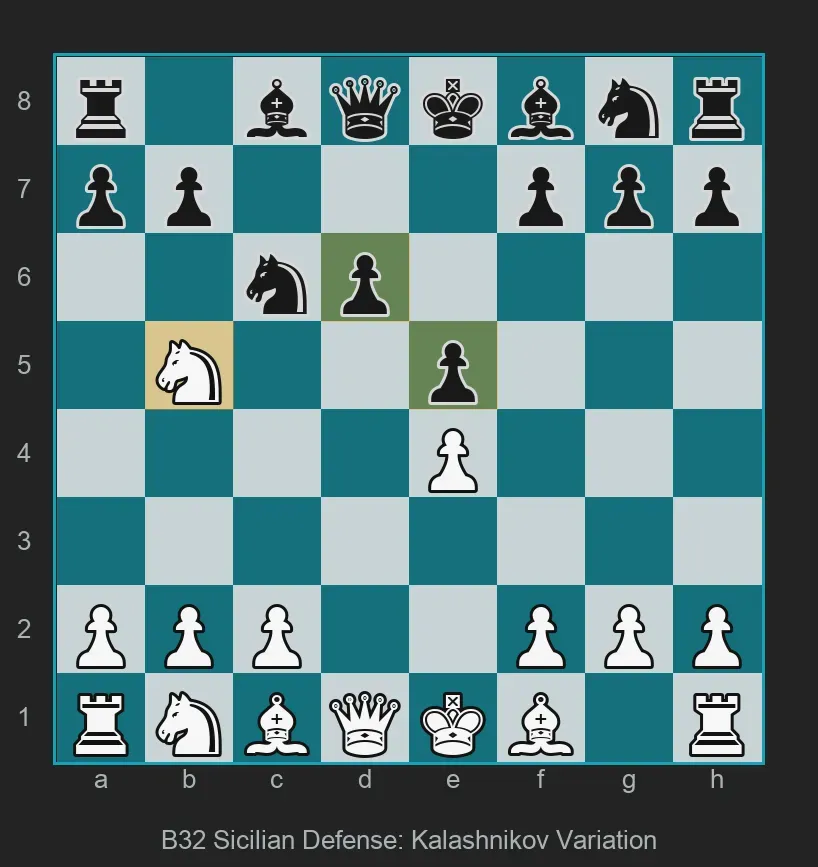
The Kalashnikov, 1.e4 c5 2.Nf3 Nc6 3.d4 cxd4 4.Nxd4 e5 5.Nb5 d6, is the Sveshnikov idea without the knight on f6. Black takes the same hole on d5 and the same space gain, but keeps the kingside knight at home for a move. Fewer forced lines to learn, slightly more freedom for White in return.
Plans in the Kalashnikov
White retreats the knight to a3 or c3 and works on d5 with Nd5, Bg5 and c4. Black plays ...a6, ...b5 and ...Be7, using the space on the queenside and the half-open c-file. If you like the Sveshnikov's structures but not its theory, this is the practical shortcut into them.
Variation Comparison Table
The table below sorts the nine systems by what they demand from you rather than by ECO number, so you can match one to your own taste before you spend a month on theory. Read the last column first. Most players choose a variation because a strong player recommended it, then abandon it because the positions feel wrong, which wastes the study time twice over.
| Variation | Defining move | ECO | Character | Suits players who |
|---|---|---|---|---|
| Najdorf | 5...a6 | B90 to B99 | Sharp, enormous theory | enjoy deep preparation |
| Dragon | 5...g6 | B70 to B79 | Racing attacks, opposite castling | like tactics and risk |
| Accelerated Dragon | 4...g6 | B34 to B39 | Positional, Maroczy Bind | prefer quiet maneuvering |
| Sveshnikov | 5...e5 | B33 | Structurally bold, piece play | trust activity over structure |
| Scheveningen | ...d6 and ...e6 | B80 to B84 | Flexible small center | like slow buildups |
| Classical | 5...Nc6 | B56 to B59 | Natural development | want normal chess |
| Taimanov | 4...Nc6 with ...e6 | B44 to B49 | Modern and flexible | dislike forced lines |
| Kan | 4...a6 | B41 to B43 | Hedgehog, low theory | play by understanding |
| Kalashnikov | 4...e5 | B32 | Sveshnikov lite | want fewer lines to learn |
How White Meets the Sicilian: The Anti-Sicilians
Most club opponents will not enter the Open Sicilian at all. Preparing for it takes real work, and the anti-Sicilians offer a cheaper deal: a system White can play on autopilot against every Black setup. Knowing these six is worth more rating points than knowing move eighteen of the Najdorf.
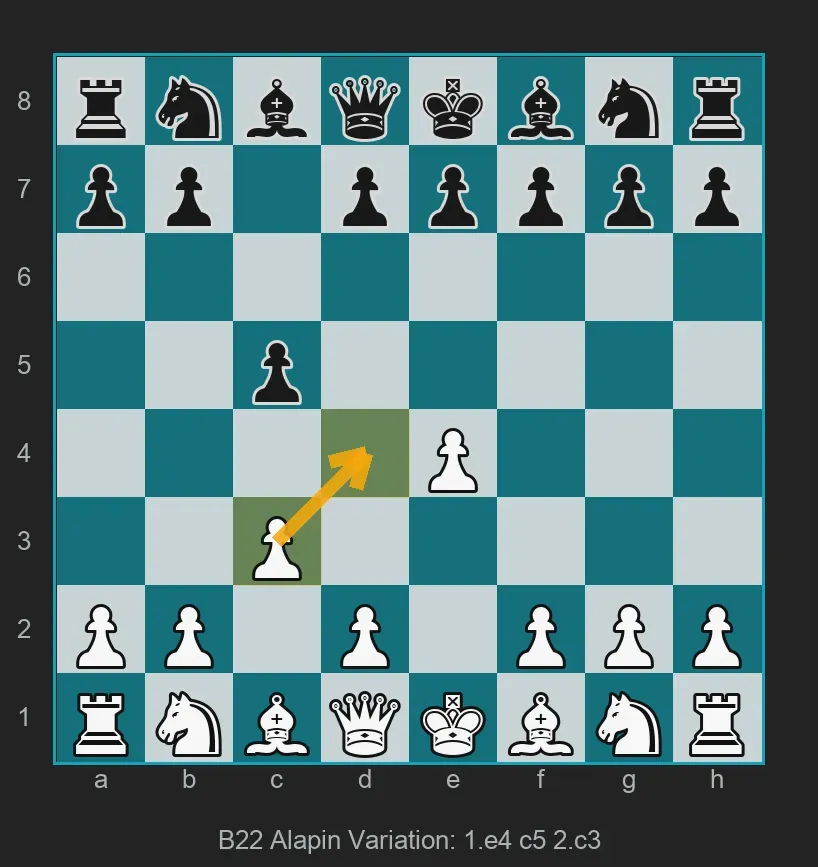
Alapin Variation: 2.c3
The Alapin, 1.e4 c5 2.c3, prepares d4 so that White can recapture with a pawn and keep a classical center. It is solid, it is popular, and it is a genuine test. Black's two main answers are 2...Nf6, attacking e4 immediately, and 2...d5, hitting the center before White is ready.
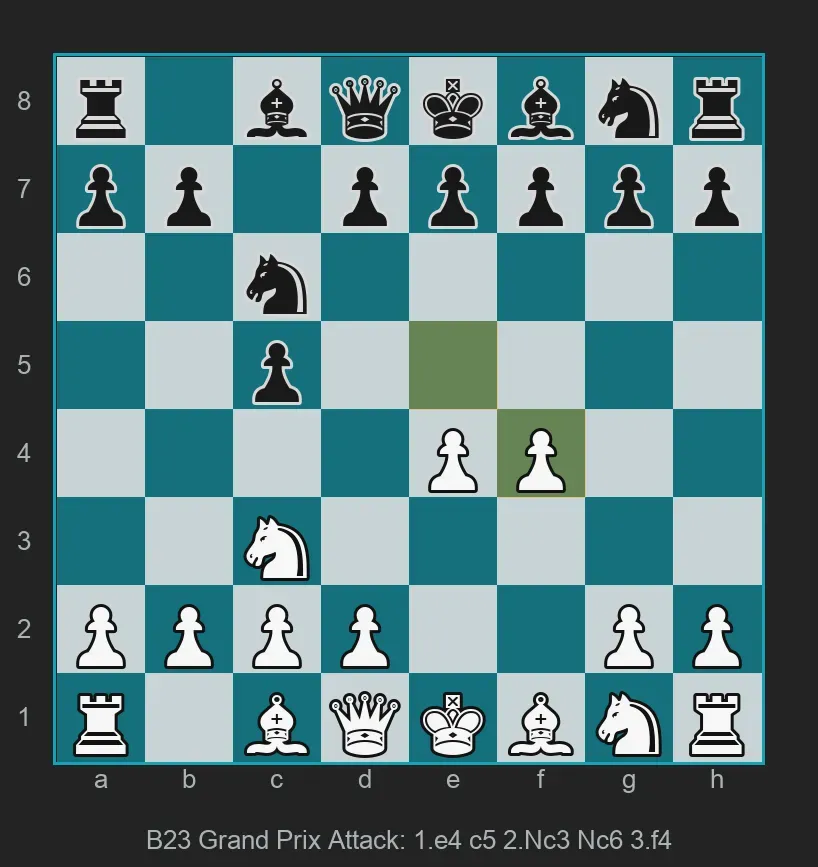
Grand Prix Attack: 2.Nc3 and 3.f4
The Grand Prix Attack builds a kingside pawn storm from move three: 1.e4 c5 2.Nc3 Nc6 3.f4, followed by Nf3, Bc4 or Bb5 and a quick f5. It is direct, it is easy to play from memory, and it wins a lot of club games. Black's reliable antidote is an early ...g6 and ...Bg7 to defend the long diagonal.
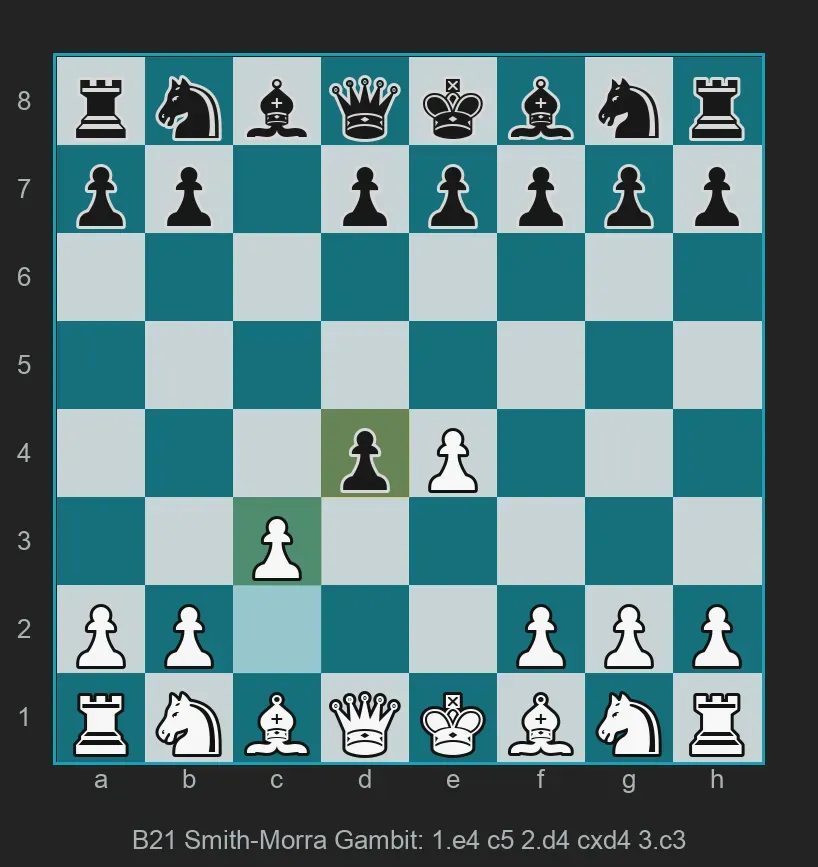
Smith-Morra Gambit: 2.d4 and 3.c3
The Smith-Morra offers a pawn for development: 1.e4 c5 2.d4 cxd4 3.c3, and after 3...dxc3 4.Nxc3 White has open c-files and d-files and a big lead in piece play. Black can accept and defend carefully, or decline with 3...d5 or 3...Nf6 and reach an Alapin type position a pawn up on the clock.
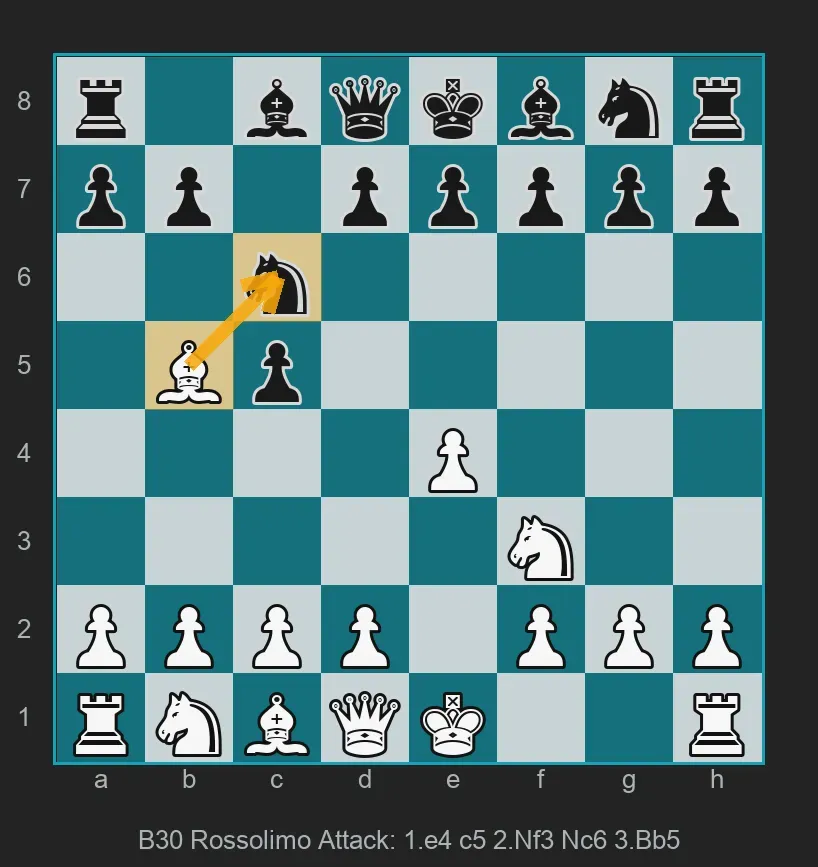
Rossolimo Attack: 3.Bb5
Against 2...Nc6, White can play 3.Bb5, the Rossolimo Attack, and simply trade on c6 to damage Black's structure. It is fashionable at the very top level precisely because it avoids theory while asking a real question. In the 2018 World Championship, Fabiano Caruana used it to keep Magnus Carlsen out of the Open Sicilian entirely. Black usually answers ...g6 and ...Bg7, treating the doubled pawns as a fair price for the bishop pair.
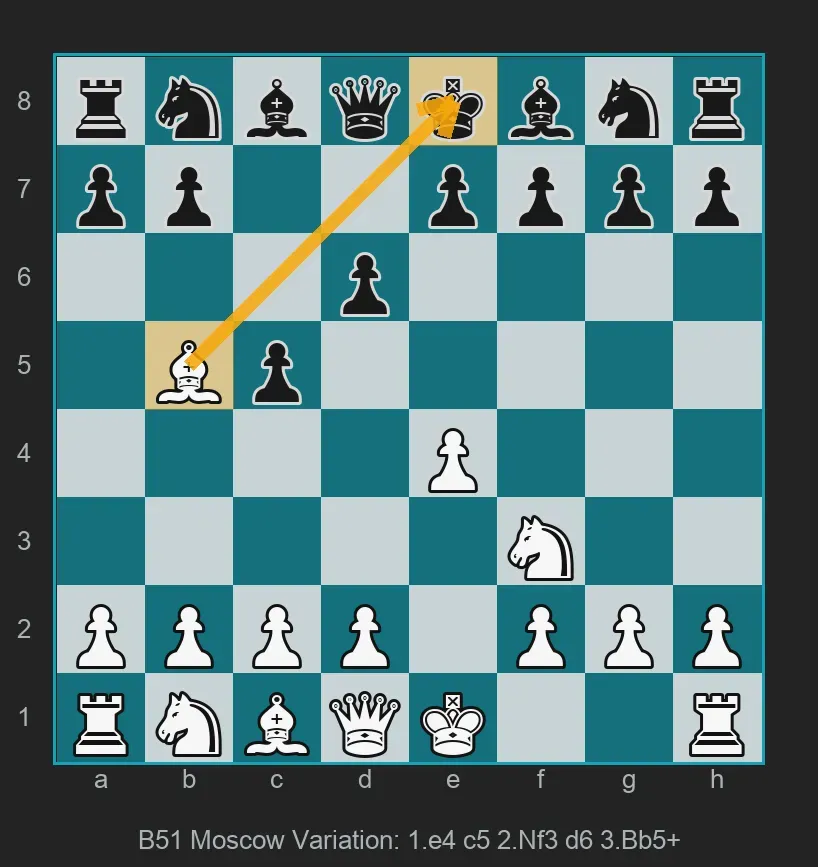
Moscow Variation: 3.Bb5+
The Moscow Variation is the same idea against 2...d6: 1.e4 c5 2.Nf3 d6 3.Bb5 check. Black blocks with ...Bd7 or ...Nd7 or ...Nc6, and White has already sidestepped every Open Sicilian book. The resulting positions are quiet, slightly better for White and completely playable for Black, which is exactly what White wants.
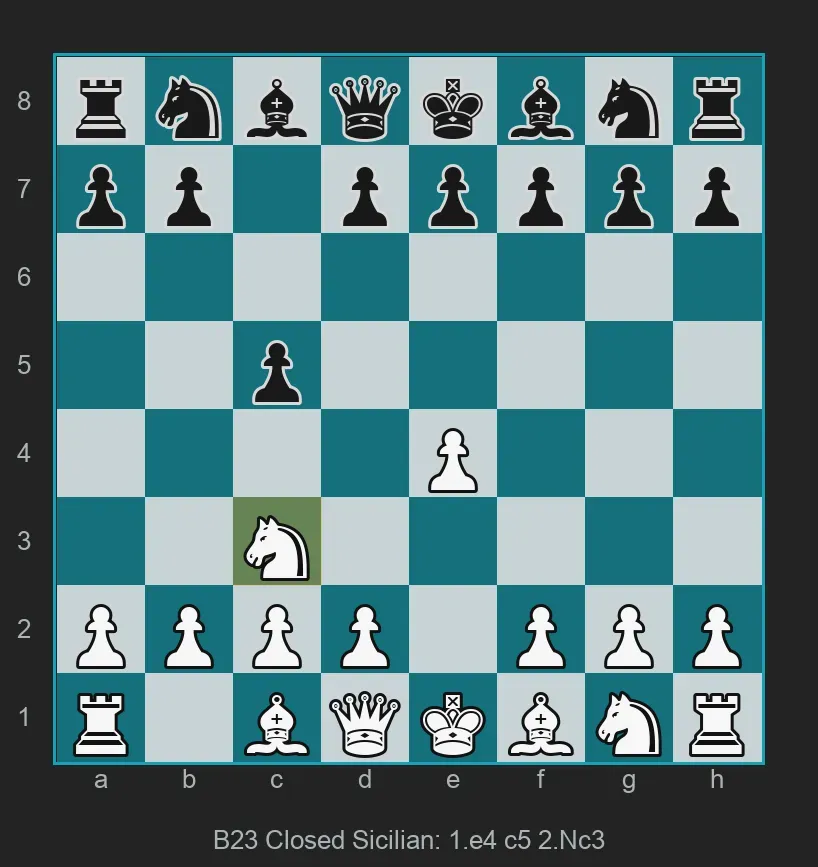
Closed Sicilian: 2.Nc3 Without f4
If White plays 2.Nc3 and then g3 rather than f4, you are in the Closed Sicilian proper. The center stays shut, the game is decided by pawn breaks on the wings, and a Najdorf specialist who has never studied it can drift into a bad position without a single tactical error. Prepare a specific setup, usually ...g6, ...Bg7, ...e6 and ...Nge7.
How to Prepare Against Anti-Sicilians
Give each anti-Sicilian one hour and one concrete setup, then stop. You do not need theory here, you need a position you recognize. Play the same six systems repeatedly until the first eight moves are automatic. Our chess openings FAQ answers the general questions that come up while you build a repertoire.
Sicilian Traps to Know
Traps are not the point of an opening, but two of them appear often enough at club level to be worth a page in your notebook. Both punish a natural looking move, and both are verified move by move in the diagrams below. Learn them from the losing side first, because that is the side you are more likely to be on.
The Magnus Smith Trap: Punishing a Careless Fianchetto
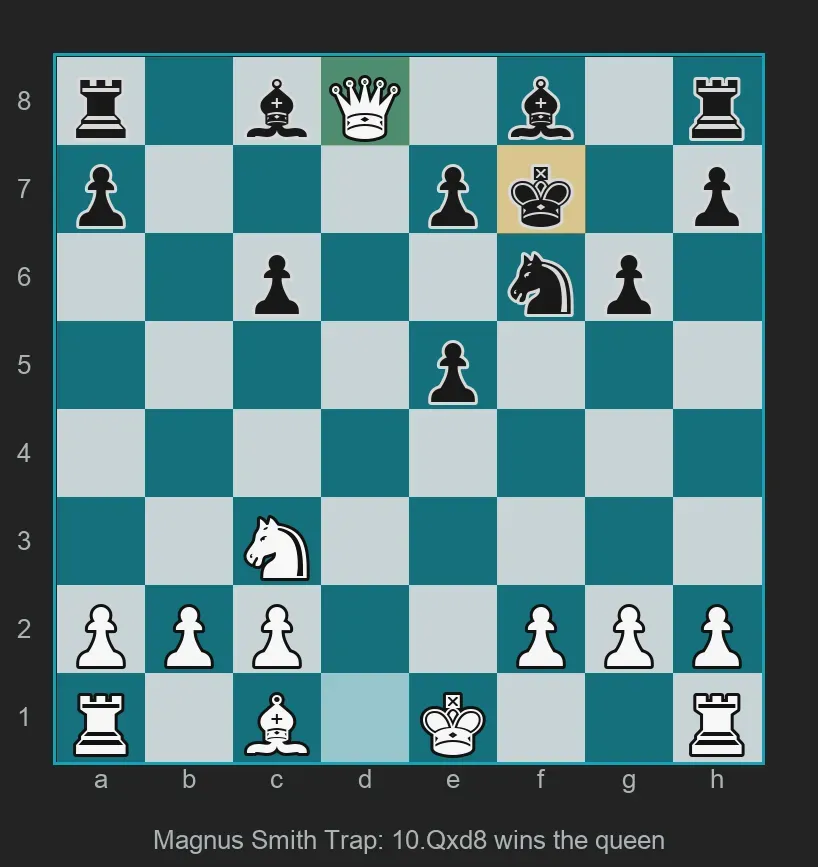
In the Classical Sicilian with 6.Bc4, the fianchetto move 6...g6 is a mistake. White plays 7.Nxc6 bxc6 8.e5, and if Black grabs with 8...dxe5, then 9.Bxf7 check drags the king out and 10.Qxd8 wins the queen for a bishop. The point is that ...g6 removed the defender of f7 at the worst possible moment.
Why It Works and How to Avoid It
Black's queen on d8 is defended by nothing once the king has been pulled to f7, and the rooks on a8 and h8 cannot reach d8 because Black's own bishops block the back rank. The fix is simple: meet 6.Bc4 with 6...e6 and take the f7 diagonal away before thinking about the fianchetto.
The Siberian Trap: Punishing a Greedy Smith-Morra
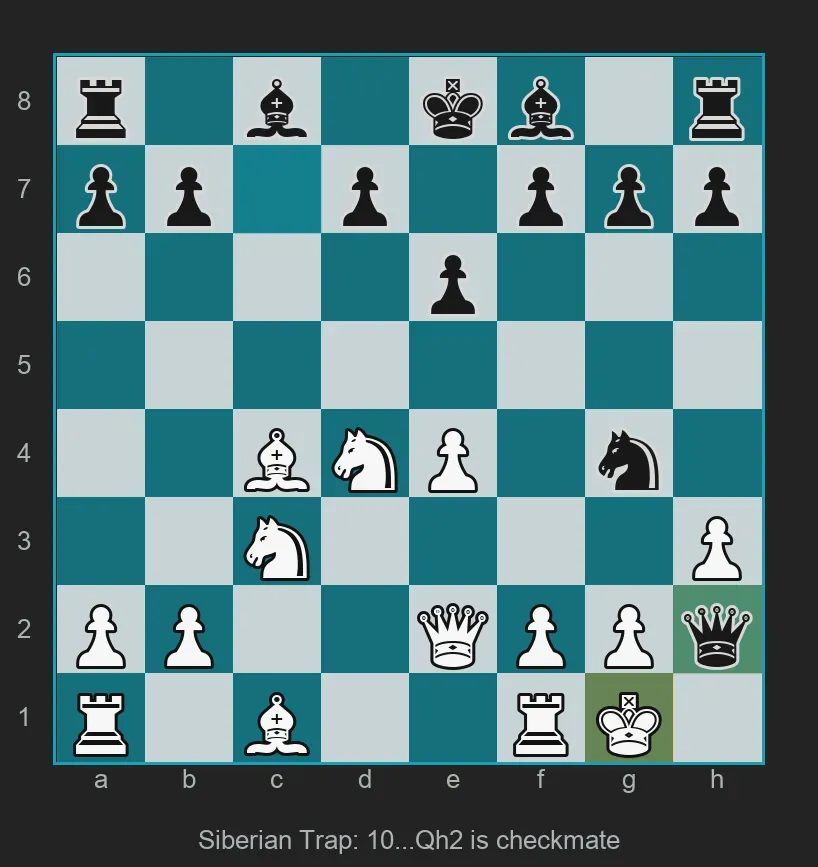
The Siberian Trap catches White in the Smith-Morra Gambit. After 1.e4 c5 2.d4 cxd4 3.c3 dxc3 4.Nxc3 Nc6 5.Nf3 e6 6.Bc4 Qc7 7.O-O Nf6 8.Qe2 Ng4 the natural 9.h3 loses on the spot to 9...Nd4, and if White takes with 10.Nxd4 then 10...Qh2 is checkmate.
Why It Works and How to Avoid It
The knight on g4 covers h2, so the queen lands there protected, and White's own pawns on f2 and g2 seal every escape square. White's fix is to defend h2 with 9.h3 only after the knight is chased, or to play 9.Nb5 and hit the queen first. Black's fix is to remember the pattern exists.
Strengths, Weaknesses and Which Sicilian Suits You
Every recommendation you read about the Sicilian is really a recommendation about temperament. The opening is objectively fine, so the useful question is not whether it is good but whether it suits how you like to think. Here is the honest ledger, followed by a way of choosing.
The Strengths
Black gets an unbalanced position from move one, a central pawn majority, a half-open c-file and genuine winning chances against stronger players. The opening also transfers well: the structures you learn in the Scheveningen or the Sveshnikov show up in other openings, so the study time is not wasted even if you later switch.
The Weaknesses
Black is behind in development for the first ten moves and often has to defend accurately before counterplay arrives. The theory is enormous, and White gets to choose which branch you enter. If you dislike being slightly worse for a while on purpose, this is the wrong opening, and there is no shame in that.
Is the Sicilian Good for Beginners?
The usual advice is no, and it is half right. The Najdorf and the Dragon really do punish a player who does not know the plans. The Kan, the Classical and the Kalashnikov do not. Start with those and you get the Sicilian's structures without its memory work.
Match the Variation to Your Temperament
If you like calculating and preparing, play the Najdorf or the Dragon. If you like squeezing and maneuvering, play the Accelerated Dragon or the Kan. If you want normal chess with a Sicilian structure, play the Classical. Choose once, then stay. Players who switch every month never build the pattern recognition the opening is actually made of.
How to Study the Sicilian: Your Training Plan
You do not learn the Sicilian by reading variations, you learn it by playing the same structure until you recognize it without thinking. This three step plan takes a few weeks and works for any of the nine variations. It also works for the anti-Sicilians, which is where most of your games will actually be decided.
Step 1: Learn the Structure, Not the Moves
Take your chosen variation and write down three things: where the pawns go, where each piece belongs, and which break frees the position. That is one page, not one book. For a Najdorf player it is ...e5 or ...e6, ...b5, ...Bb7, and the ...d5 break. Everything else is detail you can add later.
Step 2: Play Ten Games Against a Bot at Your Level
Now play ten Sicilian games against human-like bots rated near you, and resist looking anything up mid game.
Step 3: Review Every Game and Name the Mistake
After each game, find the one move where your plan stopped working and write down why in a single sentence.
Model Players to Study
Watch Bobby Fischer for the Najdorf, Garry Kasparov for the Najdorf and the Scheveningen, and Magnus Carlsen for the Sveshnikov. Pick one player, one variation and ten of their games, and replay them slowly with the board in front of you. Model games teach plans faster than any list of moves, because you see the plan fail and get repaired.
Sicilian Defense FAQ
These are the questions players actually type into a search box before they play their first 1...c5, answered without hedging.
What is the Sicilian Defense good for?
It is good for playing to win with the black pieces. The Sicilian creates an unbalanced position from move one, which means the game is unlikely to peter out into a draw. Black gets a central pawn majority and a half-open c-file for counterplay, and in return accepts less space and a slower development. It is the standard choice when a draw is not enough.
How do I do the Sicilian Defense?
- Answer 1.e4 with 1...c5.
- If White plays 2.Nf3 and 3.d4, capture with 3...cxd4 and enter the Open Sicilian.
- Choose one system and stay with it: 5...a6 for the Najdorf, 5...g6 for the Dragon, 4...a6 for the Kan.
- Prepare one setup against each anti-Sicilian, especially the Alapin and the Rossolimo.
- Play the same variation repeatedly until the plans feel automatic.
Why is it called a Sicilian Defense?
The name comes from early Italian analysis. The first recorded notes on 1.e4 c5 were made by Giulio Polerio in the 1590s, and Gioachino Greco in the 1620s, and in 1813 the English master Jacob Henry Sarratt standardized the English name while translating an old Italian manuscript that described the line as il gioco siciliano, the Sicilian game. The country in the name is the manuscript's, not the opening's.
Is the Sicilian Defense good for beginners?
It can be, if you pick the right variation. The Najdorf and the Dragon demand real theory and punish guesswork, so they are poor first choices. The Kan, the Classical and the Kalashnikov give you the same structures with far less to memorize. Learn one of those, play it against bots at your level, and the theory heavy systems will make sense later.
Sources
- Wikipedia: Sicilian Defence (nofollow) for the history, naming and the B20 to B99 ECO taxonomy.
- Lichess opening statistics for 1.e4 (nofollow) for the share of each of Black's replies, quoted in the section above.
- Lichess opening explorer (nofollow) for checking results per variation yourself.
- All positions in this guide were rendered from FEN and verified with python-chess. Both mating positions were confirmed with an is_checkmate check before publication.
Keep Going
- The Scotch Game explained: what White plays when Black answers 1.e4 with 1...e5 instead.
- The Italian Game complete guide: the other classical 1.e4 e5 main road.
- Chess terms explained: tempo, fianchetto, gambit and the rest of the vocabulary used above.
- Sicilian Defense resource page: every line in the family, move by move.