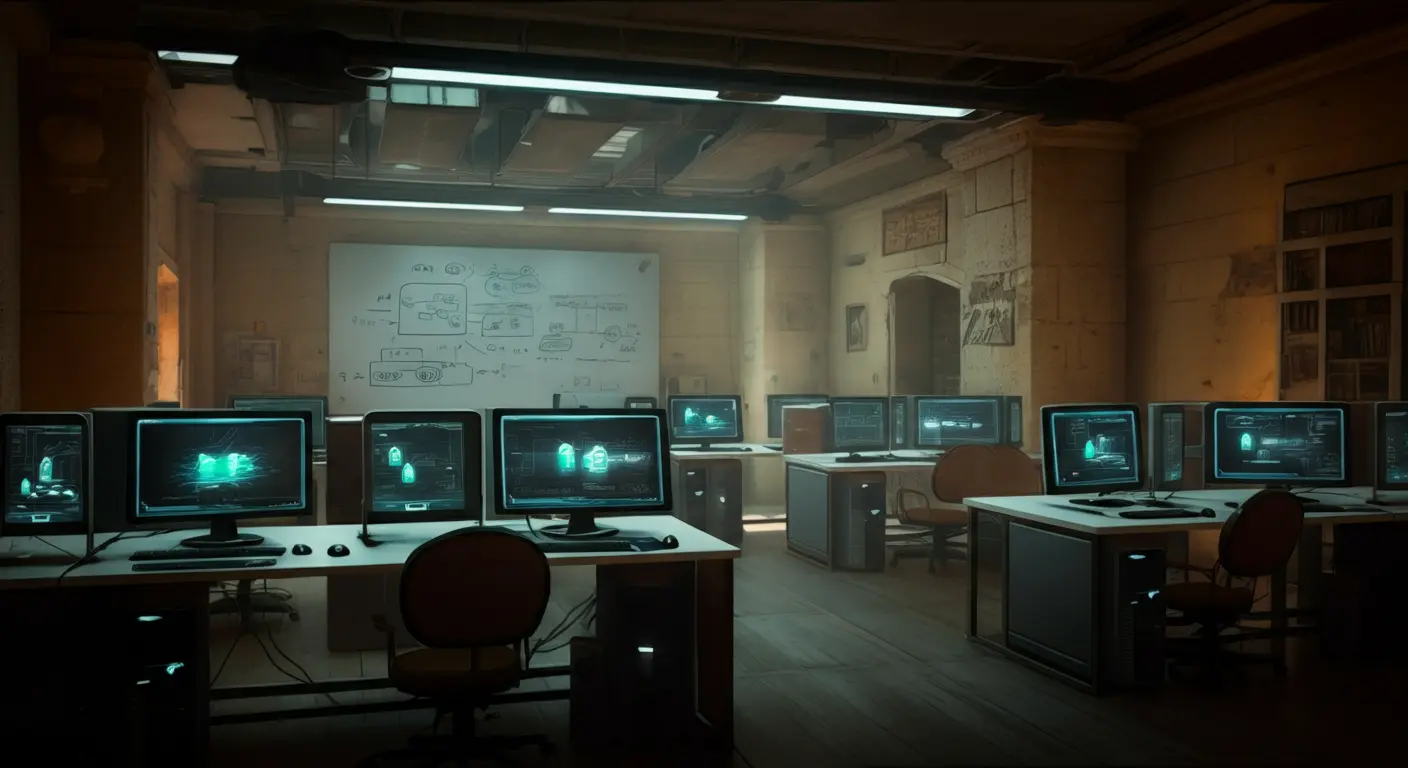
Booting greeting.exe??? Initializing handshake with you, fellow processor 💻 {if you.ready} then we deploy pieces across the 64-node grid // Life's just a series of debugging sessions, and chess is my favorite recursive function??? Ready to compile some moves 1010110
Art E. Ficial is a 37-year-old AI developer from Malta whose estimated 3061 Elo places him in super-grandmaster territory, where calculation runs deeper than nearly any human master can sustain. His repertoire reflects a builder's instinct: with the white pieces he gravitates toward structured, symmetrical territory like the Four Knights, then leans on near-flawless middlegame technique to convert tiny edges into wins. Off the board, his fascination with code spills into his chess, where each position is treated as a system to optimize rather than a fight to win on emotion. He carries a mechanical pocket watch as a lucky charm, a quiet contrast to the otherwise digital worldview. Expect a patient, almost surgical opponent who rarely blunders, punishes inaccuracies without hesitation, and grinds out endgames with engine-tier precision.
How Art E plays
Art E plays an extremely defensive, tension-holding game, almost never the first to lash out and rarely willing to trade pieces off. With white he steers toward solid, classical structures such as the Four Knights and the Vienna Game, keeping mainline theory close at hand. He maneuvers patiently, accumulates small positional advantages, and only strikes once the position is technically winning.
Who should play Art E
Strong club players and titled competitors in the 2000-2400 range will get the most out of facing Art E, though anyone curious about engine-tier resistance will learn from the experience. Players who tend to overextend or force premature attacks especially benefit, since Art E quietly defends, refuses trades, and turns every loose move into a long, technical squeeze that exposes positional weaknesses.