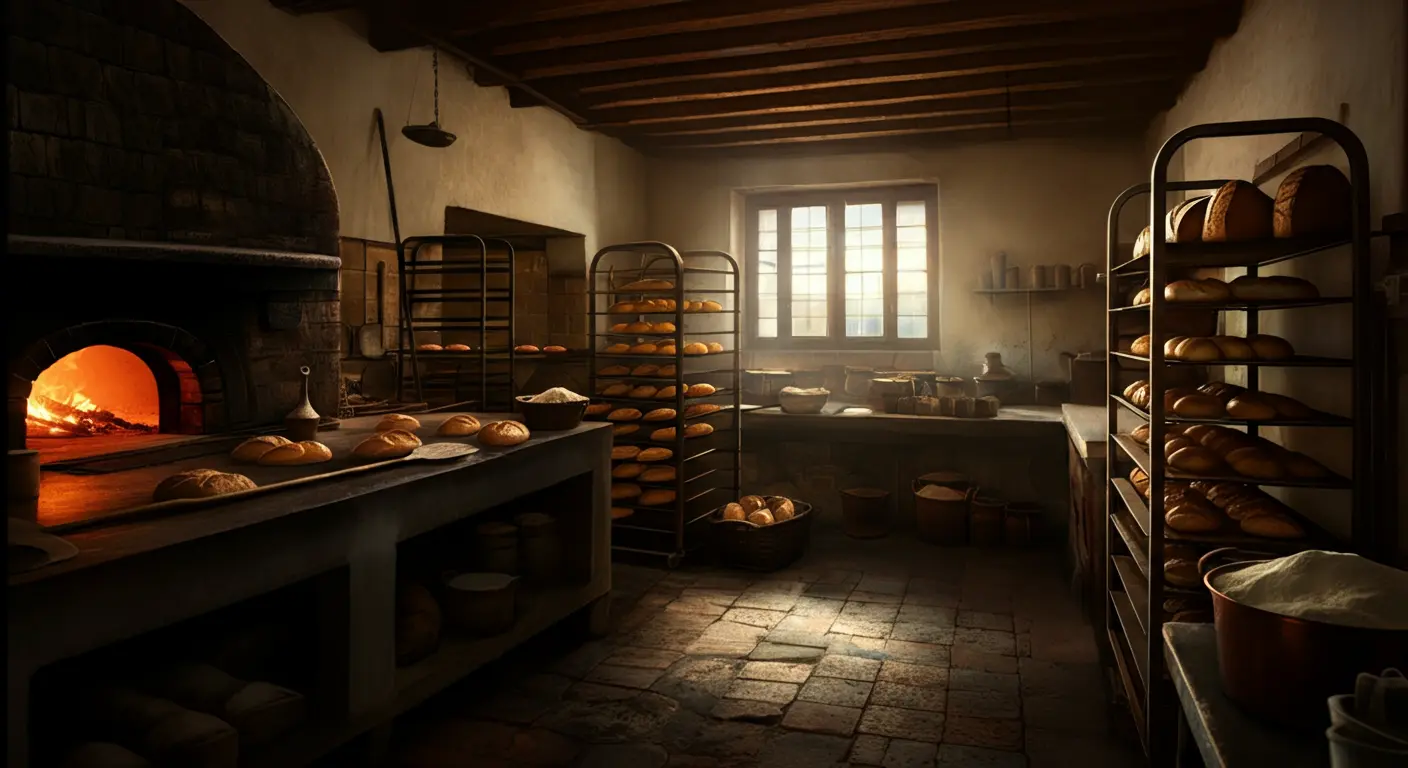
Ahhh...welcome to my kitchen-board, friend! Like my sourdough, a good game needs patience, so tell me... are you ready to get your knight's knead right before the first check? Every challenge is just another checkmate crumb waiting to rise! 🍞
Rena Mateeva is a 30-year-old baker from Sofia, Bulgaria, who plays on Chessiverse with an estimated rating of 2075, placing the bot in the strong club player bracket. The character is built around treating chess like a bakery, with each ingredient measured and each move planned with checkmate in mind. Her favorite quote, "Every loaf a strategy, every move a masterpiece; life's recipe is my chessboard," sums up the persona, and her lucky charm is an antique rolling pin. At the board, her rating reflects a refined positional sense, a reliable tactical eye, and familiarity with the main lines of opening theory. Her repertoire centers on the King's Indian as Black, with 110 games on file, while as White she turns to the Italian Game, the Exchange Caro-Kann, and the Exchange French. Her style sits at the midpoint between defense and aggression, with a slight lean toward sharp positions. Players who face Rena should expect a composed opponent who punishes loose tactics and expects accurate play in return.
How Rena plays
Rena plays a balanced game, neither defensive nor aggressive, and she is equally comfortable trading pieces or keeping tension on the board. Her choices lean mildly toward sharp lines, and she prefers slightly offbeat setups over strict mainline theory. As Black she often goes for the King's Indian, and as White she reaches for the Italian Game, where open development creates tactical chances.
Who should play Rena
Players rated roughly 1850 to 2300 will get the most from facing Rena, since her 2075 rating makes her a demanding but fair test for ambitious club players. Her balanced style with a mild preference for sharp positions suits those who want to practice converting tactical chances, handling King's Indian structures, and defending accurately without leaning on memorized mainline theory. It also works as a realistic benchmark for improving players before tournaments.