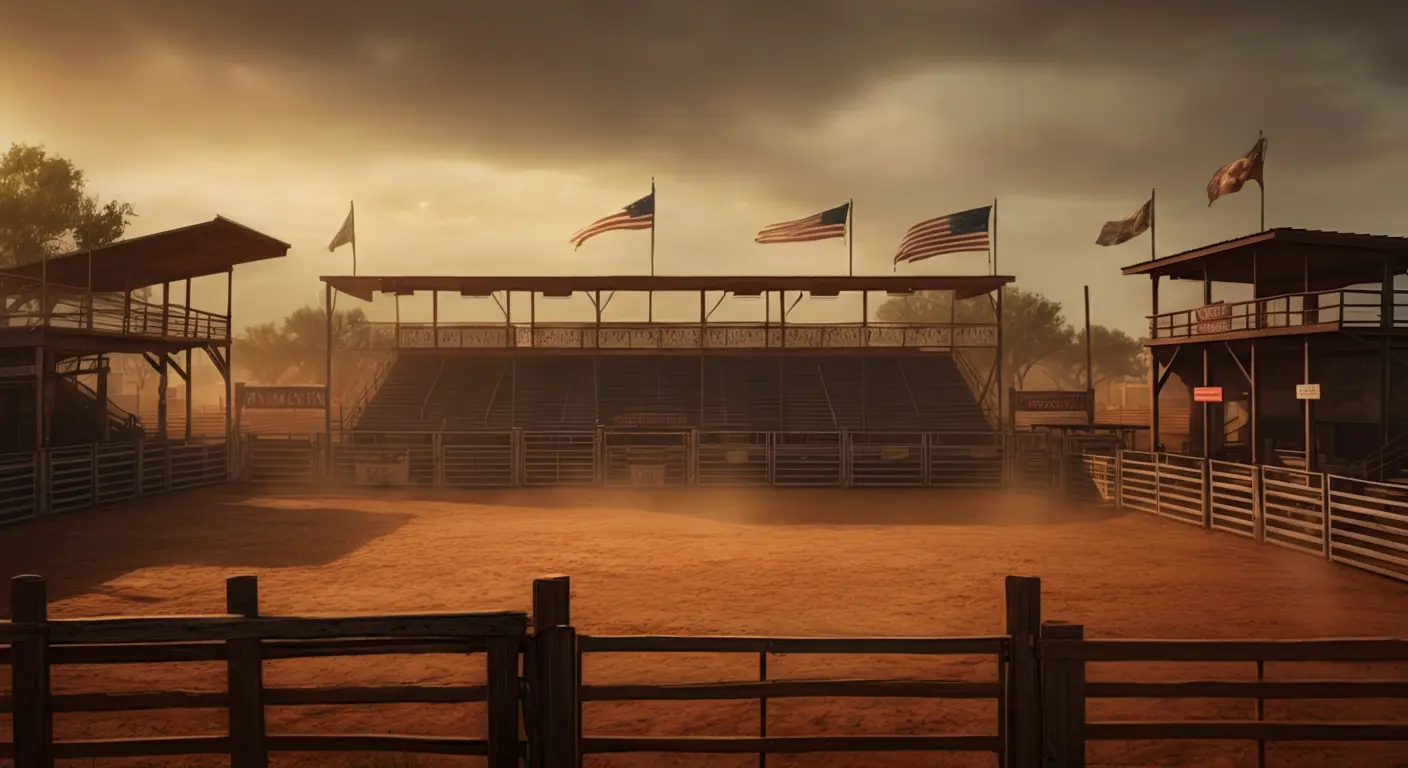
Howdy partner! Name's Sammy, and I'm fixin' to wrangle ya in a round of the great plains game! So saddle up, dust off them pieces, and let's see if y'all can outrun this ol' rodeo clown across the checkered prairie - yeehaw!!! 🐎
Sammy Chessington is a 47-year-old rodeo clown from the United States whose chessboard travels read like tall tales from the Texas circuit. With an estimated rating of 2789, Sammy plays at international master to grandmaster strength, calculating long forcing sequences with the cool precision of a seasoned roper. Years spent distracting enraged rooks between bull rides have produced a player comfortable in sharp, attacking territory, particularly with the white pieces in the Italian Game, where the light-squared bishop swings out early to apply pressure. Against the Caro-Kann and French, Sammy favors direct approaches that gain central space rather than quiet maneuvering. Opponents stepping up to the board should expect aggressive intent from the opening, frequent piece trades that simplify into clear attacking structures, and a relentless push toward the enemy king from move one.
How Sammy plays
Sammy plays sharply aggressive chess and willingly trades pieces to clarify the position rather than maintaining heavy tension. The repertoire leans toward solid, classical structures over speculative sidelines, with mainline preferences slightly tilted toward offbeat practical choices. As white, Sammy favors the Italian Game and the Advance Caro-Kann, gaining space and steering games toward direct king attacks after simplification.
Who should play Sammy
Sammy suits ambitious club players rated 1800 and above, as well as titled players preparing for serious competition. The aggressive, simplifying style is especially instructive for defensive specialists who want to feel constant pressure, and for positional players hoping to sharpen their conversion technique once material trades have reduced the board. Anyone studying classical white systems will benefit from the practical, attacking treatment of mainline structures.